
Rainy season, monsoon, tropical showers: traveling in Thailand during this period means facing transformed landscapes and unique atmospheres. Between deserted beaches, advantageous rates, and lush vegetation, choosing the right time and the right region becomes a real challenge to make the most of your stay. Thanks to personal experience gained on the ground, this guide directs you towards the best strategies to avoid climatic inconveniences, optimize your itinerary, and savor every moment, even in the rain.
What are the characteristics of the rainy season in Thailand?
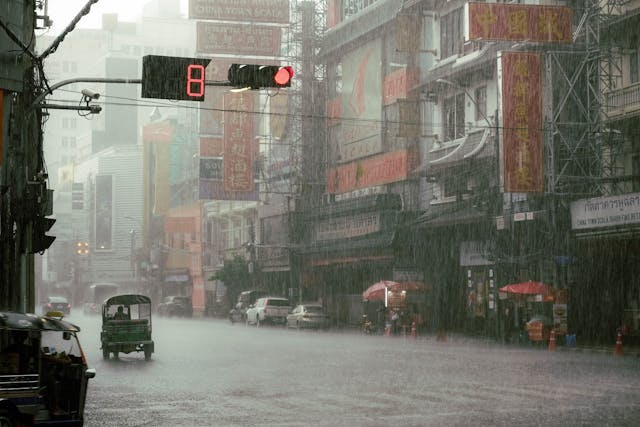
The rainy season in Thailand starts in May and generally ends in October depending on the region. The rains fall in the form of brief and intense showers, often accompanied by a sudden thunderstorm, especially at the end of the monsoon in September and October. Precipitation varies by region, with the northern climate being more humid than that of the south.
The climate of Thailand is marked by an alternation of dry and wet periods. During the rainy season, humidity reaches high levels, transforming the vegetation into a true green season. Temperatures remain high, but the feeling of heat is intensified by the humidity.
In August and September, rainfall in the north can reach 150 to 225 mm, while the south experiences more frequent showers from June to October. The mountainous regions east of the Chao Praya river experience a humid mountain season until the end of November.
Main aspects of the rainy season
- Starts in May, ends in October depending on the region
- Frequent brief and intense thunderstorms
- Daily precipitation in September and October
- Variation in rainfall between north and south
- High temperatures with high humidity
How does the rainy season vary according to the regions of Thailand?

The monsoon season does not affect all regions of Thailand in the same way. On the Andaman coast, including Phuket and the Koh islands, precipitation is more abundant between June and October, especially in September and October. The Gulf of Thailand is more sheltered, with a shorter wet season.
The north and northeast of the country, around Chiang Mai, experience a cold season from November to February, with temperatures that can drop below 20°C. The dry season in the north offers maximum sunshine and pleasant temperatures.
In Bangkok and the central region, the hot season from March to May brings temperatures up to 40°C, while the green season (May to October) offers lush vegetation thanks to humidity and rains.
Regional variations of the rainy season
- North: More abundant rains, cooler temperatures
- South: Prolonged monsoon on the Andaman coast
- Center: Marked hot season, showers at the end of the day
- Islands: Differences between the Gulf and Andaman
- Mountain regions: Longer precipitation at altitude
What is the best time to travel to Thailand according to the weather?

The dry season from December to April is the most favorable period for a trip to Thailand. Temperatures range between 25 and 32°C with a low precipitation rate, especially on the beaches of Phuket or the Koh islands. The sunshine is optimal, ideal for diving or exploring natural sites.
From November to February, the cold season in the north allows you to enjoy a pleasant climate, perfect for visiting Chiang Mai or the surrounding mountains. January and February offer only 1 to 3 days of rain per month and maximum sunshine.
The country also offers opportunities during the green season (May to October) with lush landscapes and attractive accommodation rates. The tropical season is favorable for exploring national parks and nature.
What advice for preparing your trip during the rainy season in Thailand?
Anticipating the rainy season involves monitoring the weather and avoiding the months of September and October, when the risk of storms and typhoons is higher, especially on the Andaman coast. Favoring less exposed regions helps optimize the trip according to preferences.
Planning clothes suitable for humidity and sudden rains makes travel and discovery of the country easier. Diving activities, temple visits, or mountain hiking remain accessible during the monsoon season with good organization.
A local guide helps adapt to climatic conditions and choose the best routes. The wet season offers advantages, such as tranquility on the beaches and greener landscapes, perfect for photographers and nature lovers.
In Phuket, the monsoon has allowed the discovery of deserted coves where nature takes over, offering rare moments away from mass tourism.
Quiz: Understanding the Rainy Season in Thailand
When does the rainy season generally start in Thailand?
What is the common form of precipitation during the rainy season?
Which region of Thailand generally receives more rainfall in August and September?
What is the best period to travel to Thailand if you want to avoid the rainy season?
From June to September
What are the advantages of traveling to Thailand during the green season?
What are the impacts of the rainy season on tourist activities in Thailand?
The rainy season directly influences the organization of leisure activities and excursions. Water activities such as diving or snorkeling can be limited by the monsoon on certain coasts, notably in Phuket or on the Koh islands, where underwater visibility varies depending on precipitation. Hiking in the north or visiting temples benefit from lush vegetation, offering spectacular panoramas and an immersive experience at the heart of the green season.
Access to certain national parks or trails may be temporarily restricted due to high humidity and flood risks. Travelers enjoy a less crowded season, ideal for exploring iconic places without crowds. Local markets, traditional festivals, and encounters with locals take on a special dimension during the tropical season.
Accommodation adaptation during the wet season
Hotels and accommodations adjust to the monsoon season by offering attractive deals and suitable infrastructure. Establishments in Thailand often provide equipment to cope with the rain, such as umbrellas or clothes drying services. This period also encourages the discovery of unusual lodgings in the heart of nature, conducive to observing local fauna and flora.
Transport and travel during the monsoon
Internal travel within the country remains reliable, but boat trips or travel on certain roads may be subject to changes depending on the weather and rainfall. Buses, trains, and domestic flights adapt to the rainy season, ensuring the safety of travelers. Opting for flexible bookings allows for itinerary adjustments according to weather developments.
Festivals and events during the rainy season
The rainy season coincides with major cultural events, such as the Buddha festival or Loy Krathong, which light up cities and countryside. These events offer visitors an authentic immersion into Thai traditions, with colorful decorations and unique celebrations in the rain. Participating in these festivities encourages exchanges and the discovery of local culture.
Advantages of traveling off-season
Choosing to travel during the green season allows you to benefit from advantageous rates on accommodation, excursions, and services. Lower tourist attendance offers a peaceful atmosphere on beaches and natural sites. Landscapes, enhanced by rain and humidity, reveal exceptional biodiversity and vibrant colors, ideal for photography enthusiasts.
- Reduced number of visitors at tourist sites
- Preferential rates for hotels and activities
- Lush natural landscapes
- Opportunity to attend unique local festivals
- Easier encounters with locals
How to choose your destination well in Thailand during the rainy season?
The rainy season in Thailand offers a variety of possibilities depending on the regions and expectations. Selecting an area less affected by the monsoon, such as the Gulf of Thailand or certain parts of the north, allows for a balanced trip between cultural discovery and relaxation. Adapting your itinerary to the weather and seasonal rainfall guarantees a rewarding experience, both authentic and serene, while revealing another facet of the country.
Practical FAQ about the rainy season in Thailand
Can you really enjoy diving in Thailand during the monsoon?
Some diving sites, especially in the Gulf of Thailand like Koh Tao, remain accessible with good underwater visibility even during the monsoon. Local professionals adapt outings according to conditions, allowing exploration of the richness of the seabed while avoiding areas most exposed to bad weather.
How to turn a rainy stay into an authentic experience?
Discovering Thailand in the rain opens the door to unique moments, such as participating in Buddhist rituals in peaceful temples, or exploring lively local markets despite the showers. The wet season also offers the opportunity to share special moments with locals, away from the usual crowds, and to appreciate a vibrant and renewed nature.
To better prepare your stay, discover how diving in Thailand adapts to the different periods of the rainy season and thus choose the best time to travel with peace of mind.
Related posts:
 Ouigo bus the economical solution for traveling in France and Europe with comfort and flexibility
 Gargano a natural and cultural treasure between ancient forests, spectacular beaches, and historic villages
 Blue Lagoon Iceland an immersion in the geothermal turquoise waters and wellness
 Chalcis Greece historical crossroads between Euboea and the Greek mainland between sea and culture