Comfort and optimal vision underwater, that is what every enthusiast looks for before a dive. The sensation of persistent fogging, water infiltration, or a mask that compresses the face can turn an aquatic outing into true frustration. When you have experienced the magic of the seabed in more than 50 countries, you understand how much the choice of equipment influences every experience.
Faced with the variety of models and the complexity of needs depending on your practice, it becomes difficult to find your way without risking a costly mistake. To avoid unpleasant surprises and fully enjoy each session, it is important to analyze your habits, the morphology of your face, the conditions of use, and recent innovations. This text guides you step by step to select the mask that will turn your next dives into unforgettable moments.
What essential criteria to select a high-performance diving mask?
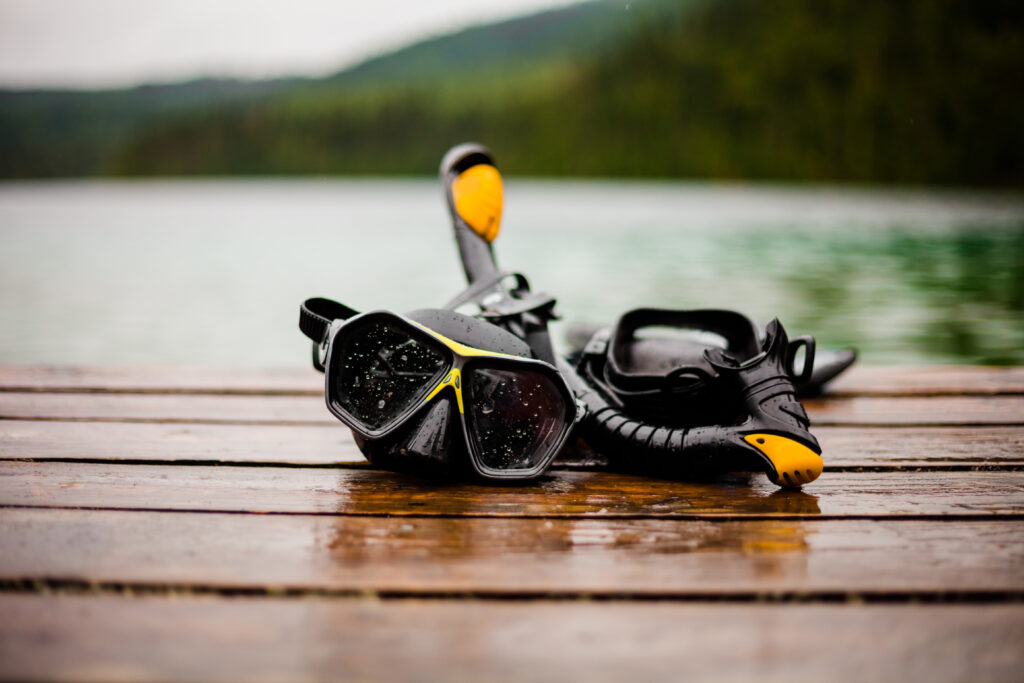
The choice of a diving mask is based on three main criteria: field of vision, compactness, and comfort of fit. Good equipment guarantees a pleasant and safe experience during every water activity. The field of vision depends on the type of lenses, single-lens or double-lens, and the distance between the glass surface and the eye.
Comparison of mask models according to uses
| Model | Internal volume | Type of lens | Recommended use |
|---|---|---|---|
| Scubapro Crystal Vu | Medium | Double-lens + side lenses | Wildlife observation |
| Aqualung Teknica | Reduced | Double-lens | Scuba diving |
| Beuchat Maxlux S | Low | Single-lens | Freediving |
| Aqualung Micromask | Very low | Double-lens | Spearfishing |
| Cressi Big Eyes | Medium | Double-lens | Snorkeling |
| C4 Plasma | Low | Single-lens | Versatile |
The compactness of the model affects the amount of air to compensate and thus the ease of use at depth. A low internal volume limits the effort required during immersion and facilitates equalization. Models like the Beuchat Maxlux S or the Aqualung Micromask are recommended for their low volume.
Comfort mainly depends on the watertightness of the silicone skirt. This material fits the contours of the face and ensures good sealing. A simple test is to place the mask without the strap and gently inhale through the nose. If the mask stays in place, the size is suitable.
- Check the field of vision according to the activity
- Choose a volume suitable for the depth practiced
- Test the watertightness and shape on the face
- Prefer black silicone to limit glare
- Opt for an adjustable strap with micrometric buckles
How to adapt the diving mask to the morphology of the face?
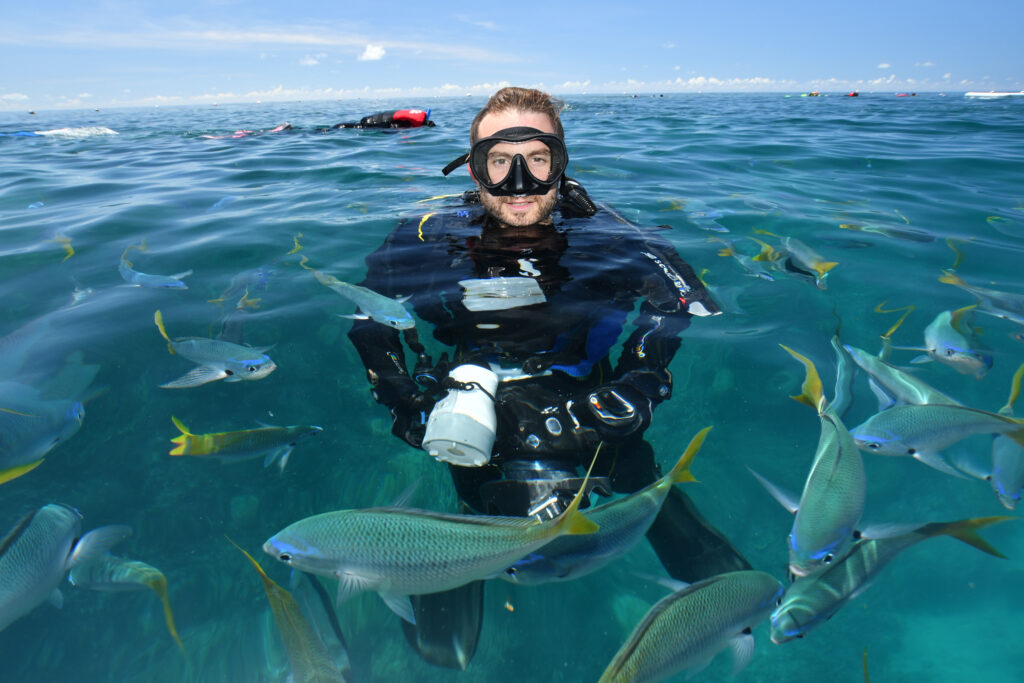
The shape of the mask must match the morphology of the face to avoid any discomfort during use. A precise fit ensures support without excessive pressure. The soft silicone skirt guarantees a good seal on different face types.
The size of the mask can be checked in-store with a quick test. Place the mask without the strap, inhale through the nose, and check that it stays in place. This simple action helps prevent water leakage during immersion.
Some models are designed to accommodate corrective lenses, very useful for glasses wearers. Dioptric corrective lenses improve vision underwater, making the environment clearer and more enjoyable to explore.
Steps to successfully choose the mask
- Identify the size suitable for the face
- Test the shape and fit in-store
- Check compatibility with corrective lenses
- Check the seal dry and then underwater
What are the advantages of different types of masks according to the activity?
Each activity requires a suitable model. For snorkeling, favor a mask with a wide field of vision and optimal comfort. For freediving, a compact low-volume model facilitates equalization. Spearfishing requires a discreet mask close to the face.
Single-lens masks offer better frontal visibility, while dual-lens masks facilitate optical correction. Frameless models are light and flexible, appreciated for their compactness and ease of storage in equipment.
The choice of material also affects durability. Silicone ensures excellent sealing and great flexibility, whereas rubber is still used for some traditional models. Major brands on the market offer variants for each activity.
How to compare models and brands for an informed choice?
The market offers a variety of models, ranging from single-lens to dual-lens and frameless masks. Each model presents features suited to a specific activity. Recognized brands like Aqualung, Cressi, Beuchat, and Scubapro guarantee reliable equipment quality.
To compare, analyze the internal volume, field of vision width, presence of corrective lenses, and flexibility of the silicone skirt. Check ease of adjustment, quality of buckles, and compatibility with other equipment elements.
Buying in-store allows a real test of the mask on the face and ensures comfort before immersion. Testing in real water confirms the choice based on vision and the environment encountered during the activity.
A world freediving record was set with a low-volume mask, demonstrating the importance of equipment adapted to depth and specific practice.
To fully enjoy your aquatic activities, it is essential not only to choose your diving mask well, but also to select a suitable swim boxer using decisive criteria to ensure comfort and performance.
How to recognize a mask adapted to specific diving conditions?
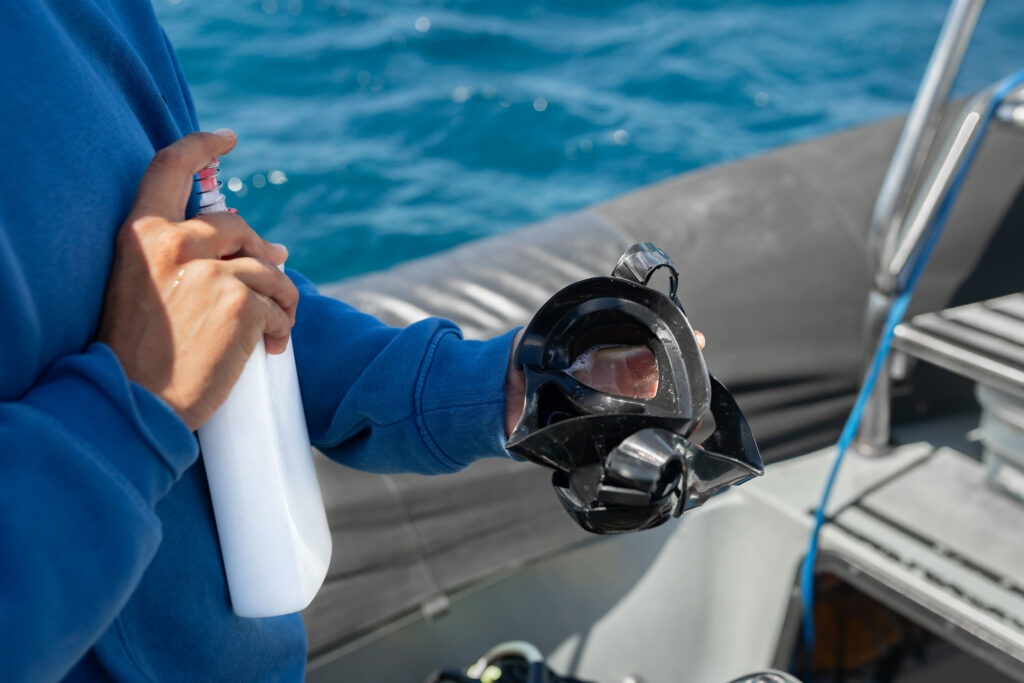
A mask suited to diving conditions must be selected according to the intended environment. Cold, tropical, or particle-laden waters require specific features. A wide field of vision promotes observation in clear waters, while a thick skirt improves comfort during prolonged cold water dives. Low-volume models are preferred for significant depths, as they reduce fatigue related to pressure equalization.
The shape of the mask influences its stability during currents or rapid movements. A wraparound model ensures better hold and superior watertightness. Masks with a double-lip skirt provide an effective barrier against leaks, particularly useful during dynamic activities such as spearfishing or freediving. A good fit prevents any involuntary displacement, ensuring a serene experience.
Comparison of features according to environments
| Environment | Key feature | Recommended mask type | Main advantage |
|---|---|---|---|
| Tropical waters | Wide field of vision | Single panoramic lens | Enhanced observation |
| Cold waters | Thick silicone skirt | Insulating dual lenses | Thermal comfort |
| Particle-laden waters | Tinted or mirrored lenses | Mask with corrective lenses | Glare reduction |
| Depth | Low internal volume | Compact frameless | Ease of equalization |
| Strong currents | Wraparound shape | Double skirt mask | Enhanced stability |
Compatibility with additional equipment
The mask must integrate perfectly with the equipment used, notably the snorkel or action camera. Some models have specific accessory mounts, facilitating attachment without compromising watertightness. Optimal compatibility avoids repeated adjustments and ensures smooth practice.
Recent innovations on the market
The latest advances concern the materials used, with hypoallergenic silicone skirts, ultra-clear tempered lenses, and quick adjustment systems. These innovations improve comfort and underwater vision. Frameless models appeal due to their lightness and compactness, ideal for travelers.
The importance of real-life testing
Testing in a pool or at sea remains essential to validate the mask choice. Real condition trials allow evaluation of vision, comfort, and watertightness over time. Feedback from practitioners is valuable to refine the selection.
Customization according to morphology
Some manufacturers offer masks adjustable according to facial morphology, with different sizes and corrective lens options. This customization guarantees a precise fit and optimal view, regardless of the activity.
- Analyze the planned diving conditions
- Test several models in-store
- Check compatibility with accessories
- Consult reviews from experienced users
- Favor innovations adapted to the use
How to Be Sure to Choose the Best Mask for Your Practice
A relevant choice is based on an analysis of the specific needs of each activity and an understanding of the innovations available on the market. The variety of models allows you to find a solution adapted to all expectations, from comfort to vision to ease of adjustment. A thoughtful selection ensures successful explorations, whatever the environment encountered.
A good mask reveals the beauty of the seabed and enhances every dive.
Frequently Asked Questions About Choosing and Maintaining a Diving Mask
How to prevent fogging on the mask during prolonged dives?
Fogging remains one of the most common annoyances for divers. A thorough cleaning with warm soapy water before first use removes manufacturing residues. Before each dive, gently applying a bit of saliva or a specific anti-fog product on the inner surface of the glass ensures clear vision throughout the outing. Then rinse with fresh water without touching the treated surface to maintain the effectiveness of the process.
Can a diving mask be used for several different aquatic activities?
Some versatile designs adapt perfectly to snorkeling, freediving, and even scuba diving, provided they meet comfort and watertightness criteria. However, intensive use at depth or spearfishing often requires more technical models, featuring low volume and a skirt adapted to repeated movements. Testing the mask in different situations remains the best way to identify its real versatility according to your specific expectations.
For those who wish to deepen their diving equipment and ensure the same level of comfort as when choosing a mask adapted to their practice, it may be useful to discover the decisive criteria for choosing the right swimsuit in order to optimize every outing in an aquatic environment.