
Awe guaranteed before the cenotes of Mexico, these natural treasures where Maya legend blends with spectacular geology. The desire to escape into crystal-clear water, to admire millennia-old stalactites, and to feel the soul of a fascinating civilization often clashes with the question: how to enjoy these places without harming their fragile ecosystem?
Between respect for nature, ancestral traditions, and unforgettable activities, the magic of the sacred wells of the Yucatán reveals a delicate balance. Ready to live a unique sensory experience while preserving the beauty and purity of these mythical springs? Follow the thread of a journey where each step reveals a secret, an emotion, and concrete advice to fully savor the richness of the Mexican cenotes.
What is a cenote and how do they form in the Yucatán Peninsula
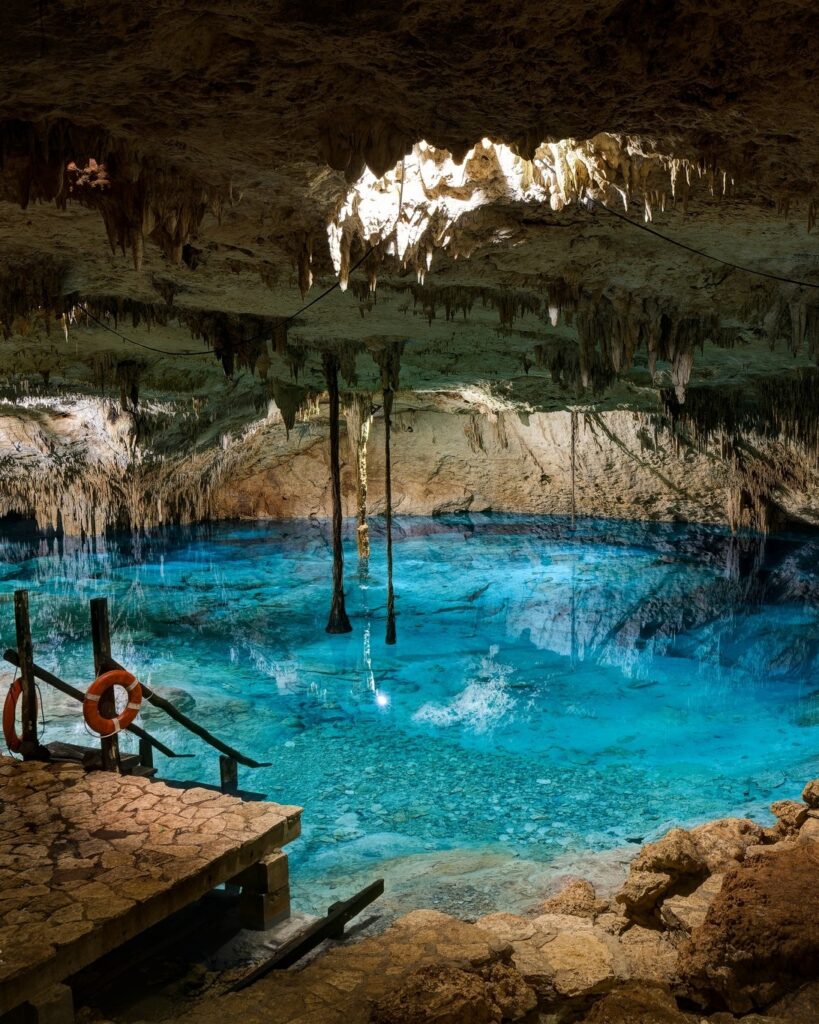
Maya legend and science intertwine around the cenote. These natural formations arise from the collapse of limestone rock, exposing crystal-clear underground water. The origin of the word comes from the Maya term “tsʼonoʼot,” meaning sacred well. The Maya saw these basins as doors to the invisible, but geology reveals a story of progressive dissolution, carving hidden cavities beneath the jungle.
Table of cenote types and characteristics
| Type of cenote | Shape | Average depth | Particularity |
|---|---|---|---|
| Cántaro | Narrow well | 10 to 30 m | Small entrance, vertical access |
| Cilíndrico | Vertical walls | 20 to 50 m | Circular basin, steep walls |
| Aguada | Shallow basin | 5 to 15 m | Wide surface, moderate depth |
| Cave | Horizontal entrance | Variable | Dry and submerged sections |
| Open | Wide opening | 10 to 40 m | Ideal for swimming |
The site of each cenote offers a different spectacle. Open basins reveal steep walls, while others hide their depth behind a discreet entrance. The waters, filtered through limestone, remain remarkably clear. Sometimes, light penetrates down to the suspended stalactites, creating a fascinating play of shadows on the submerged stalagmites.
The hydrology of cenotes is distinguished by the presence of a halocline, a meeting zone between fresh and salt water. This rare phenomenon causes spectacular light effects. Aquifers feed these basins, providing precious drinking water for communities and the Maya civilization.
Main forms of cenotes in the Yucatán
- Cántaro: Narrow entrance, marked depth, vertical access
- Cilíndrico: Circular basin, vertical walls, great visibility
- Aguada: Wide, shallow, ideal for swimming
- Cave: Horizontal entrance, dry and submerged sections
Why are Mexican cenotes linked to Maya mythology and sacred rituals?
Each cenote bears the imprint of a legend. The Mayans considered them as passages to the underworld, where gods and spirits lived. Ritual ceremonies took place at the edge of the pools, between offerings and sacrifice, sometimes human. Archaeologists have found precious objects, testifying to a civilization fascinated by water and mystery.
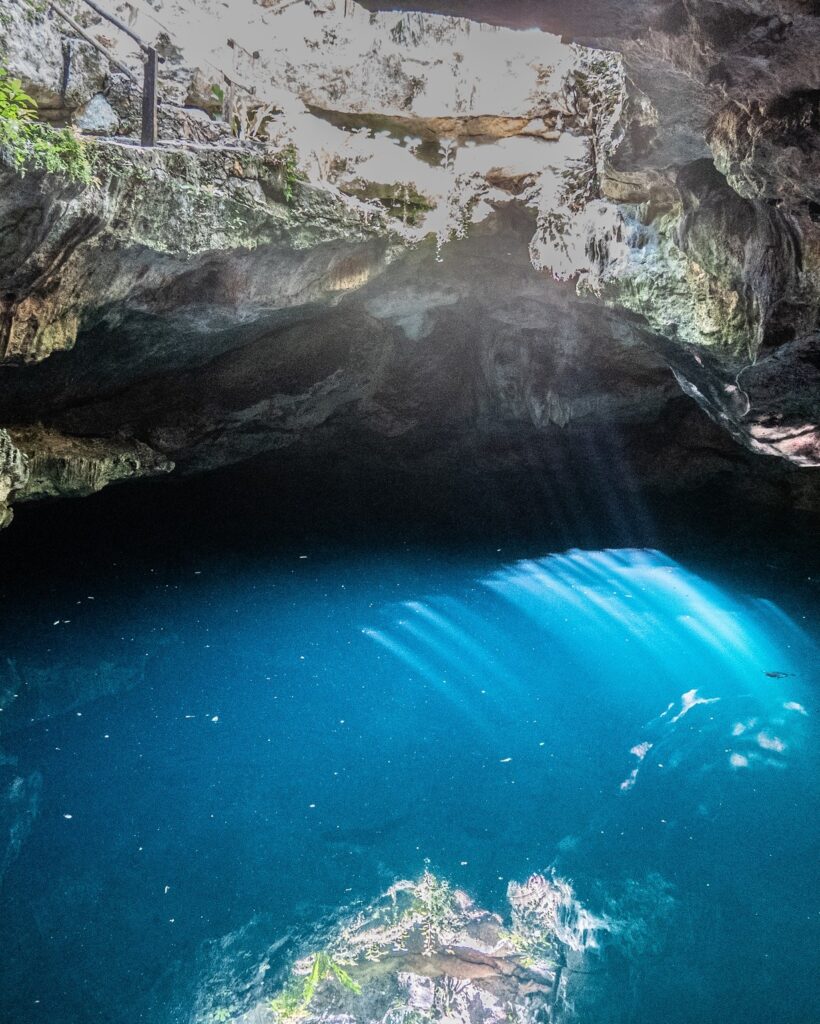
The famous site of Chichen Itza houses the Sacred Cenote, the setting for many rituals. Excavations have revealed jewelry, pottery, and bones, highlighting the sacred dimension of these places. The Mayans believed that water connected the world of the living to that of the ancestors, giving the cenote a unique status in mythology.
The biodiversity hidden beneath the surface enhances the mystical aura. Blind fish, transparent crustaceans, and hanging roots inhabit the cavities. These endemic species recall the importance of karst in Maya culture, and the interdependence between nature and spirituality.
Objects found during ritual excavations
- Gold and jade jewelry
- Human remains
- Painted pottery
- Ceremonial weapons
- Sacred textiles
Where to find the most beautiful cenotes in Mexico and what activities to do on site?
The natural site of the Yucatán Peninsula concentrates the highest density of cenotes in the world. Nearly 10,000 wells are counted, each with a unique personality. The most famous, such as Dos Ojos, Ik Kil, and Gran Cenote, offer unforgettable experiences, between swimming, snorkeling, and diving.
Some cenotes reveal networks of submerged caves, true paradises for exploration and certified diving. Biodiversity enthusiasts observe colorful fish, turtles, and aerial roots, in water of striking transparency. Stalactites and stalagmites sculpt settings worthy of a Maya tale.
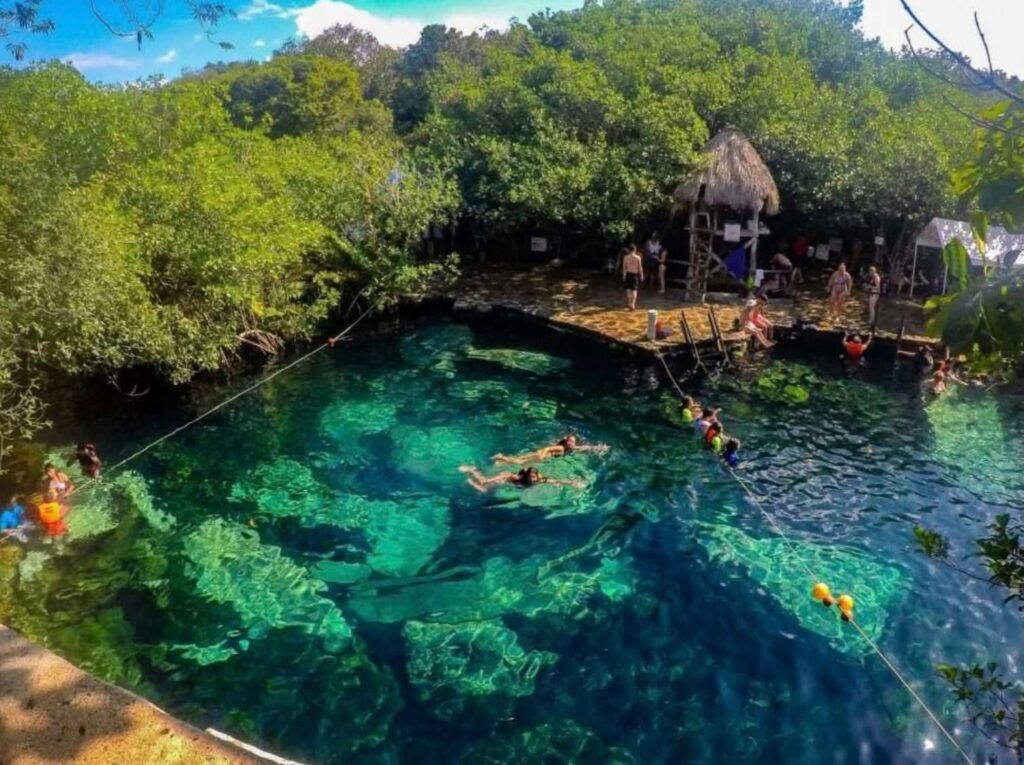
The majority of cenotes are easily accessible from Mérida, Tulum, or Valladolid, often near major archaeological sites. Renting a car allows you to travel the winding karst roads, in search of hidden pools. Activities include swimming, snorkeling, diving, and photography, sometimes with facilities for dining or changing.
Activities to do in the cenotes
- Swimming: Fresh and clear water, ideal for cooling off
- Snorkeling: Observation of wildlife and rock formations
- Diving: Exploration of submerged caves and tunnels
- Photography: Play of light and spectacular landscapes
- Relaxation: Lounging on natural platforms
How to visit a cenote responsibly and preserve its fragile ecosystem?
Environmental preservation is paramount during a visit. The use of sunscreens and chemical products is to be avoided, as they threaten the aquatic ecosystem. Managers remind visitors not to touch stalactites, stalagmites, or hanging roots, to respect the natural growth of the formations.
The cave-dwelling fauna remains discreet, but each species plays a role in the balance of the basin. Cenotes shelter fish, crustaceans, and sometimes bats, adapted to the dim light and isolation. Visitors are encouraged to leave no trace of their passage to ensure the survival of these rare species.
Access to cenotes is often in the morning, in order to enjoy the tranquility and clearer water. Snorkeling or diving equipment is rented on site, guaranteeing an experience without impact on the natural site. Bringing a waterproof bag and a reusable water bottle helps limit waste and preserve the magic of the Mayan springs.
How to organize visiting several cenotes during a stay in Yucatán?
The Yucatán region is full of cenotes accessible by car or organized excursion. To optimize each day, favor an itinerary linking several iconic sites and book a morning slot to enjoy crystal-clear water without crowds. Interactive maps and local guides facilitate the discovery of hidden or less frequented basins, thus offering a more authentic experience in the heart of nature.
Preparing your bag with suitable equipment ensures comfort and respect for the environment. Bring a swimsuit, non-slip shoes, a reusable water bottle, and a waterproof bag for personal belongings. Some sites offer changing rooms and lockers, but the essential thing remains to limit the impact on the ecosystem. Public transport connects the main cities to the major cenotes, but renting a vehicle offers total freedom to explore the geological diversity of the region.
Recommended itinerary table to discover the cenotes
| Departure | Number of cenotes visited | Duration of the circuit | Particularity |
|---|---|---|---|
| Tulum | 3 | 1 day | Caves and open basins |
| Mérida | 5 | 2 days | Historical sites and sacred cenotes |
| Valladolid | 2 | Half a day | Proximity to Chichen Itza |
| Playa del Carmen | 4 | 1 day | Exploration and snorkeling |
| Pisté | 1 | 2 hours | Sacred Cenote of Chichen Itza |
Cenotes and drinking water in the peninsula
Cenotes play a vital role in providing drinking water for many rural communities. Their natural source, filtered through limestone, guarantees water of remarkable purity. Preserving these aquifers remains a major challenge for the region’s future and local quality of life.
The specific fauna of cenotes
Each cenote shelters a unique fauna, adapted to the dim light and isolation. Blind fish, translucent shrimp, and bats find refuge in these cavities. Respectful observation of this biodiversity reminds us of the importance of preserving this fragile ecosystem.
Discovery of karst and local geology
Karst shapes the landscape of the Yucatán, offering spectacular natural sites. The formations of stalactites and stalagmites bear witness to a millennia-old geological process. Each cenote reveals a new facet of this fascinating geology, between collapses, galleries, and submerged pools.
Practical tips for responsible exploration
Respecting the instructions displayed at each site ensures the preservation of the cenote and the safety of all. Favor biodegradable products, avoid feeding the wildlife, and do not throw anything into the pool. Equip yourself with waterproof lamps for cave exploration and bring a snack to enjoy the day without interruption.
- Choose varied cenotes to diversify experiences
- Plan for light and suitable equipment
- Respect opening hours to avoid crowds
- Adopt a responsible attitude towards nature
- Consult local guides for personalized advice
Why do Mexican cenotes fascinate today’s travelers so much?
The cenotes of the Yucatán captivate with their legend, spectacular geology, and preserved ecosystem. Each site invites the discovery of crystal-clear water, rare biodiversity, and a millennia-old history. Exploring these natural wells promises a unique sensory and cultural adventure, where each dive reveals a new secret of the Mexican peninsula.
Frequently asked questions for a successful immersion in Mexican cenotes
Can you visit a cenote year-round or is there an ideal season to fully enjoy it?
The magic of cenotes knows no seasonal break! However, the dry season, from November to April, offers even clearer waters and optimal visibility. Summer rains bring freshness but can disturb clarity. To avoid crowds, favor mornings or weekdays: only blind fish will be your swimming companions!
Do you need to be an experienced diver to explore the underwater caves of cenotes or are some accessible to beginners?
No need to be an Indiana Jones of diving to savor the adventure! Many cenotes offer swimming and snorkeling areas accessible to all, with fairy-tale scenery visible from the surface. More technical dives in submerged galleries are reserved for certified explorers – but everyone can enjoy the wonder without getting an aquatic spelunker certification!
Related posts:
 Diving holidays in Egypt: which area for which level?
 Comparabus the essential comparison tool to book your transport tickets in Europe
 High Line New York between industrial history and urban biodiversity on the west side of Manhattan
 Leaving for Thailand for a successful stay between beaches, temples, gastronomy, and adventure