Underwater fragility, threatened colors, and invisible richness resonate with anyone who has ever contemplated the abundant life of reefs. Faced with the rapid degradation of these ecosystems, every action counts and the diver’s awareness becomes a lever for preservation. The intensity of memories experienced alongside corals is accompanied by deep concern: climate change, pollution, and poorly managed tourism accelerate their disappearance. Your experience can change the game, as monitoring, restoration, and collective responsibility pave the way for sustainable regeneration. Understanding the threats, acting responsibly, and supporting local initiatives form the framework of this journey, where the preservation of life is played out with every dive and every personal commitment.
Why are corals essential to marine biodiversity and threatened today?
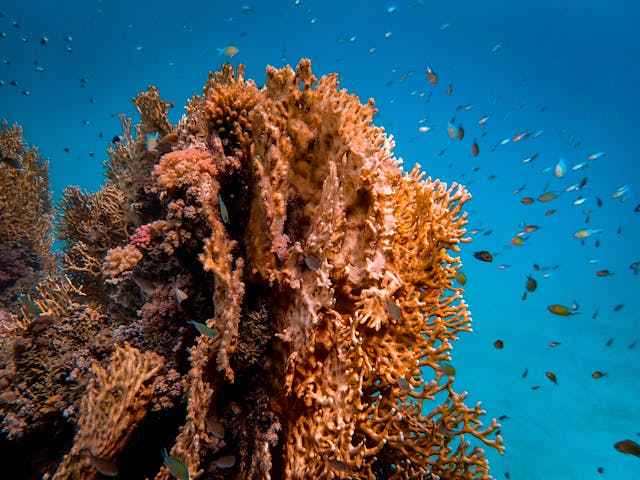
Corals shelter an immense diversity of marine species and play an indispensable role in ocean biodiversity. Their complex structure offers refuge, nurseries, and a source of food for many organisms. The loss of these ecosystems weakens the marine balance and impacts the human populations that depend on them.
Table of the main threats weighing on corals
| Threat | Impact on corals | Ecological consequence | Affected region |
|---|---|---|---|
| Climate change | Mass bleaching | Loss of biodiversity | Indian Ocean, Pacific |
| Plastic pollution | Physical degradation | Asphyxiation of reefs | South-East Asia |
| Ocean acidification | Weakening of structure | Decreased resilience | Global |
| Irresponsible fishing | Mechanical destruction | Imbalance of ecosystems | East Africa |
| Unregulated tourism | Pressure on reefs | Erosion of marine areas | Thailand, Caribbean |
Awareness of coral preservation is progressing thanks to the combined efforts of divers, scientists, and local communities. Awareness campaigns help better understand the issues related to degradation and the need for appropriate management of protected areas.
Pollution and climate change remain the two main factors responsible for bleaching, acidification, and reef degradation. Combating these phenomena requires adopting responsible practices and involving all stakeholders in responsible tourism.
- Bleaching due to warming
- Plastic and chemical waste
- Unsustainable fishing
- Poorly managed tourism
- Progressive acidification
How does diving help monitor and restore coral reefs?
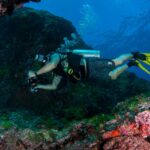
Diving offers direct access to observe the health status of corals and identify protected areas requiring intervention. Trained divers collect essential data that feed scientific databases and guide restoration actions.
Transplantation of fragments, in situ cultivation, gamete collection, all these techniques are facilitated by diving. Divers participate in restoration projects and monitor the survival of transplanted corals, thereby strengthening the resilience of reefs.
Management of marine areas involves regular monitoring of sensitive sites, limiting the number of divers, and using mooring buoys. These practices support the restoration cycle and the preservation of biodiversity.
Main coral restoration actions carried out by divers
- Fragment transplantation
- In situ coral cultivation
- Gamete collection for dissemination
- Monitoring survival and growth
- Cleaning up plastic waste
- Monitoring protected areas
What are the levers for responsible tourism around coral reefs?
Responsible tourism encourages the supervision of activities and the training of divers in ecosystem protection. Adopting practices such as using low-impact boats, limiting the number of divers, and raising awareness about the fragility of reefs proves essential.
Protected areas and connected marine reserves help limit human impact and promote sustainable resource management. Marine biodiversity benefits from better resilience when these marine areas are well managed and monitored through diving actions.
Blue economy and sustainable activities develop around responsible fishing, sustainable aquaculture, and support for local populations. These initiatives promote resource management and strengthen ecosystem resilience in the face of climate change.
Behaviors to adopt for responsible diving
- Respect wildlife and flora
- Limit contact with corals
- Use mooring buoys
- Participate in cleanup actions
- Follow conservation training
- Favor certified operators
How do divers contribute to coral conservation in the face of climate change?
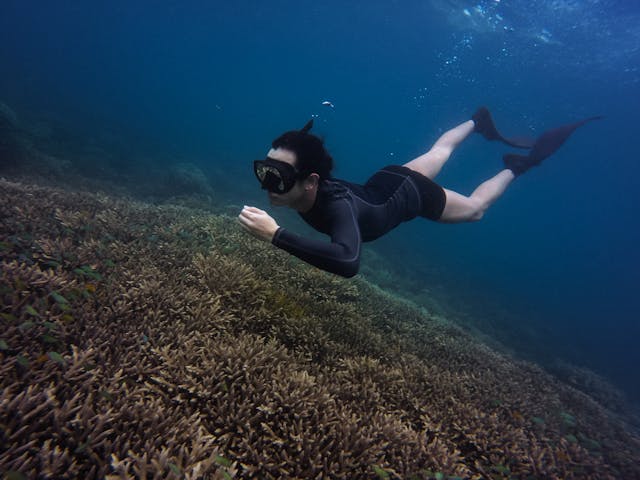
Climate change causes bleaching episodes and undermines reef resilience. Divers engaged in awareness-raising concretely show the state of the corals and mobilize the community to reduce the carbon footprint.
Data collection cycle, monitoring refuge zones, and identifying resistant species contribute to the creation of coral conservatories. These actions support the dissemination of adapted corals and strengthen biodiversity.
Resource management and the development of sustainable aquaculture practices, coupled with waste reduction, help restore reefs and preserve the carbon cycle. The commitment of divers is a major lever for the protection of ecosystems.
On the island of Koh Tao, divers transplanted more than 12,000 coral fragments in one year, promoting the natural recolonization of reefs.
Preserving coral reefs also requires special attention to the products used by divers, as sunscreen can be harmful to marine environments and compromise the restoration efforts mentioned in Corals in danger: how diving promotes their preservation and reef restoration.
How does scientific diving contribute to the active protection of corals?
Scientific diving provides access to hard-to-reach sites, where direct observation of corals reveals valuable data on the health status of reefs. Divers collect samples, measure growth, and monitor interactions between species to anticipate ecosystem changes. This approach enables the rapid detection of phenomena such as bleaching or diseases, strengthening the protection of sensitive areas.
Participatory management programs involve divers in the precise mapping of marine areas and monitoring of protected zones. Through regular surveys, it becomes possible to adjust conservation measures and optimize restoration. The data collected supports local and international decisions in favor of biodiversity and a sustainable blue economy.
Examples of scientific missions carried out by divers
| Mission | Objective | Area of operation | Expected result |
|---|---|---|---|
| Reef mapping | Identify degraded areas | Great Barrier | Targeted restoration plan |
| Monitoring coral growth | Measure resilience | Maldives | Resistance assessment |
| Water sample collection | Analyze pollution | Red Sea | Pollution reduction |
| Species census | Evaluate biodiversity | Polynesia | Protection of rare species |
| Bleaching observation | Detect critical episodes | Indonesia | Early intervention |
| Monitoring marine protected areas | Control effectiveness | Caribbean | Management improvement |
Role of technologies in coral monitoring
The use of underwater drones and connected sensors optimizes data collection on reefs. These tools facilitate monitoring degradation, detect pollution, and measure water temperature in real time, thus improving ecosystem management.
Training and involvement of local divers
Awareness and training programs strengthen community involvement in protection. Local divers become key players in restoration and pass on responsible tourism practices to visitors, promoting the sustainability of protected areas.
Impact of data collection on sustainable management
The centralization of information from scientific diving guides resource management. Analyses shared between researchers and managers support the creation of new marine areas and the preservation of endangered species.
International Cooperation and Monitoring Networks
The networking of underwater observers promotes a coordinated response to the global degradation of corals. Common protocols and data exchange accelerate the adoption of effective protection strategies on a planetary scale.
- Scientific data collection
- Mapping of fragile habitats
- Ongoing diver training
- Use of technological tools
- Information sharing between regions
How Can Everyone Act Concretely to Preserve Corals?
Individual commitment to coral protection is reflected in choosing respectful practices during diving or responsible tourism. Supporting committed operators, limiting pollution, and participating in awareness-raising activities promotes the survival of reefs and the transmission of these ecosystems to future generations.
He who knows the sea understands the urgency of preserving its living treasures.
FAQ on Coral Protection and the Role of Divers
How can an amateur diver actively contribute to the preservation of coral reefs?
By joining underwater cleaning programs, maintaining controlled buoyancy, and choosing certified operators, every amateur diver becomes a key player in preservation. Participating in data collection during guided dives or supporting local initiatives allows for concrete action, even on a small scale.
What daily actions promote the survival of corals, even without diving practice?
Reducing plastic use, choosing sunscreens that are respectful of the marine environment, and raising awareness about the fragility of the oceans positively influence reef health. Supporting committed associations and favoring products from sustainable fishing also help to limit pressures on these unique ecosystems.
Why is collaboration between scientists, divers, and local communities decisive for the future of corals?
This cooperation allows for the combination of expertise and field observations for finer and more responsive reef management. Scientific knowledge enriches local practices, while the engagement of residents ensures the sustainability of implemented solutions. This constant dialogue fosters the emergence of actions adapted to each marine context.