Up to eight species of sharks have been hand-fed at Shark Reef since 1999, off the southern coast of Viti Levu. This figure comes from a study published in the journal PLOS ONE in March 2013.
This reef accounts for a large part of the diving trips to Fiji’s main island. Our old page mixed sites located elsewhere in the archipelago, an “18th-century” wreck that cannot be found, and an ideal season that overlapped with the cyclone season.
We have revised it with the Fiji weather service, the Fijian Ministry of Foreign Affairs, and scientific literature. The rest has been removed.
What level is required to dive around Viti Levu?
It all depends on the area. According to the 2013 study, the feeding at Shark Reef took place at two points located at 16 and 30 meters, and the deepest point exceeds the limit of entry-level certifications. The reefs of the Coral Coast and the Beqa lagoon are also diveable, with daily conditions to be checked locally.
| Area | Level | Current | Season | Supervision | Fallback plan |
|---|---|---|---|---|---|
| Shark Reef (Beqa channel) | Points at 16 and 30 m (2013 study), certification appropriate to depth | Reef exposed on the open side, to be checked with the center | Longer shark absences at the end of the year (2013 study) | Guided dive organized by the operator | Shallow point or another site if the sea closes the channel |
| Beqa Lagoon | Variable depending on the chosen site | Impossible to determine from here | Outside cyclone season: May to October | Boat trip with guide | Sheltered lagoon site |
| Coral Coast (south coast) | Variable, snorkeling possible depending on tide | Passes to avoid without guide | Outside cyclone season: May to October | Hotel center or local club | Snorkeling in the lagoon in calm sea |
The current matters more than the photo.
The table leaves some boxes open, and this is intentional. None of the official sources consulted publish average current or visibility per site for Viti Levu. The figures in our old article, with 30 meters visibility and water at 25 to 29 °C, had no source. We therefore removed them. What level? For the deep feeding point, most organizations require certification beyond the first level, which stops at 18 or 20 meters depending on standards. But it is the center that decides, based on your dive log and your most recent dive.
One last detail matters in drift or open water. A decompression buoy that you know how to deploy alone weighs little in the bag and helps the boat find you if the group surfaces far from the mooring.
What really happens at Shark Reef, off Beqa?
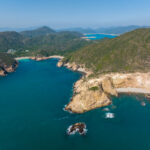
Shark Reef is a small reef on the south coast of Viti Levu, separated from the Beqa lagoon by a channel about 250 meters deep. Fishing is prohibited there. The 2013 study describes hand feeding three to five days a week, between 9 a.m. and 12 p.m., on the slope facing the open sea.
The name Beqa is often used as a commercial label for this dive, although the reef is located in the channel, halfway between the main island and the lagoon. Researchers tracked 48 bull sharks between 2004 and 2011, through direct observations and 82 acoustic transmitters. They noted regular departures lasting several days to several weeks, and the longest absences occurred at the end of the year. Nothing guarantees the presence of a specific shark on the day of your dive. A photo of a bull shark on a brochure says nothing about the number of sharks present that morning.
This data is more than ten years old.
However, it remains the most detailed published description we have found about the site, with its schedules, depths, and its link to a local conservation project that protects all sharks in the reserve and neighboring coasts. Ask the operator what has changed since then.
Should you dive with fed sharks?
The debate remains open. The 2013 study concludes that the bull sharks at Shark Reef do not seem strongly conditioned by the feeding and even avoid divers. Its authors believe that such an activity, linked to a reserve, can help protect these predators. It only concerns one species and one site.
However, critics of feeding present other arguments, such as the association between divers and food or the risk of accidents during distribution. The study does not measure these risks for the divers. On the ethical question, it is impossible to decide here, so we prefer to give you the information to judge. The authors note that sharks frequented the site even on days without feeding, but stayed longer when there was food. Everyone will set the limit where they want.
On the safety side, the question concerns the organization much more than the shark.
Before booking, ask how many guides supervise the group, where the divers position themselves during the distribution, what happens if a shark comes too close, and which sea conditions cancel the outing. A serious operator will respond in writing. And the basic rule applies here as elsewhere: do not touch the wildlife, even when it comes to you. To put these bull sharks in perspective with other species, our selection of the strangest sharks in the world shows how much the family varies.
When to go during the South Pacific cyclone season?
The Fiji Meteorological Service sets the South West Pacific cyclone season from November to April, with a peak from January to March. On average, about two cyclones affect Fiji each season. The months from May to October therefore remain the safest to plan a diving trip.
Our previous article recommended April to November. These two months fall within the official season. For 2025-2026, the outlook from the same service forecasted one to two probable cyclones in Fiji’s exclusive economic zone, including one potentially reaching a severe category (3 to 5). The service also reminds that a cyclone can form at any time of the year. Check the current season outlook before paying, then monitor official bulletins until departure.
Thus, a date in February is not forbidden.
It simply requires more margin, with buffer days, insurance covering cancellation due to weather events, and a backup plan on land. The same logic applies to the reef of the Isle of Pines in New Caledonia or Rarotonga in the Cook Islands, located in the same basin.
Entry formalities and hyperbaric chamber: what to check before booking?
According to the page of the Fijian Ministry of Foreign Affairs consulted in October 2026, French and Spanish nationals enter without a visa and receive a visitor permit valid for up to four months. A passport valid six months after entry, a return or onward ticket, accommodation booking, and a recent bank statement are required.
The ministry specifies that meeting these conditions does not guarantee admission. The permit can be extended by up to two months, for a fee. Check the page just before your departure, as these rules change without notice and an airline may refuse boarding with a passport that is too short.
Then there is the chamber.
An article from the Fiji Hotel and Tourism Association, published in December 2025, mentions two hyperbaric chambers: one at the Colonial War Memorial Hospital in Suva, the other in Nadi, commissioned on December 31, 2024, with the Fijian navy according to the Fiji Times. However, the one in Suva has previously been declared out of service for maintenance. Its status can therefore change from year to year. Before departure, ask the center which chamber it uses and verify that your insurance covers medical evacuation. A trip to Shark Reef without a clear answer on this point costs safety margin, and this margin cannot be bought back once on the boat. Would you book it like that?
FAQ
Can you dive at Shark Reef with an entry-level certification?
The study published in 2013 describes two feeding points, at 16 and 30 meters. The deepest exceeds the limit for entry-level certifications. It is the center that decides your participation and the depth, according to your certification and recent experience.
What is the best season to dive in Viti Levu?
The Fiji Meteorological Service places the cyclone season from November to April, with a peak from January to March. The months from May to October therefore avoid this period. A cyclone remains possible at any time of the year.
Is a visa required to go to Fiji?
According to the Fijian Ministry of Foreign Affairs, French and Spanish nationals are exempt and receive a visitor permit for a maximum of four months. A passport valid for six months after entry, a return ticket, accommodation booking, and a bank statement are required. Check the official page before you leave.
Is there a hyperbaric chamber in Fiji?
A December 2025 article mentions a chamber at the Colonial War Memorial Hospital in Suva and another in Nadi. The Suva chamber has experienced downtime for maintenance. Ask your center which one is operational at the time of your stay.
Sources
- Opportunistic Visitors: Long-Term Behavioural Response of Bull Sharks to Food Provisioning in Fiji (Brunnschweiler and Barnett, PLOS ONE, 2013)
- Tropical Cyclone Seasonal Outlook 2025-26 (Fiji Meteorological Service, 2025)
Photo: Maksym Kozlenko, Wikimedia Commons, CC BY-SA 4.0
{“@context”:”https://schema.org”,”@type”:”FAQPage”,”mainEntity”:[{“@type”:”Question”,”name”:”Peut-on plonger à Shark Reef avec un premier niveau ?”,”acceptedAnswer”:{“@type”:”Answer”,”text”:”L’étude publiée en 2013 décrit deux points de nourrissage, à 16 et 30 mètres. Le plus profond dépasse la limite des premiers brevets. C’est le centre qui décide de ta participation et de la profondeur, selon ta certification et ton expérience récente.”}},{“@type”:”Question”,”name”:”Quelle est la meilleure saison pour plonger à Viti Levu ?”,”acceptedAnswer”:{“@type”:”Answer”,”text”:”Le service météo des Fidji place la saison des cyclones de novembre à avril, avec un pic de janvier à mars. Les mois de mai à octobre évitent donc cette période. Un cyclone reste possible à tout moment de l’année.”}},{“@type”:”Question”,”name”:”Faut-il un visa pour aller aux Fidji ?”,”acceptedAnswer”:{“@type”:”Answer”,”text”:”Selon le ministère fidjien des Affaires étrangères, les Français et les Espagnols en sont exemptés et reçoivent un permis de visiteur de quatre mois maximum. Il faut un passeport valide six mois après l’entrée, un billet retour, une réservation d’hébergement et un relevé bancaire. Vérifie la page officielle avant de partir.”}},{“@type”:”Question”,”name”:”Y a-t-il un caisson hyperbare aux Fidji ?”,”acceptedAnswer”:{“@type”:”Answer”,”text”:”Un article de décembre 2025 cite un caisson à l’hôpital Colonial War Memorial de Suva et un autre à Nadi. Le caisson de Suva a déjà connu des périodes d’arrêt pour maintenance. Demande à ton centre lequel est opérationnel au moment de ton séjour.”}}]}