On November 16, 2020, around 10:45 UTC, the eye of Hurricane Iota passed less than 10 kilometers north of Providencia. The final report from the National Hurricane Center (NOAA), published in May 2021, then describes an island almost entirely devastated.
We start here because the old version of this page sold San Andrés as a postcard. Water at 26-29 °C, visibility “greater than 20 meters,” ideal season from December to May: nothing was dated or sourced. We rewrote the text from scratch.
You will find here a simple grid to decide (level, current, season, supervision, fallback plan) and the entrance cost to the island in 2026, quantified and dated.
Where to dive around San Andrés and Providencia?
San Andrés, Providencia, and Santa Catalina form a Colombian Caribbean archipelago, much closer to Nicaragua than to the Colombian mainland. Diving is done on the coral reefs surrounding the two main islands. The entire archipelago is part of the Seaflower Biosphere Reserve, recognized by UNESCO in 2000.
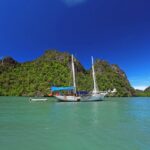
On San Andrés, the most populated, trips depart by boat to the drop-offs and reefs encircling the island, while popular excursions head to the cayos Acuario and Haynes, two islets where people swim and snorkel in shallow water. Providencia is quieter. Its Old Providence McBean Lagoon National Natural Park, the only area in the Colombian national park network located in the insular Caribbean, includes a coral reef, the McBean mangrove, and Iron Wood hill. The park service presents this reef as the second largest in the Caribbean after Belize’s. But this ranking says nothing about the conditions of the day.
The UNESCO label remains silent on the reef’s condition this month.
The nickname “sea of seven colors” comes from the variations of blue between the shallows and the open sea. It circulates everywhere. It is even found on the park’s official page. Pretty, and without the slightest information about the current. If you compare with other Caribbean reefs, such as those of the Cayman Islands and their drop-offs or Roatan in Honduras, keep the same reading grid.
What level and current to expect in San Andrés?
Impossible to decide from here for a specific site. The old pages promised dives “for everyone” without indicating depth or current. The proper method is to ask the center, for each site, the maximum expected depth, the type of entry, the usual current, and the level required that day.
For what level? A beginner on a discovery dive and an autonomous diver do not ask the same questions. The first depends entirely on the instructor, the group size, and the depth chosen that day. The second must know if the dive is drift, if the boat follows the bubbles, and at what time the wind strengthens, which no one can tell you from a brochure. Thus, your certification gives you a framework. It does not say if this specific site, with the current and swell of that morning, suits your condition at the moment.
The current decides more than the photo.
And visibility does not ensure safety. Clear water can hide a surface current that moves the group away from the boat, especially when the wind pushes on the exposed coast. A safety sausage makes you visible. Ask at the briefing what happens if you surface far from the boat.
Which season to choose for diving in San Andrés?
Guides often cite the period from December to May, drier, as the best. Take it as a trend, without official figures behind it. The solid reference remains the Atlantic hurricane season, from June 1 to November 30 according to the National Hurricane Center, which the archipelago crosses every year.
Hurricane Iota reminded us in 2020. The final NHC report, signed by Stacy Stewart and published on May 18, 2021, estimates its maximum intensity at 135 knots on November 16, about forty kilometers northwest of Providencia, which is the top of category 4 (the operational estimate spoke of category 5). The same document reports that about 80% of Providencia’s houses were destroyed and all others suffered damage. On San Andrés, about 60% of the island lost electricity. There was one death on each island.
However, going between June and November remains possible if you accept this risk and cover it.
Specifically, choose a travel insurance that covers cancellation related to a cyclone and on-site assistance, and read these clauses before paying. Keep some buffer in your schedule. An alert can cancel outings and delay flights to the mainland. Between your last dive and the flight, also follow the recommended intervals by your training organization.
How much does the San Andrés tourism card cost in 2026?
To enter the archipelago, each visitor pays a tourism card fee. In 2026, it costs 153,000 Colombian pesos, according to decree 0010 of January 8, 2026, from the Gobernación of the archipelago, reported by the Colombian press at the beginning of February. Children under 7 years old, natives, and registered residents are exempt.
The amount is recalculated each year.
This rate follows the fiscal value unit (UVT), revised annually in Colombia. Forget the 2025 price. According to the daily Vanguardia (February 4, 2026), the card can be purchased on the Gobernación’s website, from airlines before boarding, or at authorized agencies. Keep the receipt until arrival. According to the same source, 75% of the collected funds finance social projects and 25% tourism development and maintenance of public infrastructure.
Convert the amount at the daily exchange rate, as it varies with the peso.
How to choose your diving center and backup plan?
Judge a center by its precise answers: group size, number of divers per instructor, oxygen and radio on board, procedure if a diver drifts, nearest hyperbaric chamber. Commercial pages rarely answer all this. Ask these questions in writing before booking and keep the answers.
The chamber, precisely. No recent official source was found specifying the condition of a hyperbaric chamber on the archipelago, so it’s impossible to decide from here. Ask the center, and also ask how long an evacuation to the mainland would take. Yet, the answer changes your margin. An isolated archipelago, several hundred kilometers from the Colombian coast, lengthens each step of an evacuation, and your diving insurance must cover this transport with a reasonable ceiling.
If the sea is rough, snorkeling in the sheltered areas around the cayos remains a backup plan, provided you stay with a guide.
And don’t touch anything. The national parks service asks not to touch the coral, not to take anything, and to go through local guides. We explain why you should never touch marine life in a dedicated article. Your sunscreen and its effects on marine environments should also be chosen before departure. In short, a week between June and November requires buffer: diving days that may be canceled, insurance to read carefully, a return flight sometimes to reschedule. Would you book it like that?
FAQ
Do you have to pay a tourism card to go to San Andrés?
Yes. In 2026, it costs 153,000 Colombian pesos according to decree 0010 of January 8, 2026, from the Gobernación of the archipelago. Children under 7 years old, natives, and registered residents are exempt. The rate changes every year, check it at the time of purchase.
What is the best period to dive in San Andrés?
The period from December to May is often cited, without official source on diving conditions. The Atlantic hurricane season runs from June 1 to November 30. In summer and autumn, plan insurance and buffer in your schedule.
Can you dive in Providencia after hurricane Iota?
Outings exist around the coral barrier of Old Providence McBean Lagoon park. The island was devastated by Iota in November 2020. The current state of accommodations, boats, and connections is impossible to decide from here: ask the center directly.
Will we see sharks or turtles in San Andrés?
No one can promise you that. The wildlife depends on the site, the time, and luck. Choose your dive based on level, current, and supervision, and take any encounter as a bonus.
Sources
- Tropical Cyclone Report: Hurricane Iota (AL312020) (National Hurricane Center, NOAA, 2021)
- Old Providence McBean Lagoon National Natural Park (Colombian National Natural Parks, page updated in 2026)
{“@context”:”https://schema.org”,”@type”:”FAQPage”,”mainEntity”:[{“@type”:”Question”,”name”:”Faut-il payer une carte de tourisme pour aller à San Andrés ?”,”acceptedAnswer”:{“@type”:”Answer”,”text”:”Oui. En 2026, elle coûte 153 000 pesos colombiens selon le décret 0010 du 8 janvier 2026 de la Gobernación de l’archipel. Les enfants de moins de 7 ans, les natifs et les résidents enregistrés en sont exemptés. Le tarif change chaque année, vérifie-le au moment de l’achat.”}},{“@type”:”Question”,”name”:”Quelle est la meilleure période pour plonger à San Andrés ?”,”acceptedAnswer”:{“@type”:”Answer”,”text”:”La période de décembre à mai est souvent citée, sans source officielle sur les conditions de plongée. La saison des ouragans de l’Atlantique court du 1er juin au 30 novembre. En été et en automne, prévois une assurance et de la marge dans ton planning.”}},{“@type”:”Question”,”name”:”Peut-on plonger à Providencia après l’ouragan Iota ?”,”acceptedAnswer”:{“@type”:”Answer”,”text”:”Des sorties existent autour de la barrière de corail du parc Old Providence McBean Lagoon. L’île a été ravagée par Iota en novembre 2020. L’état actuel des hébergements, des bateaux et des liaisons est impossible à trancher d’ici : demande-le directement au centre.”}},{“@type”:”Question”,”name”:”Verra-t-on des requins ou des tortues à San Andrés ?”,”acceptedAnswer”:{“@type”:”Answer”,”text”:”Personne ne peut te le promettre. La faune dépend du site, de l’heure et de la chance. Choisis ta plongée sur le niveau, le courant et l’encadrement, et prends une rencontre comme un bonus.”}}]}