
In Chiang Rai, the White Temple fascinates with its dazzling structure, sparkling mosaics, and profound symbolism. Faced with the influx of visitors, it becomes difficult to grasp the full richness of this masterpiece without expert advice. To live an authentic experience, understand the codes of Buddhism, and appreciate every detail, one must know how to plan the day, choose the right moment, and spot the lesser-known areas. This story aims to guide you step by step, from the access bridge to the interior frescoes, through the peaceful gardens and the art gallery, in order to transform your trip into an unforgettable interlude.
How did Thailand’s White Temple establish itself as a major work of art?
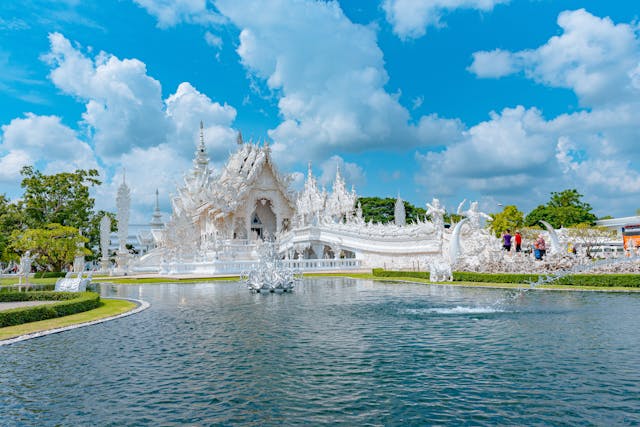
Thailand’s White Temple, known as Wat Rong Khun, fascinates with its art and contemporary architecture. Built in Chiang Rai by the artist Chalermchai Kositpipat, this building blends local traditions and modernity. The main structure uses concrete covered with a white coating and shards of mirror creating the impression of a sparkling mosaic.
Construction began in 1997 to restore an old temple, funded by the artist himself. Visiting the site reveals a deep reflection on heritage and spirituality, symbolized by the duality between spirit and matter. The design of the white building illustrates the purity of the spirit while the golden structure represents attachment to material desires.
The symbolism of the bridge spanning the lake marks the transition towards wisdom and meditation. Outstretched hands emerge, recalling human greed, while mythological figures guard the passage to the gate of paradise. This site attracts those who wish to explore Buddhism through a visionary work.
Main artistic elements of the site
- Art and contemporary architecture fused
- Mirror mosaic on the main building
- Construction funded by the artist
- Symbolism of the bridge and hands
- Cultural and spiritual heritage valued
What are the architectural features of the White Temple of Chiang Rai?
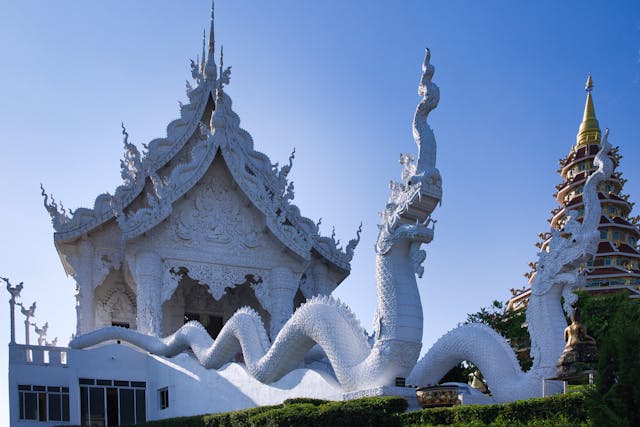
The temple’s structure stands out with a bright white building adorned with mirror fragments, evoking a huge mosaic. The three-tiered roof recalls traditional Lanna architecture, while Nāga serpents decorate the ends. The entire site includes nine buildings, including a relic hall, a meditation hall, and an art gallery.
Inside the ubosot, the decoration offers a striking contrast with murals blending flames, demons, and characters from popular culture. This artistic diversity questions the place of man in the modern world and the duality between virtue and materialism. The presence of Western icons on the building’s walls underscores the universal scope of the message.
The symbolism of gold and white structures the visit and guides the visitor’s gaze towards a reflection on Buddhism and contemporary society. The entire site design creates a unique visual and spiritual experience in Chiang Rai.
Architectural points to observe during the visit
- Mirror mosaic on the walls
- Three-tiered Lanna-style roof
- Nāga sculptures and mythological figures
- Interior decoration blending traditional fresco and pop culture
- White and gold contrast for symbolism
Why does the White Temple attract so many visitors each year?
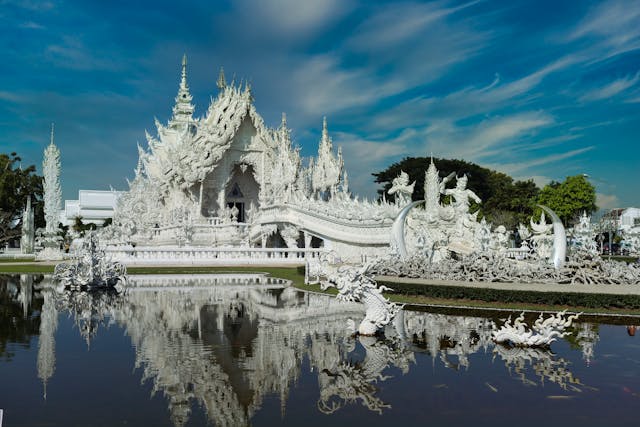
This temple has become a major attraction thanks to its unique art and structure. The blend of Buddhist heritage and contemporary artistic vision offers a different experience from other sites in Thailand. The visit is accompanied by a symbolic path, from the access bridge to the gate of paradise, which captivates travelers seeking meaning.
The affordable entrance fee, 100 baht for foreigners, allows broad access to this masterpiece. Free entry for Thais strengthens its local roots and encourages the discovery of this heritage. Donations are limited to preserve the independence of the structure and ensure an artistic vision free from any influence.
Located near the city of Chiang Rai, the site is easily accessible from hotels in the region, favoring a day of cultural and artistic discovery. This journey attracts both architecture enthusiasts and curious visitors eager to understand Buddhist symbolism.
How to organize an unforgettable visit to the White Temple of Wat Rong Khun?
To make the most of the temple, start the day with an early arrival to avoid crowds. The visit begins with the bridge over the lake, then the discovery of the ubosot and its original frescoes on the walls. The adjoining art gallery allows a deeper understanding of the work of artist Chalermchai.
Plan a stop at a hotel in Chiang Rai to enjoy the region and explore other cultural sites. The local heritage offers many complementary attractions, enriching the trip. The entrance fee and rules on donations guarantee an authentic and accessible experience.
Respect the dress code and on-site instructions to preserve the serenity of the place. The structure welcomes all visitors in a spirit of discovery and sharing around art, Buddhism, and the unique decoration of mosaics and wall frescoes.
Practical tips for organizing your visit
- Day: Early arrival recommended
- Hotel: Book in Chiang Rai
- Price: 100 baht for foreigners
- Visit: Respect site rules
- Structure: Explore the art gallery
During the restoration of the temple after the 2014 earthquake, Chalermchai promised to continue the reconstruction until 2070 to ensure the preservation of this extraordinary cultural and artistic heritage.
Quiz on the White Temple of Chiang Rai
What is the main color of the Wat Rong Khun temple?
Who designed the White Temple of Chiang Rai?
Which symbolic element marks the transition to wisdom in the temple?
What material is mainly used for the temple’s structure?
Natural stone
Which decorative elements adorn the roof edges?
What little-known aspects enrich the discovery of the White Temple in Thailand?
The White Temple is not limited to its exterior appearance. Several discreet spaces, such as symbolic gardens and annex pavilions, offer an immersion into Buddhist spirituality and artistic reflection. Every detail of the exterior decoration, from floral stucco motifs to fantastic creatures, reflects the artist’s unique vision and invites a careful exploration of every corner of the structure.
The sensory experience continues with the play of light on the mirror mosaic, which transforms the building throughout the day. The reflections change according to the weather, revealing new perspectives with each visit. This visual dynamism, combined with the diversity of works displayed in the gallery, is a rarely mentioned asset during a trip to Chiang Rai.
The symbolic gardens and their role in the visit
The gardens surrounding the temple are designed to encourage meditation and contemplation. Sculptures, ponds, and paths wind among the trees, creating a route where each decorative element carries strong symbolism related to the purification of the mind. This peaceful atmosphere complements the experience of the main building.
The art gallery and temporary exhibitions
The site’s gallery exhibits various works by Chalermchai and other Thai artists. Temporary exhibitions enrich the visit and allow visitors to follow the evolution of contemporary design in Thailand. This place serves as a meeting point between tradition and modernity, stimulating the curiosity of art lovers.
Annual Cultural and Religious Events
Buddhist ceremonies and artistic festivals mark the year around the temple. These events offer the opportunity to discover local rituals, traditional music, and performances related to the heritage. Participating in these moments enhances the understanding of the symbolism and the role of the site in the city of Chiang Rai.
Innovations in Construction and Restoration
The construction of the white building incorporates innovative techniques, notably the use of modern materials to strengthen the durability of the structure. After the earthquake, specific restoration methods were applied to preserve the integrity of the heritage, while respecting the artist’s vision.
- Symbolic gardens promoting meditation
- Temporary exhibitions in the art gallery
- Annual Buddhist ceremonies and festivals
- Innovative restoration techniques
- Light plays on the mirror mosaic
Why Does Thailand’s White Temple Attract So Much Interest from Curious Travelers?
This temple fascinates by the fusion between contemporary art and spiritual heritage, offering an immersive experience with every visit to Chiang Rai. The unique design, the richness of symbolism, and the diversity of spaces, from the main building to the gardens, captivate all those seeking a unique cultural and sensory journey in Thailand. This place invites reflection on the role of spirituality in modern society, while admiring an exceptional structure.
Frequently Asked Questions for an Enriched Visit to the White Temple of Wat Rong Khun
Does the White Temple offer activities for families and children?
You can discover spaces designed to awaken the curiosity of the youngest, notably thanks to the symbolic gardens and artistic exhibitions accessible to all ages. Children marvel at the sculptures, light plays, and the diversity of fantastic creatures while enjoying a peaceful atmosphere conducive to learning about Thai culture.
Are there specific times of day when the White Temple offers a different visual experience?
The reflections on the mirror mosaic transform the appearance of the building depending on the morning, afternoon, or twilight light. Arriving early or late in the day allows you to observe unprecedented nuances on the white reliefs, offering a new and captivating dimension to the visit each time.
If you wish to continue discovering the wonders of Thailand after exploring the fascinating White Temple Wat Rong Khun in Chiang Rai, a masterpiece of unique Buddhist art and architecture, I invite you to consult this guide dedicated to the best diving destinations in Thailand to enrich your trip with unforgettable underwater experiences.
Related posts:
 Blablacar carpooling and bus platform for an economical and secure trip in Europe
 Skyscanner the flight comparison platform for economical and flexible travel booking
 What to do in Bastia for an authentic experience between heritage, beach, and water activities?
 Housetrip the vacation rental platform to book safely worldwide