In December 2007, Indiana University announced it had identified the wreck of the Quedagh Merchant, the ship abandoned by the pirate William Kidd in 1699. It lies less than 3 meters deep, about twenty meters from the coast of Catalina Island, southeast of the Dominican Republic.
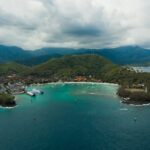
This detail says a lot about diving in the country. The most documented sites are far from the hotels of Punta Cana, further south, between Bayahibe, Catalina, and the Del Este National Park.
Our old page touted “crystal-clear” waters, 30-meter visibility, and prices down to the last cent, without dates or sources. We have redone everything with a simple grid: level, current, season, supervision, and fallback plan.
Punta Cana or Bayahibe: where to dive in the Dominican Republic?
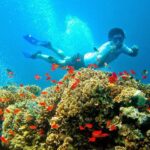
Punta Cana and Bávaro are mainly hotel bases. The reefs close to the beaches are suitable for snorkeling and beginner dives, but the most cited wrecks and protected areas are found around Bayahibe, Catalina Island, and Del Este National Park. Many “diving” trips sold in Punta Cana therefore depart by bus towards the south.
This journey changes your day. An excursion announced from your hotel in Bávaro may include a long road transfer, then an hour by boat, then two consecutive dives before returning late afternoon. Ask for the total duration. And also ask how much time you actually spend in the water during the day.
The transfer weighs as much as the site.
On booking platforms, listings often mix snorkeling, catamaran, open bar, and scuba diving in the same product. Our old version included these listings with their star ratings and a minimum price of 43.36 euros. These figures change weekly. We have removed them. If you only want to watch fish from the surface, our article on good reasons to start snorkeling will help you choose without paying for an unnecessary scuba outing.
Which wrecks and protected areas around Bayahibe and Catalina?
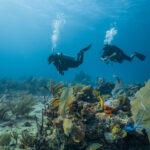
Three landmarks are repeatedly mentioned in dated sources. The St George, a 72-meter cargo ship sunk in June 1999 about 800 meters from Bayahibe beach. The Quedagh Merchant of William Kidd, in front of Catalina. And the Guadalupe archaeological reserve, off Bayahibe, where two Spanish galleons lost in 1724 rest.
According to Divernet (November 2024), the St George measures 72 meters and lies at 40 meters depth, with a top accessible around 15 meters. These depths are a general framework, not a target. The top of the wreck remains more accessible, while the hull and sand require deep qualification and proper air management. The center sets the day’s depth according to your certification and conditions. Keep a surface marker buoy if you ascend in open water far from the boat.
For the galleons, Smithsonian magazine (December 2019) recalls that Indiana University created several “living sea museums” with the Dominican government.
The principle is to leave cannons and anchors in place on the seabed and open them to divers rather than removing them from the water. The Guadalupe one, created in 2004, protects the remains of the Guadalupe and the Tolosa. However, a living museum remains a protected archaeological site. Nothing is touched or taken up, just like on any reef (we explain why in our article on reasons to never touch marine life). Precise access rules, mandatory guide or not, are not published with dates. Ask the center.
Finally, Del Este National Park covers Saona Island and the nearby coastline. A file from the Caribbean network CaMPAM indicates a creation in 1975 and 808 km² including 388 km² at sea, without update date.
What level, current, and supervision to expect?
No Dominican authority publishes a minimum level per site, nor dated current readings. The level therefore depends on the center, the day’s site, and sea conditions. For the rest, it is impossible to decide from here. The grid below separates what we know, with source and year, from what you must ask the center.
| Criterion | What is known (dated sources) | What you should ask |
|---|---|---|
| Level | No official level per site. St George: bottom at 40 m, top around 15 m (Divernet, 2024) | Maximum depth allowed for your certification, dive group, guide in the water |
| Current | No official dated data | Drift dive or anchored, instructions if the current picks up |
| Season | Hurricanes from June 1 to November 30, peak mid-August to mid-October (NOAA) | Cancellation and rescheduling policy in case of alert |
| Supervision | Protected living museums (Smithsonian, 2019) | Guide certification, oxygen and radio on board, guide/diver ratio |
| Fallback plan | Hyperbaric chamber not confirmed by an official dated source | Evacuation procedure, nearest hospital and chamber |
But visibility says nothing about safety.
Clear water can hide a current that takes you away from the boat, and rough seas on the surface complicate diver recovery even in good weather. The briefing must therefore address the current, ascent, and pickup point. If the guide only names the fish, ask again. A beginner has the right to ask these questions, and no one should blame them. Note the answers.
For a first trip, a shallow coral site near Bayahibe or Catalina, supervised by a guide in the water, offers more margin than a wreck at 40 meters chained after a morning transfer. The center remains the sole judge of what suits you on the day.
When to go: hurricane season and weather
According to the NOAA National Hurricane Center, the Atlantic hurricane season runs from June 1 to November 30, with a peak on September 10 and most activity between mid-August and mid-October. France Diplomacy and the Spanish Ministry of Foreign Affairs give the same window for the Dominican Republic.
Our old page promised 30 meters of visibility and 27 °C water from December to April. We found no official dated measurement to confirm these figures. They have disappeared. The dry winter season attracts more people, it’s known, but daily visibility depends on wind, swell, and recent rains. Thus, the same week can offer flat seas on Monday and a canceled outing on Thursday.
During hurricane season, you can dive, provided you allow flexibility.
Keep at least one buffer day before your return flight and check the center’s rescheduling policy. A forecasted hurricane closes ports, and flooded roads lengthen transfers to Bayahibe. Official forecasts count more than the brochure’s turquoise photo, and you can find them daily on the National Hurricane Center website or from the Dominican meteorological office.
Formalities, safety, and hyperbaric chamber: what to check before leaving?
Before entering or leaving the country, you must fill out the electronic e-Ticket form on the portal eticket.migracion.gob.do. The General Directorate of Migration presents it as mandatory and free. France Diplomacy confirms this in its updated sheet on September 15, 2026, with a 30-day tourist stay visa-free for French nationals.
These rules change. Check them on the official source a few days before departure, as a missing QR code at the airport can cost you time at the counter. Yet, French diplomats worry mostly about something else. Their safety sheet requests “the utmost caution” in the Bávaro and Punta Cana area, especially around the many all-inclusive hotels, due to crime targeting tourists. Don’t leave anything valuable on the excursion bus.
The hyperbaric chamber is the point we could not confirm.
A 2003 testimony located the nearest chamber in Santo Domingo, at least an hour and a half drive from Bayahibe. This text is over twenty years old. No recent official source today specifies the address, hours, or availability of a chamber for divers. Ask the center where they evacuate a decompression accident, and verify that your insurance covers diving and repatriation. Also keep oxygen on board among your questions. As in Roatán in the Bay Islands or Bonaire, the distance to the chamber is part of the destination choice.
FAQ
Can you dive directly from Punta Cana?
Yes, centers offer trips to the Bávaro and Punta Cana reefs, often for beginner dives and snorkeling. The most documented wrecks and protected areas are rather towards Bayahibe and Catalina. Ask about the transfer duration before booking.
What is the best time to dive in the Dominican Republic?
The hurricane season runs from June 1 to November 30, with a peak between mid-August and mid-October according to NOAA. Outside this window, the hurricane risk decreases, but daytime visibility still depends on wind and swell. Allow a buffer day before your flight.
Is the e-Ticket form mandatory?
Yes, the Dominican General Directorate of Migration presents it as mandatory and free, both on entry and exit. France Diplomacy reminds this in its fact sheet updated on September 15, 2026. Check the rule on the official portal before your departure.
Is there a hyperbaric chamber near Bayahibe or Punta Cana?
No recent official source was found confirming the location and availability of a chamber. A 2003 testimony placed it in Santo Domingo. Ask the center about its evacuation procedure and check your insurance.
Sources
- Tropical Cyclone Climatology (NOAA National Hurricane Center, consulted in 2026)
- Captain Kidd’s Shipwreck Of 1699 Discovered (ScienceDaily, according to Indiana University, 2007)
{“@context”:”https://schema.org”,”@type”:”FAQPage”,”mainEntity”:[{“@type”:”Question”,”name”:”Peut-on plonger directement depuis Punta Cana ?”,”acceptedAnswer”:{“@type”:”Answer”,”text”:”Oui, des centres proposent des sorties sur les récifs de Bávaro et Punta Cana, souvent pour les baptêmes et le snorkeling. Les épaves et les aires protégées les plus documentées se trouvent plutôt vers Bayahibe et Catalina. Demande la durée du transfert avant de réserver.”}},{“@type”:”Question”,”name”:”Quelle est la meilleure période pour plonger en République dominicaine ?”,”acceptedAnswer”:{“@type”:”Answer”,”text”:”La saison cyclonique court du 1er juin au 30 novembre, avec un pic entre mi-août et mi-octobre selon la NOAA. En dehors de cette fenêtre, le risque d’ouragan baisse, mais la visibilité du jour dépend toujours du vent et de la houle. Prévois une journée tampon avant ton vol.”}},{“@type”:”Question”,”name”:”Le formulaire e-Ticket est-il obligatoire ?”,”acceptedAnswer”:{“@type”:”Answer”,”text”:”Oui, la Direction générale des migrations dominicaine le présente comme obligatoire et gratuit, à l’entrée comme à la sortie. France Diplomatie le rappelle dans sa fiche mise à jour le 15 septembre 2026. Vérifie la règle sur le portail officiel avant ton départ.”}},{“@type”:”Question”,”name”:”Y a-t-il un caisson hyperbare près de Bayahibe ou Punta Cana ?”,”acceptedAnswer”:{“@type”:”Answer”,”text”:”On n’a trouvé aucune source officielle récente qui confirme l’emplacement et la disponibilité d’un caisson. Un témoignage de 2003 le situait à Saint-Domingue. Demande au centre sa procédure d’évacuation et vérifie ton assurance.”}}]}