Meeting the manta rays in Hanifaru Bay is a rare experience, marked by the magic of nature and the power of marine encounters. If you feel the call of the vast underwater spaces and the thirst for authenticity, you know how frustrating it can be to find a preserved, accessible, and environmentally respectful site. Spectacular gatherings, biodiversity protection, and restricted access make this site a unique place where every moment counts. Faced with tourism pressure, how can we combine ecosystem respect, responsible immersion, and unforgettable moments? I propose to discuss the site’s particularities, the steps to organize your stay, the rules to follow, and the choices of suitable accommodations to turn this dream into reality.
Why does Hanifaru Bay attract so many diving and marine biodiversity enthusiasts?
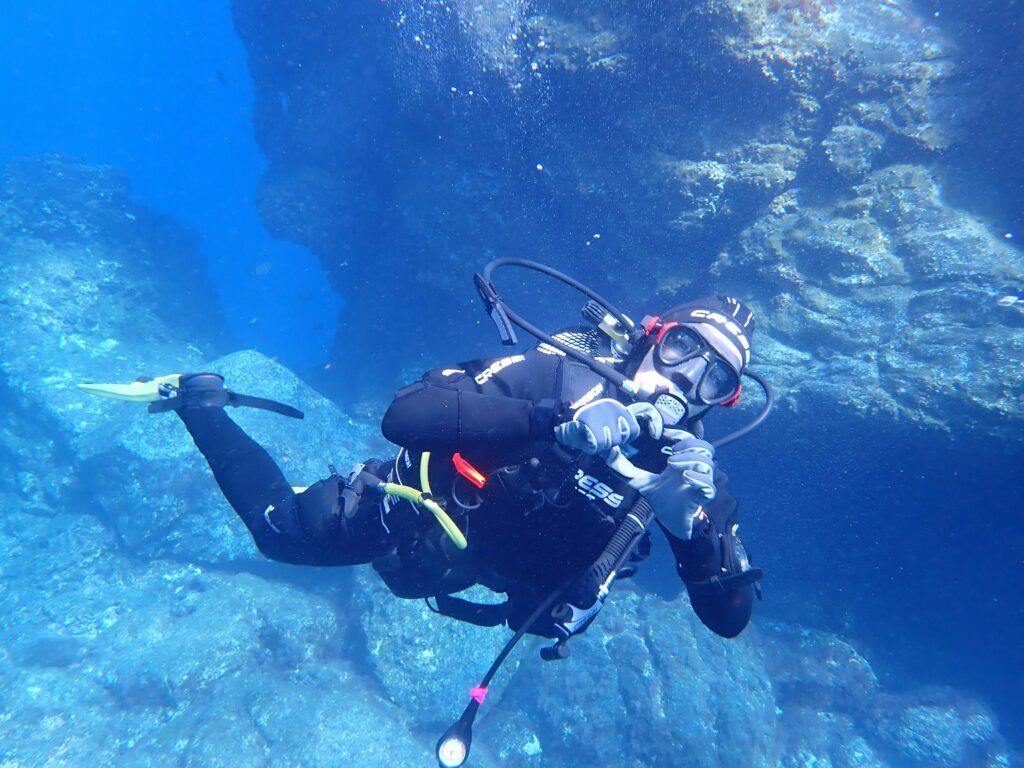
The biodiversity of Hanifaru Bay is a global reference for diving in the Maldives. The abundance of manta rays and the rarity of this natural phenomenon explain the enthusiasm of divers and underwater exploration enthusiasts. The Baa Atoll, listed as a UNESCO World Heritage site, protects a unique natural site in the world.
Each year, the migration of mantas transforms the bay into a fascinating spectacle. Ocean currents concentrate plankton, thus attracting manta rays, whale sharks, and many fish. This collective filtration and feeding phenomenon mainly occurs between May and November.
The conservation and protection of this ecosystem are ensured by strict measures. Only five boats and eighty people per day can access the bay, guaranteeing the preservation of marine fauna and flora.
The major assets of Hanifaru Bay
- Worldwide concentration of manta rays
- UNESCO natural heritage and protected area
- Spectacular observations of whale sharks
- Life cycle of mantas observable on site
- Supervision by certified guides and respect for the habitat
How to organize a dive or snorkeling session with manta rays in Hanifaru?
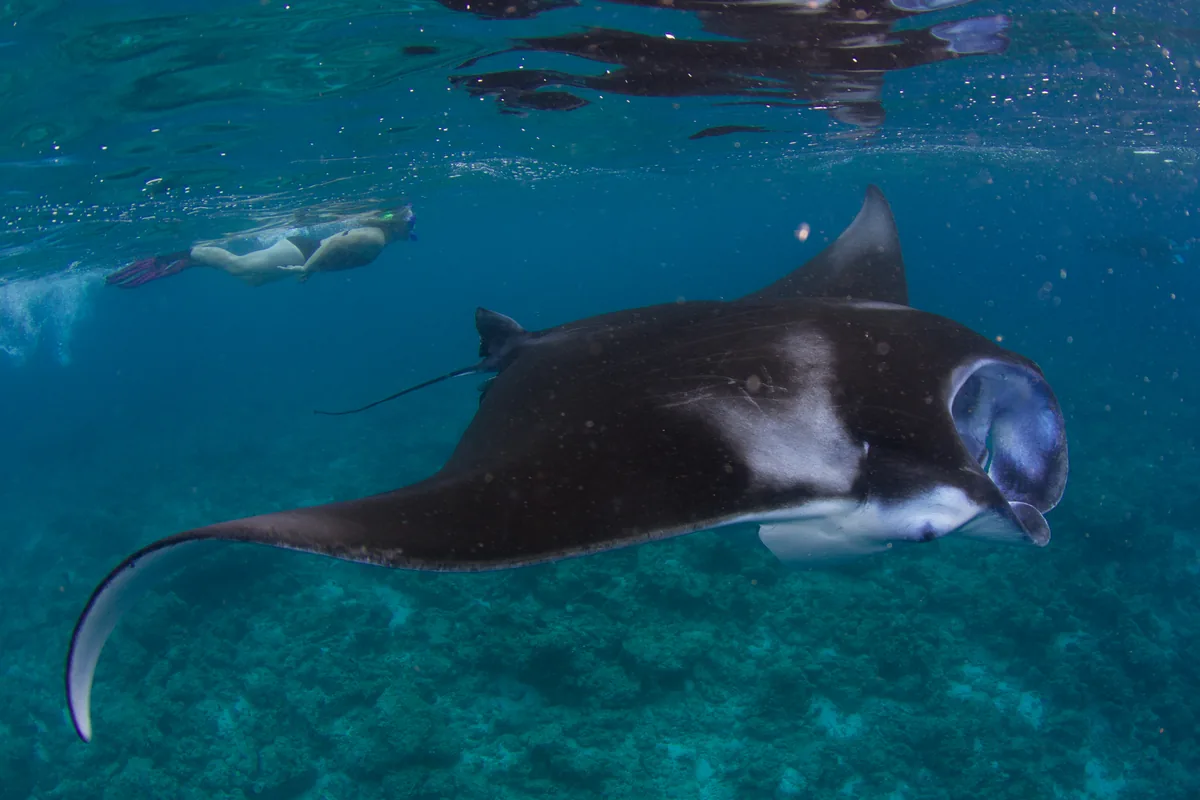
Snorkeling with manta rays in Hanifaru requires rigorous organization. The protected area imposes strict rules to ensure respect for the habitat and the life cycle of the species present. Booking a certified guide is mandatory for any exploration of the bay.
Access to the bay is mainly by seaplane from Malé, in thirty-five minutes, or by domestic flight to Dharavandhoo, just two kilometers from the diving site. Many hotels and guesthouses offer guided outings, suitable for all levels of divers.
The entrance fee, which is allocated to conservation, is about twenty-eight euros for international visitors. Participants must maintain a safety distance of three meters from the head and four meters from the tail of the mantas, never touching or disturbing these animals.
Steps for a successful experience
- Choose the optimal period (May to November)
- Book a certified local guide
- Equip yourself for snorkeling only
- Respect the distances and protection rules
- Plan access from Malé or Dharavandhoo
What are the advantages and particularities of snorkeling compared to scuba diving at Hanifaru?
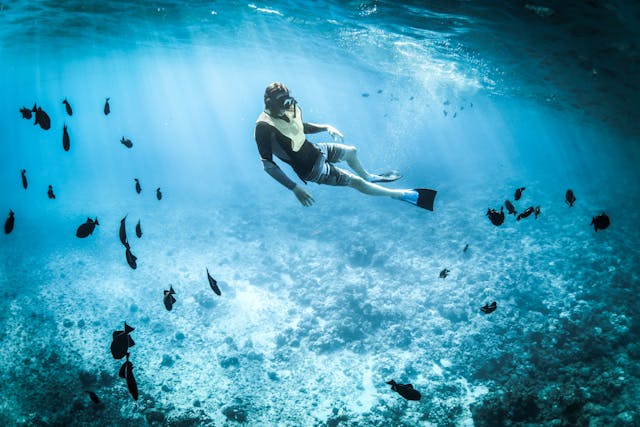
Snorkeling is preferred at Hanifaru due to the fragility of the ecosystem and regulations that prohibit scuba diving in the bay. This approach promotes discreet and respectful observation of manta rays and whale sharks.
The plankton filtration by the mantas takes place at the surface, making snorkeling ideal for admiring their natural behavior. Visitors thus enjoy a panoramic view of the marine fauna and flora without disturbing the natural site.
This method also has the advantage of being accessible to all, without the need for advanced certification, allowing for an immersive and authentic experience in an exceptional snorkeling site.
Which accommodations and services should be prioritized to fully enjoy the experience at Hanifaru?
Travelers have a wide choice of accommodations, ranging from luxury hotels to guesthouses on the local islands. Establishments such as Amilla Maldives Resort & Residences, Milaidhoo, and Four Seasons Landaa Giraavaru guarantee quick access to the diving site and personalized support for each adventure.
Local islands like Dharavandhoo, Maalhos, and Eydhafushi offer more affordable options, allowing visitors to book guides for explorations and snorkeling sessions while respecting the protected area. Hotels and guesthouses commit to applying conservation protocols and collaborating with marine protection organizations.
Services offered include booking certified guides, lending suitable equipment, and participating in conservation programs such as the symbolic adoption of a manta ray through Manta Trust.
Main accommodations and services to prioritize
- Luxury hotels: direct access and high-end services
- Guesthouses: local immersion and affordable rates
- Certified guides: safety and respect for rules
- Conservation Programs: ecological commitment
In 2022, more than two hundred manta rays were simultaneously recorded during a single snorkeling session at Hanifaru, a world record for this exceptional snorkeling site.
Quiz on Diving in the Maldives with Manta Rays
What is the main food of manta rays in Hanifaru Bay?
What is the best time to observe manta rays at Hanifaru?
Which activity is prohibited in Hanifaru Bay to preserve the ecosystem?
What is the maximum number of people allowed to visit the bay each day?
How do manta rays interact with their environment in the Maldives?
Manta rays live in a complex ecosystem where every interaction plays a role in preserving biodiversity. Their plankton-filtering behavior directly influences water quality and the distribution of fish around the atolls. These marine giants move in groups during seasonal migration, creating spectacular gatherings that promote observation and scientific exploration.
The life cycle of manta rays closely depends on the availability of plankton and the stability of their habitat. Protecting certain areas, such as Hanifaru, ensures the continuity of these cycles and the presence of these iconic animals. Divers can thus witness rare scenes of collective feeding and social behavior, enriching the underwater exploration experience.
Interactions between manta rays and other marine species
The Maldives’ fauna includes many species that share the natural site with manta rays. Whale sharks, turtles, and schools of fish coexist in remarkable harmony. These interactions promote diversity and ecosystem balance, offering visitors unique observation scenes.
The role of currents in the migration and gathering of manta rays
Marine currents carry large amounts of plankton, the main food of manta rays. This natural phenomenon conditions their migration and presence at certain diving sites. Understanding these dynamics helps anticipate peak periods and optimize snorkeling outings.
Local conservation initiatives
Conservation programs involve local communities and travelers in the protection of manta rays. These initiatives include awareness-raising, scientific monitoring, and sustainable management of snorkeling sites. The results contribute to habitat preservation and the enhancement of natural heritage.
The importance of education and awareness for divers
Training for divers and local guides promotes respect for protection rules and the dissemination of good practices. Workshops and briefings precede each exploration to ensure responsible observation and to limit disturbance to marine wildlife.
- Observe manta ray gatherings at sunrise
- Participate in a supervised scientific monitoring session
- Discover alternative diving sites around Baa
- Adopt a manta ray through a conservation program
- Attend a conference on manta migration
Why choose the Maldives for a unique experience with manta rays?
The Maldives offers an exceptional setting to live an immersive experience with manta rays. The balance between ecosystem protection and controlled access to diving sites guarantees privileged moments of observation and diving. Each visitor leaves with the feeling of having contributed to the conservation of an exceptional natural site, while discovering the richness of the archipelago’s marine fauna and flora.
Practical FAQ for an authentic adventure with manta rays at Hanifaru
Can you photograph manta rays during a snorkeling session at Hanifaru?
Underwater photography is allowed, provided that safety distances are strictly respected and no flash is used. The mantas naturally move in shallow waters, which allows for spectacular images without disturbing their behavior. Prefer compact equipment and avoid sudden movements to preserve the tranquility of the site.
How to adapt to the high attendance during manta season without spoiling the experience?
Regulations limit the number of visitors per day and distribute groups across different time slots. Favor sessions early in the morning or late in the afternoon to enjoy a calmer atmosphere. Local guides ensure the smooth organization of entries into the bay and the harmonious rotation of groups, allowing for a privileged moment at the heart of the manta ballet.
Are there complementary activities to snorkeling on the Baa Atoll?
The Baa Atoll offers many alternatives such as visiting traditional villages, dolphin-watching cruises, or introductory workshops on marine biology. Discovering preserved coral reefs, accessible by kayak or paddleboard, complements the experience while promoting a cultural and natural immersion off the beaten path.
If you wish to enrich your underwater experiences after exploring the majestic encounter with manta rays in Hanifaru Bay, Baa Atoll, a UNESCO protected natural site, you can also discover the best snorkeling destinations in the world to broaden your aquatic horizons across the planet.