According to the Cook Islands Tourism Office, the water temperature hovers around 26 °C from June to August and rises to 28 or 29 °C from February to April. Our old page stated 27 to 28 °C year-round.
The difference is small. Yet it sums up the flaw of old guides: you round once, then everyone copies the rounded figure.
So we revised the article, removed what we couldn’t verify, and added a chart to compare offers before booking.
Where do you dive in Rarotonga and the Cook Islands?
In Rarotonga, you have two very different terrains. The lagoon, shallow and sheltered by the coral reef, is mainly suited for snorkeling. Most scuba dives take place on the other side of the reef, on the outer slope, with a boat trip. Aitutaki, further north, is mainly known for its large lagoon.
Between the two terrains are the passes, channels through which the lagoon empties into the open sea and where currents can be much stronger than the surface suggests.
Our old version listed site names without saying how to get there or for what level. We removed those that no dated public source described. For the lagoon, rather inquire about ra’ui zones, traditional prohibitions on harvesting or access declared on certain coastal areas. But a protected zone tells you nothing about the tide, wind, or outgoing current on the day you go, and it is often there that unpleasant surprises happen with fins, mask, and snorkel. Ask locally.
In short, the reef dictates the organization.
If someone in the group does not dive, our selection of best snorkeling destinations compares other lagoons in the Pacific and beyond.
Marae Moana: what does the marine sanctuary change for you?
Marae Moana is the marine park of the Cook Islands, created by a law in July 2017. According to its official website, it covers the entire exclusive economic zone of the country, about 1.9 million km². It has multiple uses. Fishing is not prohibited everywhere, and the law divides the space into zones.
The text creates marine protected areas up to 50 nautical miles around the islands. In these areas, large-scale commercial fishing and seabed mineral exploitation are forbidden. It also provides for marine spatial planning up to 12 miles from the coasts. And the law lists recreation, education, and cultural uses among activities compatible with protection. The page presenting the law does not detail any rules specific to visitors.
A sanctuary more than three times the size of mainland France does not guarantee an intact reef in front of your hotel.
The rules that concern you daily play out near the shore, with the ra’ui and center instructions. The basic gestures remain yours. Do not touch anything, for the reasons detailed in why you should never touch marine life, and choose your protection knowing what research says about sunscreen and the seabed.
What season to dive in the Cook Islands and see humpback whales?
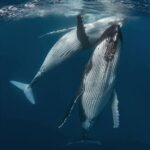
The tourism office places the dry season from April to November and the wet season from November to March. The water drops to around 26 °C from June to August. It rises to 28 or 29 °C from February to April. Humpback whales are often visible from the shore of Rarotonga from July to October.
They come from Antarctica to mate, give birth, and rest in warmer waters, and the same page reminds that the entire exclusive economic zone of the country has been declared a whale sanctuary. However, often visible does not mean guaranteed. A season can be poor. No outing can promise you an encounter. If an operator offers to swim with them, ask in writing what approach distances they respect and who decides to cancel.
We addressed the same question for swimming with orcas in Norway: the boat’s behavior matters more than the brochure photo.
Our old page also announced visibility “up to 30 meters” from May to October, without source or date, so we removed the figure. Clear water says nothing about the current. The wet season finally requires some leeway in your schedule, as it is the season of showers and bad weather episodes (we won’t give you a frequency, impossible to determine from here).
Can you see the Maitai wreck in Rarotonga?
Yes, but more by swimming than diving. The RMS Maitai, a mail and cargo ship built in 1892, sank on December 25, 1916, just outside the port of Avarua. According to the tourism office, the wreck lies just under the break zone. It is now part of the reef.
The same source describes a swim of about 800 meters, or 10 to 20 minutes at low tide in a group. It is not recommended for swimmers who are not comfortable. High tide and rough seas should be avoided. The current is often quite strong in the pass, and depending on the swell, waves wash over the boiler, the part that still protrudes. Fins are strongly recommended.
Thus, the beautiful water above the wreck says nothing about the current waiting for you on the way back.
For a diver, the interest lies mainly in the history of the place and its reef fauna, which we cannot promise you, and the real criterion remains the weather of the day. If you go, go with someone who knows the pass. Also inform someone who stayed on land.
For what level? The checklist to fill before booking
No page can say from a distance if a site suits you. The table below lists the five criteria we apply to each destination: level, current, season, supervision, and fallback plan. It notes what we know, what remains to be asked, and what we cannot decide from here.
| Area | Level | Current | Season | Supervision | Fallback plan |
|---|---|---|---|---|---|
| Rarotonga Lagoon (snorkeling) | accessible on surface, comfort in water to be assessed | low in the lagoon, stronger near the passes at ebb tide | water from 26 °C (June-August) to 28-29 °C (February-April) | autonomous or guided outing, ra’ui instructions to be asked | another lagoon area sheltered from the wind |
| Outer reef slope (scuba diving) | required level to be asked site by site | impossible to decide from here, to be asked at briefing | dry season from April to November, whales from July to October | center on land, guide/diver ratio to be requested in writing | more sheltered site depending on wind, or no diving day |
| Maitai wreck (swimming) | not recommended for swimmers who are not comfortable | often quite strong in the pass | low tide, calm sea | in group, with someone who knows the pass | give up if the swell breaks over the boiler |
However, the checklist is useless if the answers remain vague.
On its official website, consulted on October 3, 2026, Adventure Cook Islands presents itself as a PADI, SSI, SDI, and TDI center located in Rarotonga, with outings for certified divers, refresher dives, introductory dives, and technical training. No prices are displayed. Our old page cited a price in British pounds, without date or link, which we therefore removed without replacement. Ask the same questions to this center as to any other. Is there oxygen on board, and someone trained to administer it? Where is the nearest hyperbaric chamber, and how long does it take to reach it?
Your certification card says what you have learned. It does not say how you handle an outing in a pass after six months without diving, and only the professional on site can judge your comfort on the day. Plan a buffer day without diving during your stay. It costs you one hotel night. Without it, you risk diving in bad weather so as not to lose what you paid for.
Would you book it like that?
FAQ
What is the best time to dive in the Cook Islands?
The tourism office places the dry season from April to November. The water varies from about 26 °C from June to August to 28 or 29 °C from February to April. The best month therefore depends on what you are looking for: water warmth, drier weather, or whale season.
When to see humpback whales in Rarotonga?
According to the tourism office, they are often visible from the shore of Rarotonga from July to October. No outing can guarantee an encounter. If you want to swim with them, ask the operator for their approach rules in writing.
What is the Marae Moana Marine Park?
It is the Cook Islands’ multi-use marine park, created by a 2017 law and extended to the entire exclusive economic zone, covering 1.9 million km². It includes protected areas up to 50 nautical miles around the islands, with no large-scale commercial fishing or seabed mining.
Is a particular level required to dive in Rarotonga?
The required level depends on the site and the center, and it cannot be decided from here. Most dives take place outside the reef, near passes where the current can be strong. Ask for the required level site by site and let the local professional judge your comfort.
Sources
- What does the Marae Moana Act 2017 say? (Marae Moana, Cook Islands Government, 2017)
- Weather & Seasons (Cook Islands Tourism Corporation, accessed in 2026)
{“@context”:”https://schema.org”,”@type”:”FAQPage”,”mainEntity”:[{“@type”:”Question”,”name”:”Quelle est la meilleure période pour plonger aux îles Cook ?”,”acceptedAnswer”:{“@type”:”Answer”,”text”:”L’office du tourisme situe la saison sèche d’avril à novembre. L’eau varie d’environ 26 °C de juin à août à 28 ou 29 °C de février à avril. Le bon mois dépend donc de ce que tu cherches : chaleur de l’eau, météo plus sèche ou saison des baleines.”}},{“@type”:”Question”,”name”:”Quand voir les baleines à bosse à Rarotonga ?”,”acceptedAnswer”:{“@type”:”Answer”,”text”:”Selon l’office du tourisme, elles sont souvent visibles depuis le rivage de Rarotonga de juillet à octobre. Aucune sortie ne peut garantir une rencontre. Si tu veux nager avec elles, demande à l’opérateur ses règles d’approche par écrit.”}},{“@type”:”Question”,”name”:”Qu’est-ce que le parc marin Marae Moana ?”,”acceptedAnswer”:{“@type”:”Answer”,”text”:”C’est le parc marin à usages multiples des îles Cook, créé par une loi de 2017 et étendu à toute la zone économique exclusive, soit 1,9 million de km². Il comprend des aires protégées jusqu’à 50 milles nautiques autour des îles, sans pêche commerciale à grande échelle ni exploitation minière des fonds.”}},{“@type”:”Question”,”name”:”Faut-il un niveau particulier pour plonger à Rarotonga ?”,”acceptedAnswer”:{“@type”:”Answer”,”text”:”Le niveau exigé dépend du site et du centre, et on ne peut pas le trancher d’ici. La plupart des plongées se font à l’extérieur du récif, près de passes où le courant peut être fort. Demande le niveau requis site par site et laisse le professionnel sur place juger ton aisance.”}}]}