Travel to the heart of marine legends and feel the power of Neptune, an emblematic figure who shapes the identity of port cities and fuels the dreams of those who live to the rhythm of the waves. When walking along the docks or admiring a monumental fountain, the imprint of this deity awakens a sense of wonder, but also respect for the power of the oceans.
Behind every statue, every ritual, lies a story where man tries to understand and tame the mysteries of the sea. Your view of the ancient and maritime heritage then transforms, oscillating between fascination and questioning: how has Neptune crossed the centuries to influence our relationship with the sea and culture? This story invites you to follow the thread of this influence, from Antiquity to the present day, revealing the symbols, rituals, and places that perpetuate the memory of the Roman god of waters.
How did Neptune become a major figure in Roman mythology and the maritime imagination?
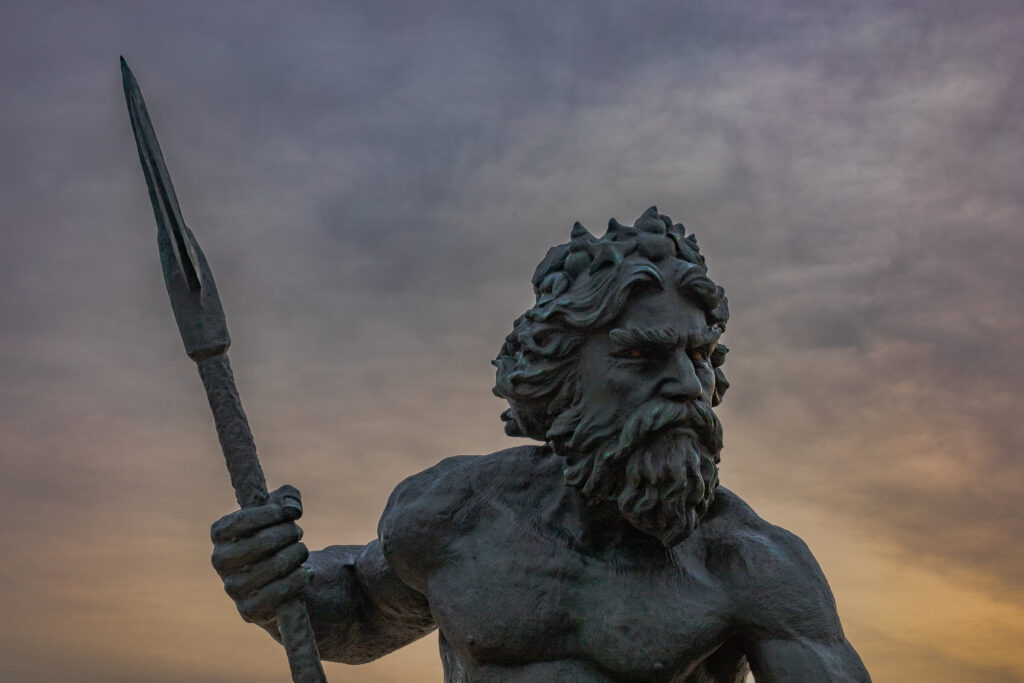
Roman mythology saw Neptune emerge as a central deity of waters and oceans. His Latin name, Neptunus, evokes the power and mastery of fresh waters, embodying the protection of fishermen, boatmen, and horses. The Romans attributed to him control over springs and marine expanses, gradually merging his cult with that of Poseidon, the Greek god of the sea.
Neptune’s influence extends far beyond religion, touching culture and the arts. Legends surrounding Neptune, such as that of the overflow of Lake Albano, leave a mark on minds and inspire many artistic representations. His presence in rituals, festivals, and processions anchors his cult in the daily life of the Romans, while his attributes – the trident, the chariot drawn by hippocamps or horses – become iconic symbols of the sea and ocean.
Table of Neptune’s major attributes and symbols
| Attribute | Meaning | Associated Animal | Artistic Representation |
|---|---|---|---|
| Trident | Power over waters | Sculpture, painting | |
| Chariot | Mastery of the seas | Hippocamp, horse | Mosaic, fresco |
| Thick beard | Strength and wisdom | Sculpture | |
| Hippocamp | Mythical animal | Hippocamp | Mosaic, painting |
| Dolphin | Guide of sailors | Dolphin | Sculpture, fountain |
| Bull | Strength and fertility | Bull | Mosaic |
| Ram | Protection | Ram | Painting |
| Fish | Marine life | Fish | Sculpture |
Main elements of Neptune’s figure
- Name: Neptunus, Roman god of the sea
- Deity: Master of fresh and salt waters
- Symbol: Trident, chariot, marine animals
- Cult: Festivals, temples, processions
- Representation: Beard, wavy hair, marine attributes
What are the distinctive attributes and symbols of Neptune in art and culture?
Representations of Neptune are distinguished by rich iconography. The trident, a three-pronged instrument, symbolizes domination over the waters, while his chariot pulled by hippocamps or horses evokes power over the sea. Roman artists draw from mythology to create sculptures, paintings, mosaics, and frescoes, often in temples or public monuments.
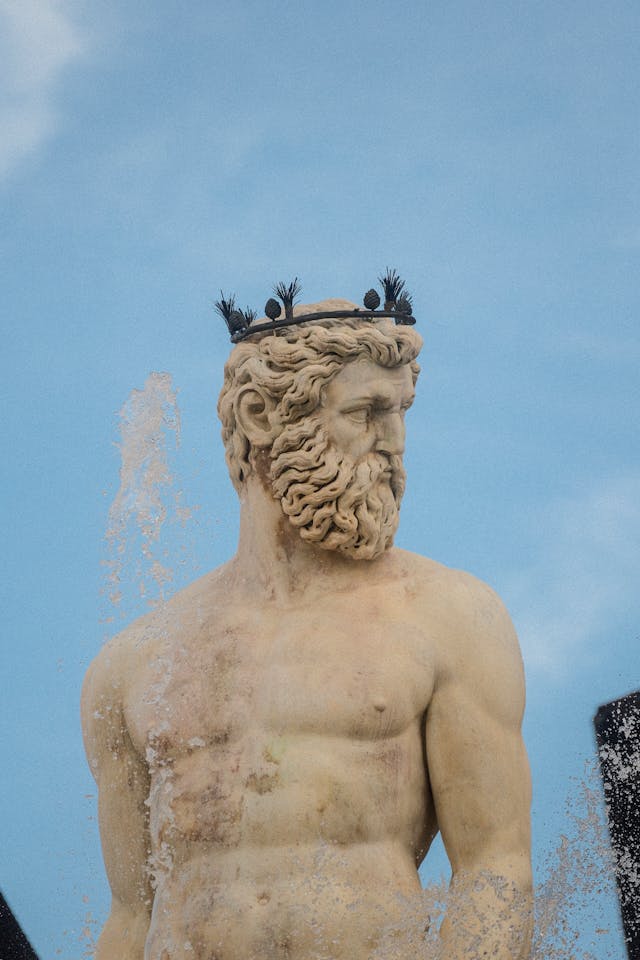
The animals that accompany Neptune – horses, hippocamps, dolphins, bulls, rams, fish – embody the diversity and richness of the ocean. These symbols transcend eras, inspiring artists from the Renaissance to modern sculptors, as evidenced by the Neptune fountain in Florence and the Neptune basin in Versailles.
How has the legend of Neptune transformed throughout Roman history?
The legend of Neptune evolves during the Punic Wars, a period when the Romans assimilate the Greek god Poseidon, thus expanding the deity’s domain from fresh water to the salt sea. This transformation is illustrated by the association with Salacia, goddess of the sea, and by the celebration of the Neptunalia festival, a key moment for rites related to the domestication of waters.
The processions and annual rituals, such as the construction of huts and the sacrifice of bulls, testify to the deep integration of Neptune’s cult in Roman society. These practices illustrate the legend of the overflow of Lake Albano and reinforce the perception of Neptune as the absolute master of both fresh and salt waters.
Main festivals and rituals related to Neptune
- Festival: Neptunalia on July 23
- Procession: Parade of priests and faithful
- Sacrifice: Offerings of bulls
- Construction: Huts for shade
- Games: Festive activities in public squares
Which places and monuments bear witness to the cult of Neptune through architecture?
The cult of Neptune is rooted in Roman architecture through the construction of temples on the Campus Martius, including those from 207 BC and 122 BC. The remains of these monuments recall the central place of the god in urban life. Other sites, such as the temple of Ostia or the Baths of Neptune, illustrate the strength of his influence on Roman society and culture.
Major works like the Neptune fountain in Madrid, the Neptune basin in Versailles, or the monumental sculpture in Florence perpetuate his image through the centuries. These architectural works testify to the fascination with the sea and the importance given to the deity in public spaces.
Why does Neptune still inspire modern culture, science, and marine imagination?
The mythology of Neptune feeds Western imagination, from astronomy to zoology. The planet Neptune, discovered in 1846, adopts the symbolism of the sea through its bluish color and its astral symbol, the trident. Its satellites bear names derived from mythology, and the Mediterranean posidonia recalls the god’s influence on marine fauna and flora.
In contemporary culture, the deity inspires ships, military operations, and modern buildings, such as the Neptune Tower in Courbevoie. The motto of the city of Nantes, “Favet Neptunus Eunti,” illustrates the lasting presence of Neptune in the collective imagination and the attachment to the sea and ocean.
During the Neptunalia festival in Rome, inhabitants erected huts made of green wood to protect themselves from the sun while celebrating the power of the god of waters.
To deepen the understanding of Neptune’s influence on maritime culture, it may be interesting to discover the top 10 Greek sea deities to compare the different mythological representations that have crossed the ages.
From Antiquity to the present day, the most impressive mythological creatures continue to nourish the marine imagination shaped by the figure of Neptune, the Roman god of the seas.
How does Neptune shape the identity of major maritime cities
Major port cities often adopt Neptune as a symbol of their connection to the sea. This appropriation is expressed through the erection of fountains, monuments, and sculptures bearing the deity’s likeness. In Genoa, Naples, or Marseille, the presence of Neptune in public squares recalls the strength of maritime influence on local history. The inhabitants regularly celebrate festivals and processions in his honor, thus perpetuating the tradition of Roman mythology in the urban space.
The coats of arms and mottos of many coastal cities incorporate elements of Neptune’s iconography, such as the trident or chariot. These references highlight the populations’ attachment to the sea and navigation. Monuments dedicated to Neptune become landmarks and gathering places during nautical or festive events. This heritage dimension strengthens the maritime identity of each city.
The representation of Neptune in urban architecture is also found in the naming of neighborhoods, streets, or harbor basins. These toponymic choices testify to the desire to preserve the memory of the god of waters and to recall his role in the prosperity of maritime activities. Visitors thus discover a living heritage, where the legend of Neptune is inscribed in the daily life of the inhabitants.
Examples of emblematic places linked to Neptune
| City | Monument or site | Distinctive element | Year of creation |
|---|---|---|---|
| Florence | Neptune Fountain | Monumental sculpture | 1575 |
| Madrid | Neptune Fountain | Trident and chariot | 1786 |
| Versailles | Neptune Basin | Water jets, marine statues | 1679 |
| Rome | Neptune Baths | Seahorse mosaic | 2nd century |
| Ostia | Neptune Temple | Ancient remains | 1st century |
The art of the fountain dedicated to Neptune
The fountain dedicated to Neptune occupies a major place in European urban architecture. These works combine sculpture and hydraulic engineering, evoking the deity’s mastery over waters. Artists compete in creativity to represent the trident, seahorses, and dolphins in spectacular scenes. These monuments become meeting places, spots for contemplation and celebration, embodying the maritime spirit of the cities.
The role of the trident in maritime traditions
Neptune’s trident inspires many traditions among sailors and fishermen. This symbol of power and protection adorns the prows of ships, the coats of arms of brotherhoods, and the flags of nautical societies. Boat christening ceremonies or equator crossing rituals often reference Neptune, creating a link between mythology and contemporary maritime rituals. This transmission values the memory of the elders and the continuity of sea-related practices.
- Discovery of iconic fountains
- Exploration of neighborhoods dedicated to Neptune
- Participation in a maritime procession
- Observation of ancient mosaics
- Study of urban coats of arms
Why does Neptune remain a universal symbol of the maritime imagination
The figure of Neptune spans centuries and cultures by embodying the strength, protection, and wealth of the waters. His image adapts to contemporary challenges, whether it is ocean preservation or inspiration for the arts and science. Monuments, festivals, and symbols related to Neptune testify to a living heritage, inviting everyone to reinvent their relationship with the sea and maritime history. The fascination for the deity continues, nurturing the curiosity of travelers and the collective imagination.
“The gods of the sea watch over those who dare to explore the unknown.”
Frequently asked questions about Neptune and his maritime heritage
How can travelers discover Neptune’s influence during their journeys in the Mediterranean or Europe?
During your explorations, you will have the opportunity to encounter majestic fountains, squares adorned with statues, or even ancient mosaics bearing Neptune’s image. Visiting cities like Florence, Madrid, or Ostia, you will find that each monument tells a unique story linked to the sea and mythology. Participate in local festivals or follow thematic routes to feel the strength of the ancestral bond between the inhabitants and the god of the waters.
Why does Neptune still fascinate artists, scientists, and ocean enthusiasts today?
The figure of Neptune embodies both the power of the sea and the mystery surrounding underwater worlds. This inspiration is found in artistic creation, scientific discoveries related to oceanography, and the symbolism used to name ships and planets. The myth continues to feed the collective imagination, inviting everyone to reflect on the relationship between humanity, the sea, and the unknown.