Open Hesiod’s Theogony at line 233 and look for Poseidon. He isn’t there. The poet first introduces Nereus, son of Pontus, the eldest of a sea lineage far older than the god with the trident, and then he runs through the fifty names of his daughters.
The rankings you find online often mix everything up. Freshwater nymphs, sirens, monsters and Olympians all end up in the same list.
We sorted it out from the texts (Hesiod, Homer, and a few later authors flagged as such) and kept ten figures from the Greek sea pantheon alone.
Which 10 Greek sea deities should you know?
Ten figures keep coming back in the ancient texts: Pontus, the couple Oceanus and Tethys, Nereus, Phorcys, Poseidon, Amphitrite, Thetis, Triton, Proteus and Glaucus. The table gives each one’s parentage and the ancient passage where you can check it, so you don’t have to rely on a family tree copied from one website to the next.
| Deity | Parentage or status | Where to read it |
|---|---|---|
| Pontus | Son of Gaia, born without a father | Hesiod, Theogony, lines 131-132 |
| Oceanus and Tethys | Titans, children of Gaia and Uranus | Theogony, lines 133-136 and 337-370 |
| Nereus | Son of Pontus and Gaia | Theogony, lines 233-236 |
| Phorcys | Son of Pontus and Gaia | Theogony, line 237, and Odyssey, Book XIII |
| Poseidon | Son of Cronus and Rhea | Theogony, lines 453-458, and Iliad, Book XV |
| Amphitrite | Nereid, wife of Poseidon | Theogony, lines 243 and 930 |
| Thetis | Nereid, mother of Achilles | Theogony, line 244, and Iliad, Book I |
| Triton | Son of Poseidon and Amphitrite | Theogony, lines 930-933 |
| Proteus | Old man of the sea, in Poseidon’s service | Odyssey, Book IV |
| Glaucus | Fisherman from Anthedon who became a god | Ovid, Metamorphoses, Book XIII |
Why this order?
We follow the chronology of the family trees rather than fame. Pontus and Oceanus belong to the generations before the Olympians. Nereus and Phorcys come next. So Poseidon arrives late, with the children of Cronus, and his family joins the line of Nereus through his marriage to a Nereid. Glaucus closes the list because he is a mortal turned god, a story you read mostly in Roman-era authors such as Ovid or Pausanias, several centuries after Homer and Hesiod.
Any ranking is a convention, and this one openly puts the sources first.
Where does the sea come from in the Theogony: Pontus, Oceanus and Tethys?
In Hesiod, the sea exists before the gods who rule it. Gaia gives birth to Pontus, the salt flood, on her own, then joins with Uranus and bears the Titans, including Oceanus and Tethys. Pontus is the sea itself. Oceanus is the river that, in the Greek picture of the world, encircles the whole inhabited earth.
So two sea lineages exist side by side.
The first descends from Pontus, who fathers Nereus, Thaumas, Phorcys, Ceto and Eurybia with Gaia. The second comes from Oceanus and Tethys, the most prolific couple in the poem. Hesiod gives them the rivers, then “three thousand” neat-ankled Oceanids (line 364), before admitting that a mortal would struggle to name them all. Doris, the future wife of Nereus, is one of these daughters. And she is where the two lineages meet.

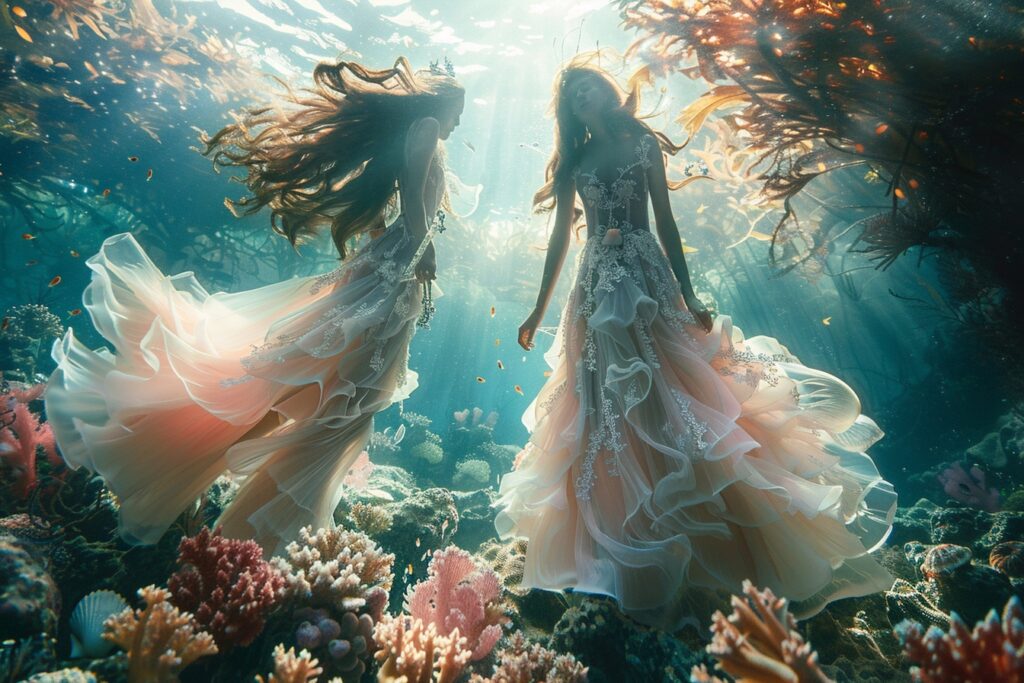
Why are Nereus, Phorcys and Proteus called “old men of the sea”?
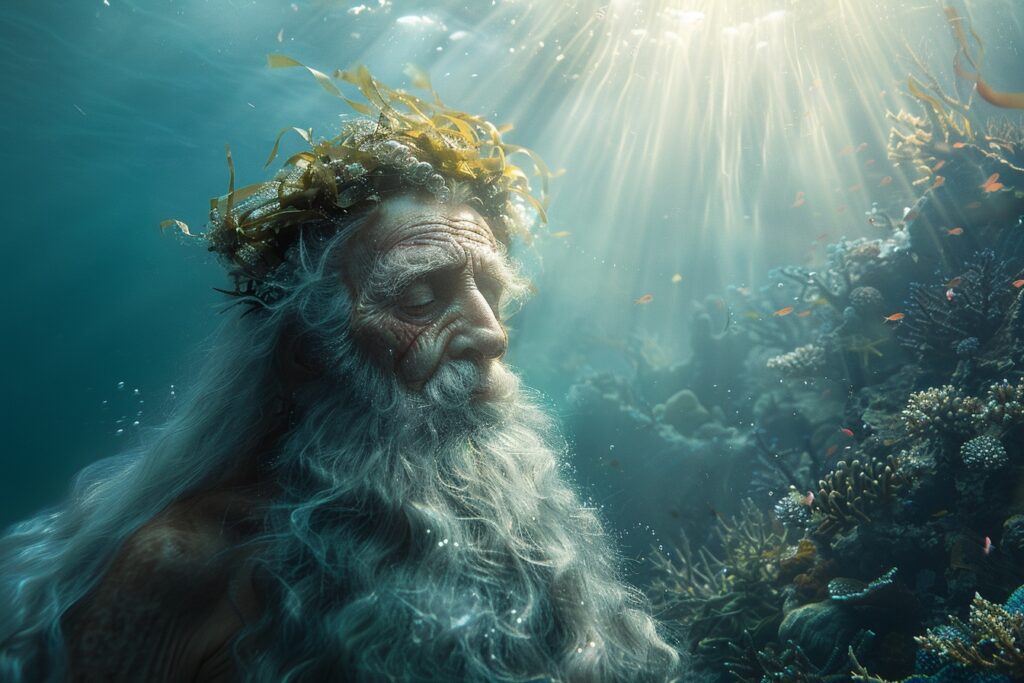
The Greek phrase halios geron, “old man of the sea”, applies to several gods. Homer uses it for Proteus in Book IV of the Odyssey and for Phorcys in Book XIII. Hesiod explains that Nereus is called “the Old Man” because he is truthful and gentle, and never forgets what is just. All three know things that humans don’t.
Nereus has fifty daughters with Doris. These are the Nereids, and Hesiod lists them name by name between lines 240 and 264. In Apollodorus, a much later author, Heracles catches him asleep and holds on through all his transformations until the old god finally tells him the way to the garden of the Hesperides.
Proteus gives you the liveliest scene of the lot (it’s our favorite). Stuck on the island of Pharos, Menelaus follows the advice of Eidothea, the god’s daughter, and hides under a sealskin. When Proteus comes to count his seals, the king grabs him. The god turns into a lion, a snake, a leopard, a boar, running water and then a tree. Menelaus doesn’t let go, and Proteus finally answers. The passage in Book IV takes about half an hour to read.
Phorcys is the most unsettling of the three.
With his sister Ceto, he fathers the Graeae and the Gorgons, who belong more with the mythological sea creatures than with the pantheon. Yet Homer gives him a quiet harbor on Ithaca, the one where the Phaeacians set Odysseus down while he sleeps.
Poseidon and Amphitrite: what do Homer and Hesiod say?
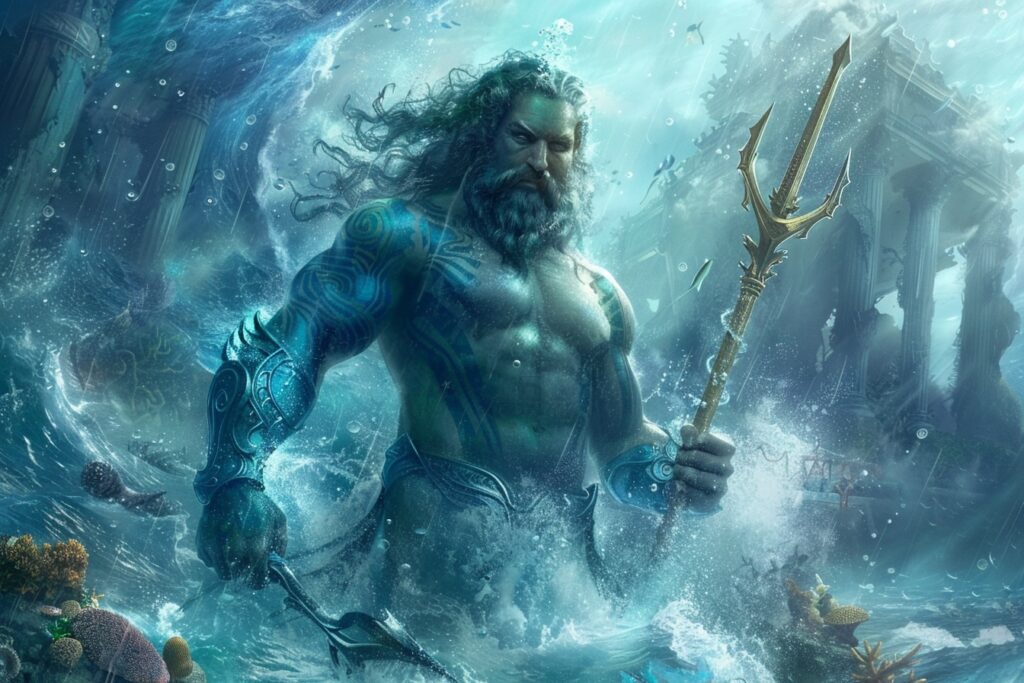
Poseidon is the son of Cronus and Rhea. In Book XV of the Iliad, he explains that the three brothers drew lots for their shares: the sea for him, the sky for Zeus, the darkness for Hades, while the earth and Olympus stayed common to all. Homer calls him “the Earth-Shaker”, because he also commands earthquakes.
The Encyclopaedia Britannica describes him as the god of the sea, earthquakes and horses. In the Odyssey, his anger pursues Odysseus for years because the hero blinded the Cyclops Polyphemus, the god’s son.
Amphitrite has fewer stories, and that gap tells you something.
Hesiod places her among the Nereids, then makes her the mother of Triton with Poseidon. In Homer, her name sometimes stands for the sea itself, with its waves and its monsters. The story of the dolphin that finds her and brings her back to Poseidon comes from much later authors, such as Hyginus. According to them, the god thanks the animal by setting it among the stars, which gives us the constellation Delphinus. Still, this late tale shouldn’t be passed off as Homer.
The same caution applies to Atlantis, which Plato links to Poseidon in the Critias, a philosophical dialogue from the 4th century BCE.
Thetis, Triton and Glaucus: who are the other sea gods?
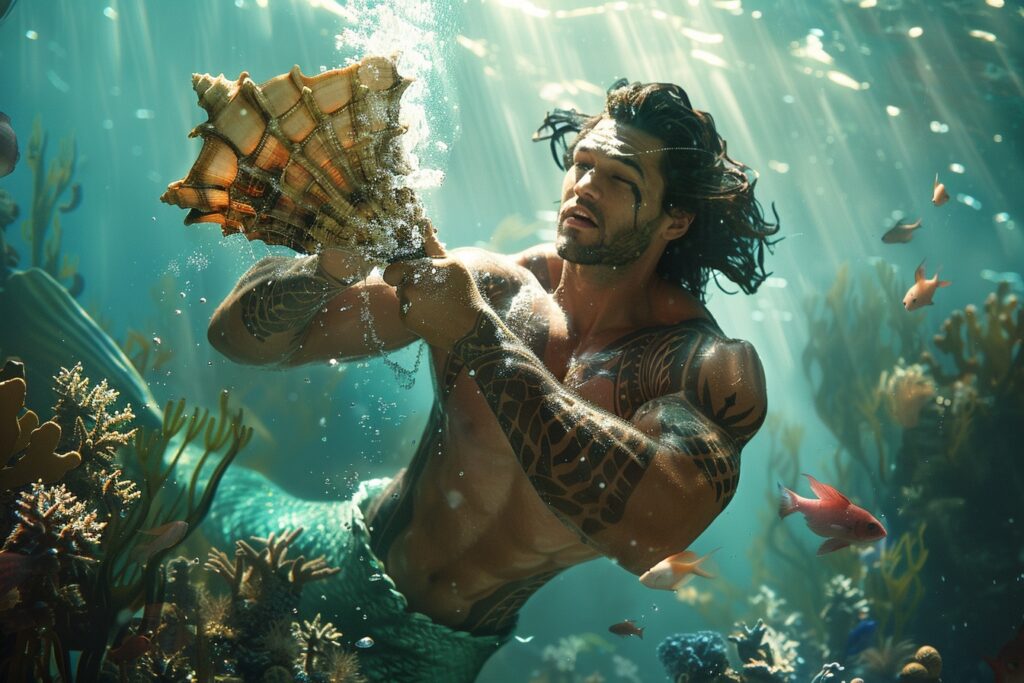
Thetis is the Nereid who appears most in Homer: she rises from the sea to comfort her son Achilles as early as Book I of the Iliad. Triton, son of Poseidon and Amphitrite, lives in a golden palace at the bottom of the sea, according to Hesiod. Glaucus starts out as a fisherman before becoming a god.
Thetis shows you where sea goddesses sit in the order of the world. According to Pindar, a prophecy said her son would be stronger than his father. Zeus and Poseidon give her up, and she is married to the mortal Peleus. Their wedding, where Eris throws the apple of discord, sets things on course for the Trojan War. In short, a Nereid indirectly starts the epic.
Triton has a more modest career. Ovid shows him blowing his conch to make the waters of the flood recede, and Apollonius of Rhodes has him guide the Argonauts out of Lake Tritonis, in Libya.

Glaucus comes from Boeotia.
Ovid and Pausanias place him in Anthedon, where he eats a strange herb, throws himself into the sea and becomes a god with the gift of prophecy. You could add Leucothea, the mortal Ino made divine, who hands her veil to the shipwrecked Odysseus in Book V of the Odyssey.
Nereids, sirens, monsters: where does the sea pantheon end?


The sea pantheon ends with the figures who have a divine family tree and act as gods. Naiads guard springs and rivers, so fresh water. Sirens, Scylla or Andromeda’s monster threaten heroes without being worshipped, and they fit better among the creatures of mythology.

Take Andromeda. In Apollodorus, her mother Cassiopeia brags that she is more beautiful than the Nereids, who complain, and Poseidon sends a flood and then a sea monster against the kingdom. The queen’s name was later given to a constellation, and you also find it on a genus of jellyfish, Cassiopea, the jellyfish that lives upside down.
Sirens raise a different problem. Homer refers to them in the dual, which suggests he counts two, and he never describes their bodies. The image of bird-bodied women comes mostly from painted vases, and the fish tail arrives much later.
If you read only one text, make it Book IV of the Odyssey.
For the gods, the cost of entry is modest: a paperback translation of Hesiod and Homer, and one or two evenings of reading, are enough for you to check every name in this top 10 yourself.
FAQ
What is the oldest Greek sea deity?
In Hesiod, it is Pontus, whom Gaia bears on her own before joining with Uranus. He is the salt flood itself. Oceanus, close to him in age, stands instead for the river that surrounds the earth.
How many Nereids are there?
Hesiod counts fifty and names them all in the Theogony. Homer lists about thirty in Book XVIII of the Iliad, and the lists vary from one author to another. Amphitrite and Thetis are the best known.
What is the difference between Poseidon and Neptune?
Neptune is a Roman water god whom the Romans identified with Poseidon. Greek stories were retold under his name, which explains the confusion in works of art. The Greek family trees remain those of Hesiod and Homer.
Are sirens sea deities?
Not strictly. Homer presents them as creatures whose song lures sailors to their death, with no divine family tree and no cult. Their bird bodies come mostly from Greek art, and the fish tail is much later.
Sources
- NEREUS – Greek Sea-God, The Old Man of the Sea (Theoi Project, accessed 2026)
- Poseidon | God, Wife, Son, Myths, Symbols, & Facts (Encyclopaedia Britannica, accessed 2026)