When Pavlopetri is mentioned, it refers to a submerged site where history and mystery mingle beneath the waves. Feeling the thrill of a preserved past, observing the remains of a lost civilisation and pondering the power of the elements, this is what awaits those interested in this sunken city. Between cutting-edge technology, invaluable heritage and tales of earthquakes, this story takes you to the heart of a Mediterranean enigma, revealing how Pavlopetri has endured through the ages, what testimonies it preserves, and why its preservation remains a fascinating challenge to undertake.
How was the city of Pavlopetri discovered and studied?
An exceptional site, Pavlopetri is located in the south-east of the Peloponnese, near Pounta beach and the island of Elafonisos. The first mentions of this sunken city date back to 1904, when the geologist Fokionas Negris spoke of the existence of underwater remains. In 1967, Nic Flemming from the Southampton Oceanography Centre identified ruins underwater, revealing a complex urban layout.
The first mapping and exploration campaigns took place in 1968 thanks to a team from the University of Cambridge. The researchers then discovered foundations, streets, tombs and other structures characteristic of an ancient civilisation. The technology used was enhanced in 2009 with the involvement of the University of Nottingham, employing a sector-scanning sonar and a stereo mapping robot to record the city with unprecedented precision.
Recent research has enabled the mapping of more than 80,000 square metres of underwater heritage. The materials analysed cover different periods, from the Neolithic to the Bronze Age, offering a comprehensive view of the evolution of this unique site. The data collected contribute to Pavlopetri’s international recognition as a benchmark in underwater archaeology.
Timeline of major discoveries
- First mention in 1904 by Fokionas Negris
- Underwater discovery by Nic Flemming in 1967
- Partial mapping by Cambridge in 1968
- Research project by the University of Nottingham in 2009
- Use of cutting-edge technology such as sonar and robot
- Recognition by UNESCO in 2016
What remains and structures testify to the richness of Pavlopetri?
The city of Pavlopetri offers remarkably well-preserved remains, including building foundations, narrow streets, tombs carved into the rock and urns. Several buildings reach up to 35 metres in length, demonstrating the sophistication of this civilisation. Fragments of pottery, intact or broken urns and everyday objects illustrate life on this site across different periods.
The discovered structures reveal an advanced urban organisation for a prehistoric era. The streets grid the site, allowing movement between dwellings, public places, and burial spaces. The materials found, ranging from the Neolithic to the Mycenaean period, document a long occupation and an adaptation to societal changes.
Pavlopetri is also distinguished by the presence of collective and individual burials, illustrating the funerary practices of the Archaic period and the Hellenistic period. The entire set of ruins highlights architectural ingenuity and the importance of maritime trade in the region.

Notable elements found on the site
- Foundations of large buildings
- Streets and structured alleys
- Graves dug into the rock
- Urns and pottery fragments
- Everyday objects made of various materials
- Collective and individual funerary structures
What historical periods are represented at Pavlopetri?
Pavlopetri covers an extensive chronology, from the Neolithic to the Mycenaean period. The materials discovered show that the town experienced continuous occupation, with a peak between 3000 and 1000 years BC. The early and middle Bronze Age marks a period of great prosperity for the site.
The remains testify to human presence in the prehistoric era and architectural evolution up to the Archaic period and the Hellenistic period. The study of the ruins allows identification of cultural and commercial influences from the Mediterranean basin, reinforcing Pavlopetri’s importance in regional maritime control.
The diversity of graves, objects, and materials attests to the civilisation‘s adaptation to different periods and social changes. Pavlopetri thus illustrates the continuity and richness of the Greek heritage through the ages.
How was the town submerged and protected until today?
The town of Pavlopetri was affected by several earthquakes and a rise in sea level, causing its progressive submersion. The stability of the underwater site allowed remarkable preservation of the remains. All the foundations and structures were preserved thanks to the absence of invasive human activities.
Since 1976, the area has had the status of a marine archaeological site, which limits access and protects the ruins from damage. In 2016, UNESCO recognised Pavlopetri as the oldest submerged town in the world, included in the World Monuments Watch and eligible for the convention on the protection of underwater cultural heritage.
Current research and explorations use cutting-edge technologies, such as sonar and mapping robots, to study the site without damaging it. Guided underwater tours allow visitors to discover this unique heritage while ensuring its preservation.
Main factors for preservation and protection
- Stability of the underwater site
- Status as a marine archaeological site since 1976
- Recognition by UNESCO in 2016
- Use of non-invasive technology
- Regulated access for diving and tourism
In 2009, Pavlopetri was the first sunken city to be fully mapped in 3D thanks to a robot developed by the University of Sydney.
Pavlopetri, the oldest sunken city in Greece, is a unique underwater archaeological site to explore where one can easily imagine encountering the most impressive mythological creatures from ancient legends.
What scientific contributions have research on Pavlopetri made?
Studies conducted on Pavlopetri have revolutionised the understanding of maritime civilisations in the Mediterranean. The analysis of the remains highlighted the existence of an active trade network linking Greece to other regions during the Bronze Age. The use of advanced technology, such as 3D mapping, enabled the identification of foundations of public buildings, workshops, and warehouses, revealing the complexity of urban organisation and the diversity of economic activities on this site.
Research on the materials and objects discovered at Pavlopetri has improved understanding of the evolution of construction techniques and cultural exchanges between different periods. The study of streets, tombs, and ruins also provided information on social practices, funerary rites, and religious beliefs of the ancient period. These discoveries enrich knowledge of Greek heritage and highlight the importance of the sunken city in Mediterranean history.

The role of earthquakes in Pavlopetri’s history
Earthquakes played a decisive role in the transformation of Pavlopetri. Geological records and observation of displaced foundations show that several major earthquakes contributed to the gradual sinking of the city below sea level. Analysis of sediment layers around the ruins allows precise dating of events that marked the Mycenaean period and subsequent eras.
The impact of sea level rise on the disappearance of the city
Paleoclimatic studies demonstrate that the progressive rise of the sea level accelerated the submersion of Pavlopetri. Simulations carried out using modern technology show that the flooding was a slow phenomenon, allowing partial adaptation by the inhabitants before the definitive abandonment of the site. This process highlights the vulnerability of coastal civilisations to environmental changes.
Methods of protection and enhancement of underwater heritage
The preservation of Pavlopetri relies on strict protection measures, including limiting access to the archaeological site and the use of non-invasive technology. Mapping and exploration campaigns employ sonars and robots to document the remains without disturbing the environment. Public awareness and international cooperation strengthen the safeguarding of this exceptional heritage.
Recent discoveries and their influence on archaeological research
The latest exploration campaigns have revealed previously unknown areas of the site, notably residential quarters and new burial spaces. The integration of data from 3D mapping and geophysical analyses offers a comprehensive view of the sunken city. These technological advances inspire new methods for studying other underwater ruins in the Mediterranean and beyond.
- Discovery of previously unknown port structures
- Identification of new construction materials
- Analysis of trade exchanges during the Bronze Age
- Use of 3D modelling for site reconstruction
Can Pavlopetri still reveal new secrets?
The sunken city of Pavlopetri continues to fascinate researchers and enthusiasts of underwater exploration. Advances in technology suggest the possibility of discovering other buried remains and deepening the understanding of interactions between ancient civilisations and the marine environment. Each new campaign reveals previously unknown elements of the submerged heritage, confirming the exceptional potential of this site to enrich knowledge of human history.
“Beneath the sea, the past reveals itself to those who know how to look beyond the waves.”
Frequently asked questions about the discovery and exploration of Pavlopetri
Can you dive at Pavlopetri as a non-scientific visitor?
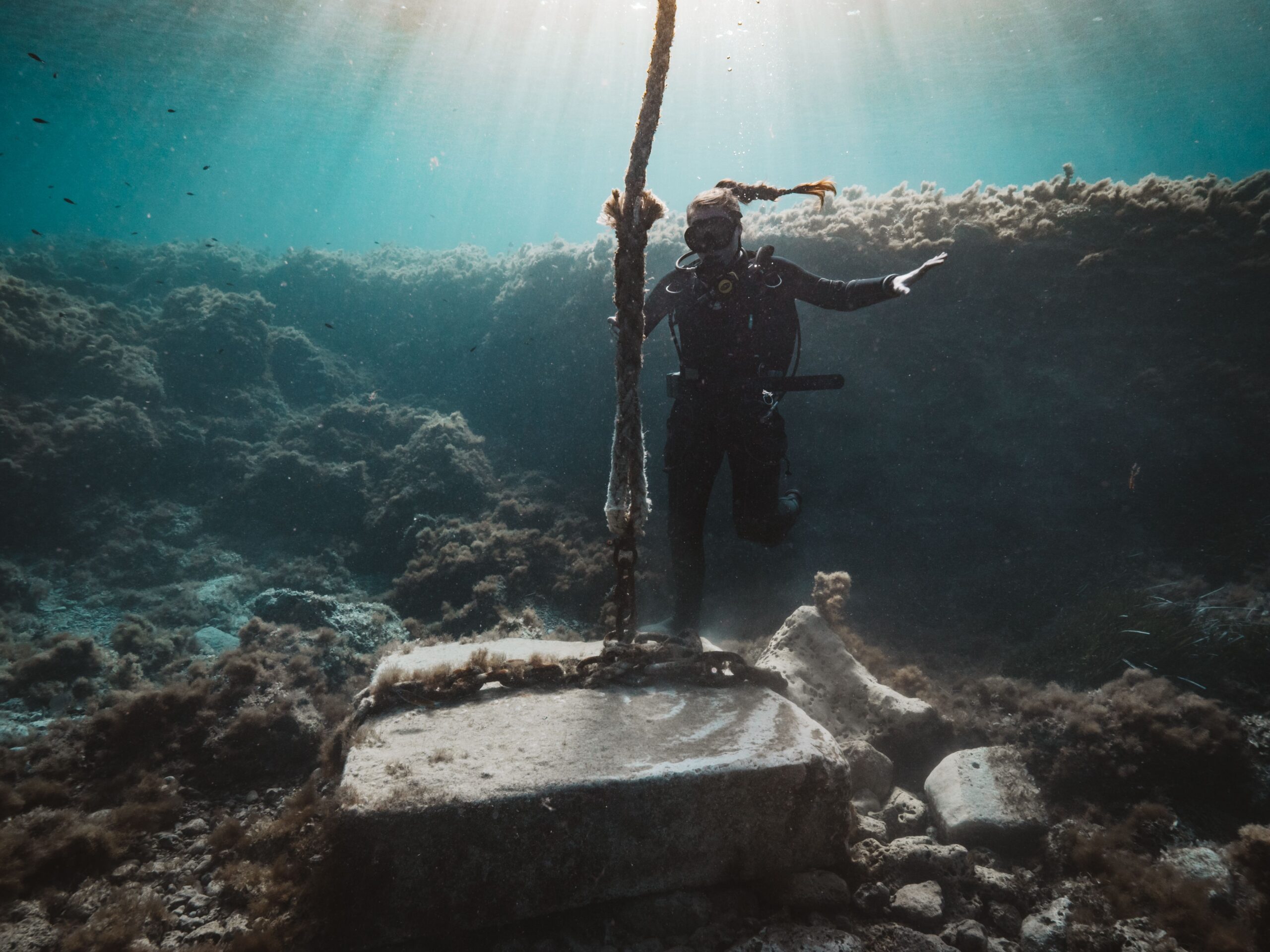
Access to the Pavlopetri site is strictly regulated to preserve its archaeological integrity. Only supervised dives authorised by local authorities are permitted. If you wish to explore the underwater remains, you should go through certified diving clubs that collaborate with researchers and adhere to conservation rules.
What advice is there for organising a stay near the site?
To fully enjoy the region, opt for accommodation in Elafonisos or Neapoli. These villages offer an immersion in local life, with easy access to Pounta beach and the surrounding natural landscapes. Prepare to experience authentic moments, away from the crowds, while respecting the nature and cultural heritage of southern Peloponnese.
How do the locals perceive the presence of the submerged city?
The locals consider Pavlopetri a source of pride and a valuable testimony to their history. Many actively participate in preserving the site, raise visitors’ awareness of its value, and share anecdotes passed down through generations. The existence of the underwater city strengthens the bond between the local community and Mediterranean heritage.
To better understand the influence of ancient beliefs on coastal civilisations, also discover the top 10 Greek sea deities which perfectly illustrates the deep connection between mythology and archaeological sites like Pavlopetri, the oldest submerged city in Greece.