Between living tradition and spiritual power, the figure of Yemaya fascinates anyone seeking to understand the deep connection between Afro-Caribbean peoples and the sea. Feeling this need for grounding, protection, and connection to a universal maternal force can sometimes seem elusive in the face of everyday realities or the superficiality of mass tourism. Through my life experience within different communities, I have observed how rituals, beliefs, and oral transmission shape the perception of the ocean and collective identity. The challenge remains to grasp what Yemaya represents for the inhabitants, how her symbols are invited into modern life, and why her presence influences both cultural practices and the preservation of the marine environment. For this, I offer you a structured journey, ranging from Yemaya’s place in Afro-Caribbean culture to her impact on festivals, art, ecology, and the search for meaning, to illuminate the richness and relevance of this ancestral cult.
What is Yemaya’s place in Afro-Caribbean culture?
Yemaya holds a central place in Afro-Caribbean culture as the deity of waters and the sea. Recognized as the mother of the orishas, she watches over fertility and family protection, embodying the nourishing and maternal strength of the ocean.
In Afro-Caribbean spirituality, Yemaya symbolizes the power of waters, her presence manifesting during rituals on beaches or by lakesides. The veneration of this deity expresses a deep respect for the sea and nature, marking a sacred bond between the faithful and their environment.
The major roles of Yemaya
- Protector: Watches over the home and family
- Mother goddess: Source of fertility and love
- Guardian: Defends spiritual traditions
- Symbol: Incarnation of strength and resilience
What are the attributes and symbols associated with Yemaya?
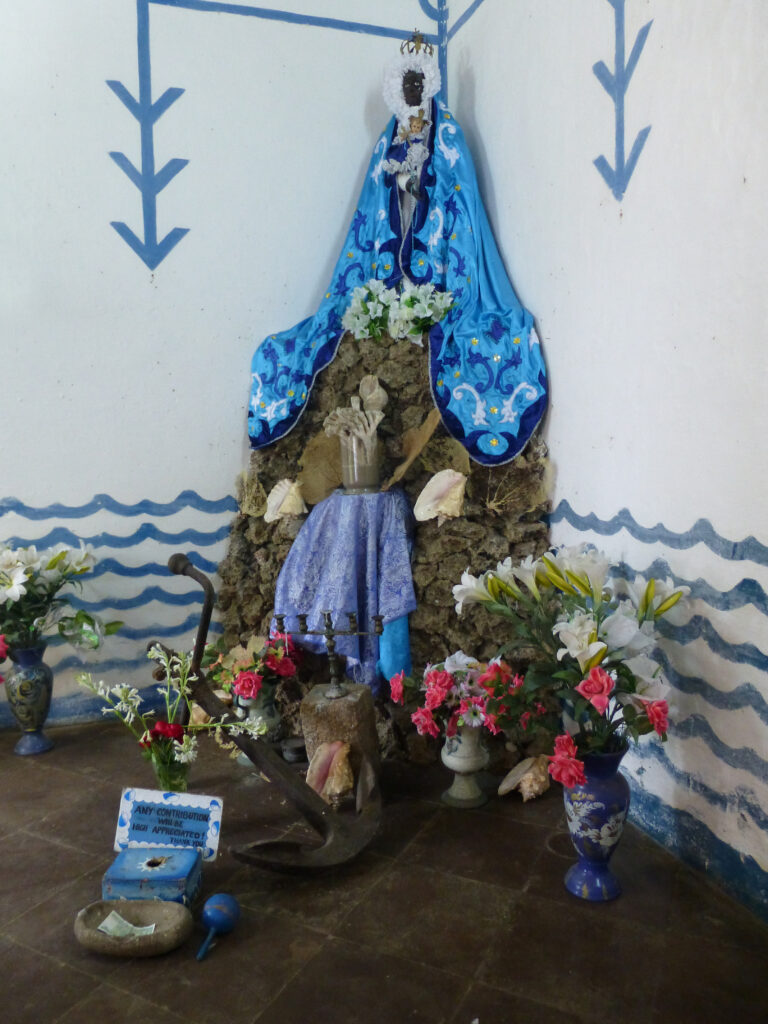
The colors blue and white dominate in representations of Yemaya, evoking the purity and depth of waters. Pearls, silver, conches, and doves constitute her main attributes, symbolizing the richness and wisdom of the sea.
Each object carries a strong meaning in the cult of this deity. Shells, in particular, are considered Yemaya’s first gift, allowing one to hear her voice when held to the ear during ceremonies by the ocean.
Emblematic objects and symbols
- Blue and white pearls: Sign of protection
- Shells: Symbol of divine communication
- Doves: Messengers of peace
- Silver: Purity and light
- Fine fabrics: Elegance and spirituality
How is Yemaya celebrated in rituals and festivals?
Ceremonies dedicated to Yemaya often take place by the sea, where devotees place offerings in the waters. Coconut cakes, white flowers, red watermelon, jewelry, or floating candles make up the traditional gifts to honor this deity.
The rituals emphasize gratitude towards the sea and ocean, strengthening the connection with Afro-Caribbean spirituality. Songs, dances, and prayers mark these moments of sharing and fervor, creating an atmosphere of respect and trust towards Yemaya.
Why is Yemaya associated with fertility and protection?
Considered the original mother, Yemaya embodies fertility, motherhood, and emotional healing. She protects the family, supports love, and helps overcome difficulties, offering inspiring comfort to those who seek her kindness in moments of doubt.
Her reputation as a nurturing deity is rooted in African and Caribbean mythology, where she is seen as the source of all life, capable of soothing or manifesting her anger to defend her children or her territory.
What is the historical journey of Yemaya in Afro-Caribbean mythology?
Arriving from the Yoruba in Nigeria, Yemaya crossed the Atlantic with the transatlantic slave trade, accompanying African slaves to the Caribbean and Latin America. She became an emblematic figure of resistance and the preservation of African spirituality on foreign soil.
In Cuban Santería and Brazilian Candomblé, Yemaya was syncretized with the Virgin Mary, sharing the blue and white iconography and integrating into local religious art, a testament to the adaptability and strength of the Afro-Caribbean cult.
Key Historical Milestones
- Origin in Nigeria among the Yoruba
- Journey to the Americas in the 16th century
- Syncretism with the Virgin Mary
- Development in Santería and Candomblé
- Transmission of rituals across generations
In Brazil, every February 2nd, thousands of devotees place offerings in the ocean at Salvador de Bahia to honor Yemaya during a large popular festival.
In Afro-Caribbean culture, Yemaya embodies the deity of the seas and holds a prominent place in spiritual beliefs, and to deepen your understanding of different marine figures, also discover the god of the sea in other traditions around the world.
Yemaya, the deity of the seas in Afro-Caribbean culture and her spiritual impact evoke the richness of beliefs related to the most impressive mythological creatures and their influence in the collective imagination.
How does the figure of Yemaya influence contemporary cultural practices?
Yemaya inspires many artistic creations in Afro-Caribbean culture. From murals to musical works, her representation feeds the collective imagination and shapes the identity of entire communities. Artists draw from the mythology of this deity to express strength, motherhood, and the unbreakable bond with the waters.
In daily life, rituals in honor of Yemaya are integrated into popular festivals, especially during maritime celebrations where the sea becomes the center of gatherings. The inhabitants organize processions, decorate boats, and offer gifts to seek the orisha’s protection over fishermen and their families.
The transmission of values related to Yemaya is found in education and oral traditions. The elders tell the younger ones about the importance of spirituality and respect for the sea, thus perpetuating a living cult that unites generations around the ocean.
The impact of Yemaya on music and dance
Traditional rhythms pay homage to Yemaya through songs and percussion inspired by the waves and the movement of waters. Ritual dances imitate the ebb and flow of the ocean, creating a unique body language that expresses gratitude and connection with the deity.
Yemaya’s role in the preservation of the marine environment
The veneration of Yemaya encourages the protection of the sea and waters. Communities raise awareness about the preservation of marine ecosystems, linking spirituality to concrete actions to safeguard natural resources and pass on a respectful heritage of the ocean.
- Creation of murals representing Yemaya
- Organization of annual maritime festivals
- Education of youth about the symbolism of orishas
- Promotion of traditional songs and dances
- Beach cleanup actions in homage to Yemaya
Why does Yemaya still fascinate spirituality and travel enthusiasts so much?
Yemaya embodies a universal deity that connects humans to the sea, to nature, and to the quest for meaning. Her presence in Afro-Caribbean culture offers an immersive experience where spirituality, mythology, and respect for the ocean intertwine, inviting everyone to discover the richness of traditions and to open up to the diversity of the world’s beliefs.
The sea is the memory of the world, and Yemaya is its silent guardian.
Frequently asked questions about Yemaya and her spiritual heritage
How to have an authentic experience during a ceremony dedicated to Yemaya as a traveler?
To feel the full depth of a celebration dedicated to Yemaya, prioritize listening and respecting local rituals. Participate discreetly, observe the gestures of the faithful, and converse with the elders who willingly share stories related to the deity. By immersing yourself in the collective atmosphere, you will discover a unique spiritual dimension, imbued with sharing and harmony with nature.
What advice to integrate the values of Yemaya into your daily life, even far from the Caribbean?
Draw inspiration from the principles of protection, respect for water, and kindness towards those around you. Adopt eco-responsible actions, cultivate gratitude for natural elements, and practice personal rituals of meditation or reflection to strengthen your inner connection to the sea and its symbols, wherever you are.