Thirteen meters. According to the Smithsonian, that is roughly the length of the largest giant squid ever measured, tentacles included, for an animal that may have weighed close to a ton.
With numbers like that, the kraken stories told by northern sailors start to make sense. Some sea monsters in myth match a real animal. Others belong to religious texts or to hoaxes, like the most famous Loch Ness photo.
Here we go through the Kraken, the sea serpent, Charybdis and Scylla, Leviathan and Nessie, and we keep what the old texts say apart from what biology has documented. The gods have their own page: the top 10 Greek sea deities.
Did the Kraken really exist?
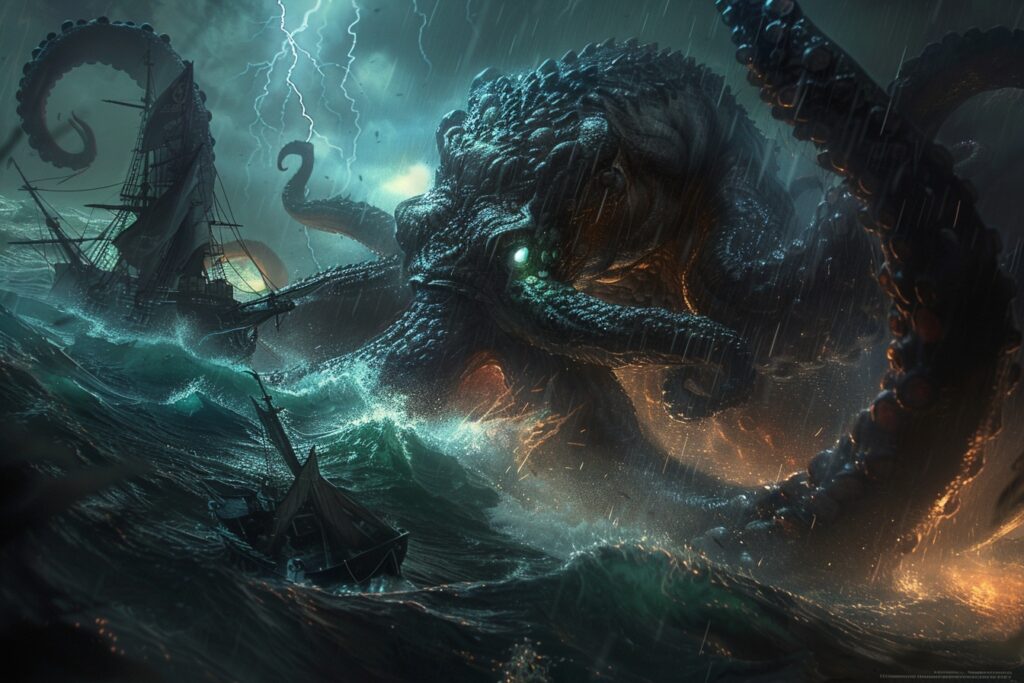
Not as a living island that drags ships under. But the myth has a serious candidate: the giant squid, Architeuthis dux. The Smithsonian credits it with a record length of close to 13 meters, eyes about 30 centimeters across (the largest in the animal kingdom) and a life spent between 500 and 1,000 meters deep.
The kraken entered the books through a bishop. In 1752-1753, Erik Pontoppidan, Bishop of Bergen, described it in his natural history of Norway as a beast so vast that people mistook it for islands. His text mixes fishermen’s tales with hearsay. Hard to do better at the time.
For more than a century, the real animal was known only from stranded carcasses and from remains found in the stomachs of sperm whales, whose skin sometimes carries scars left by the squid’s suckers.
Images of a live animal are recent. According to the Smithsonian, a specimen about 7 meters long was brought up alive off the Ogasawara Islands in 2006. Six years later, a Japanese team filmed a giant squid in its natural habitat, drawn in by a glowing lure that mimicked a jellyfish. None of them went after a boat. So the hull-crushing kraken is a sailor’s exaggeration, built on a creature that does exist.
One side note: the monster that threatens Andromeda in the Perseus myth is called Cetus, and it has nothing to do with the Scandinavian kraken.
Does the sea serpent come from the oarfish?
That is the explanation you will hear most often, and it holds up. The giant oarfish (Regalecus glesne) is the longest bony fish known, according to the Australian Museum, with specimens reliably measured at 8 meters. Its silvery ribbon of a body and red fins look a lot like the sea serpents in old engravings.
The same museum mentions claimed lengths of up to 17 meters. Nothing confirms them. Other deep-sea animals with unlikely shapes, such as the abyssal anglerfish, feed the same imagination.
The oarfish is thought to live mostly between 20 and 200 meters deep, in tropical and temperate waters around the world. It is rarely seen alive. Most sightings involve animals washed up on a beach or weakened near the surface. A crew that came across a dying one, rippling for several meters along the hull, had a story to tell in port for years. The Australian Museum itself links these sightings to sea serpent legends.
Still, an oarfish bites no one. It feeds on invertebrates and small fish.
The serpents wrapped around ships on Olaus Magnus’s Carta Marina (1539) owe a lot to the mapmakers’ imagination. The animal itself is harmless.
Charybdis and Scylla: what lies behind the Strait of Messina?
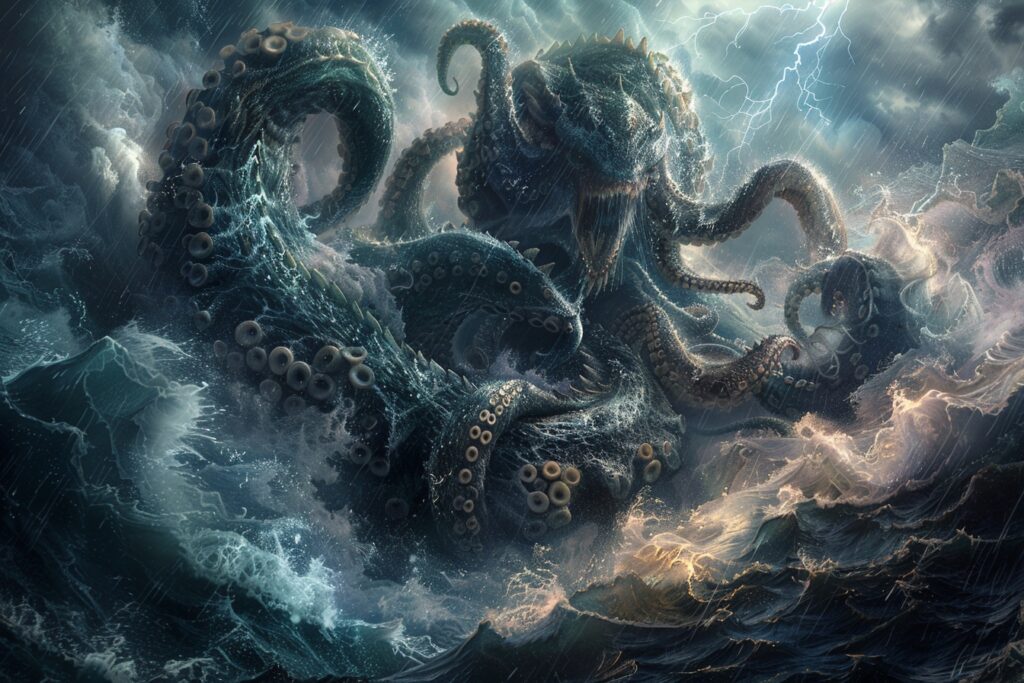
In Book 12 of the Odyssey, Charybdis swallows the sea three times a day and spits it back out, while Scylla, a six-headed monster, snatches sailors off the deck of Odysseus’s ship. Ancient tradition placed this passage in the Strait of Messina, between Sicily and Calabria.
The strait’s tidal currents and whirlpools are the rational explanation cited most often. It remains a hypothesis. Homer gives no map, and the link to Messina comes from later writers who wanted to pin every stage of Odysseus’s voyage onto the Mediterranean they knew.
Scylla’s origin changes from one version to the next. In Ovid’s Metamorphoses, she is a nymph loved by the sea god Glaucus, and the jealous sorceress Circe turns her into a monster. Charybdis is often described as a daughter of Poseidon punished by Zeus. The phrase “between Scylla and Charybdis” survived to describe a choice between two dangers. It fits the story: Odysseus chooses to sail past Scylla and lose six men rather than risk the whole ship in the whirlpool.
The Sirens in the same book were first pictured as bird-women. Their fish tail only shows up in the Middle Ages, which makes them a much younger sea creature than you might think.
Where do Leviathan and Jörmungandr come from?
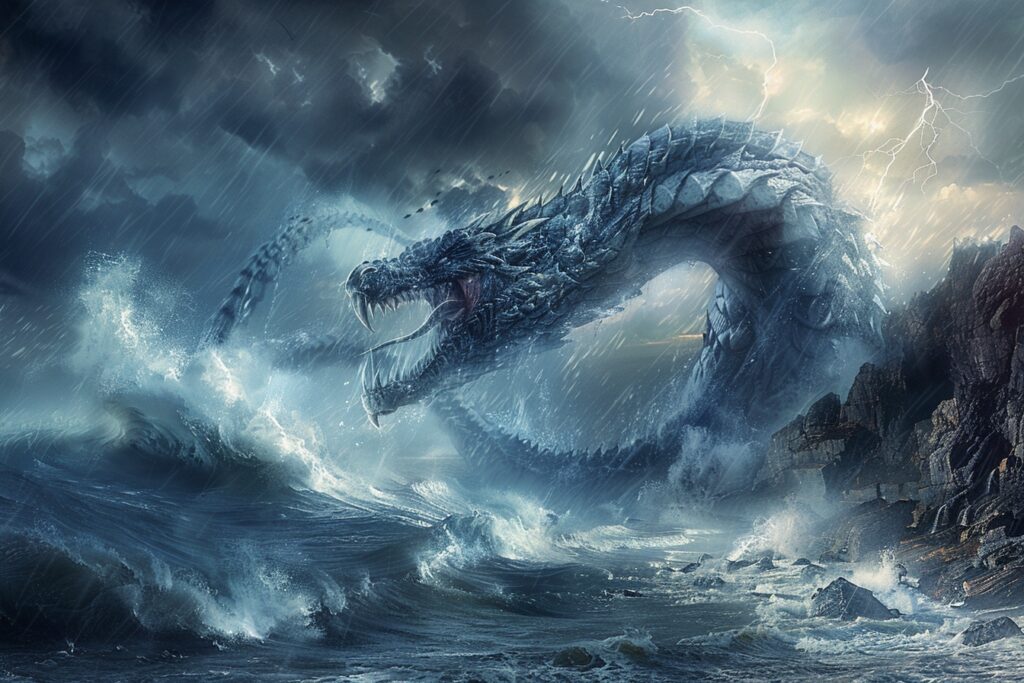
Leviathan comes from the Hebrew Bible. It appears in the Book of Job, in the Psalms and in Isaiah, who describes it as a “fleeing serpent” and a “twisting serpent” that God will strike down. Texts from Ugarit, in present-day Syria, mention a similar monster, Lotan, defeated by the god Baal.
The version that circulates online, a 75-meter Phoenician demon guarding the entrance to the underworld, rests on no identifiable text. We removed it. The biblical Leviathan has no measurements. Some readers see a crocodile in the description in Job, others a whale or a pure monster of chaos. There is no way to settle it.
The Norse serpent follows a different logic. In Snorri Sturluson’s Prose Edda, Odin throws this child of Loki into the ocean, where it grows so large that it circles the earth and bites its own tail.
It faces Thor at Ragnarök. Neither survives. No real animal has been seriously linked to either of these two serpents.
Is there anything real behind the Loch Ness monster?
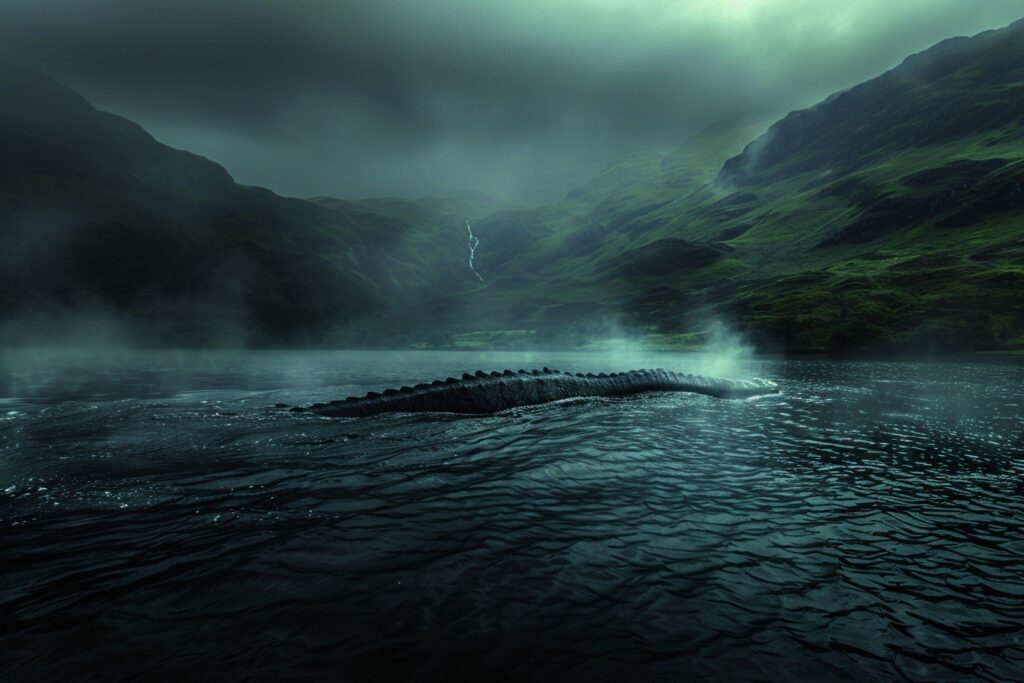
No biological evidence supports Nessie’s existence. The legend draws on an episode in the Life of Saint Columba, written by the abbot Adomnán in the late 7th century, in which the monk drives off a beast in the River Ness. Above all, it rests on a 1934 photo since shown to be a fake.
This “surgeon’s photograph”, credited to the London doctor Robert Kenneth Wilson, ran in the Daily Mail in April 1934. Shortly before his death, Christian Spurling admitted it was a model mounted on a toy submarine, and his confession was made public in 1994. The old version of this article dated the photo to 1933 and attributed the confession to Wilson’s brother-in-law. Two mistakes. Spurling was in fact the stepson of Marmaduke Wetherell, the man who set up the hoax.
And Adomnán’s episode takes place in the river, not in the loch.
In 2019, a team from the University of Otago presented an analysis of environmental DNA sampled from the loch. They found no trace of reptile DNA, but plenty of eel DNA. The giant eel monster remains a hypothesis with no specimen.
Which real animal is behind each sea monster?
The table below sums up the level of evidence for each creature. Only the kraken and the sea serpent have a solid biological candidate, the giant squid and the oarfish. The rest belong to religious narrative, geography or hoax, and that is fine by us.
| Creature | Earliest text | Proposed real animal or phenomenon | Level of evidence |
|---|---|---|---|
| Kraken | Pontoppidan, 1752-1753 | Giant squid (Architeuthis dux) | Animal documented, shipwrecks not |
| Sea serpent | Sailors’ tales, Olaus Magnus (1539) | Giant oarfish (Regalecus glesne) | Plausible |
| Charybdis and Scylla | Odyssey, Book 12 | Currents and whirlpools of the Strait of Messina | Hypothesis |
| Leviathan | Job, Psalms, Isaiah | Crocodile or whale, depending on the reader | Impossible to settle |
| Jörmungandr | Snorri’s Edda (13th century) | None | Mythological narrative |
| Nessie | Adomnán (7th century), 1934 photo | Eels (hypothesis) | Faked photo, no specimen |
Cthulhu never claimed to be ancient. Lovecraft invented him in “The Call of Cthulhu”, published in 1928 in Weird Tales, and has him sleeping in the sunken city of R’lyeh, at the bottom of the Pacific. The exile from a system called Xoth, mentioned in the old version, comes from Lovecraft’s followers, not from the original story. We removed it. He is the only monster on this page whose author we know.
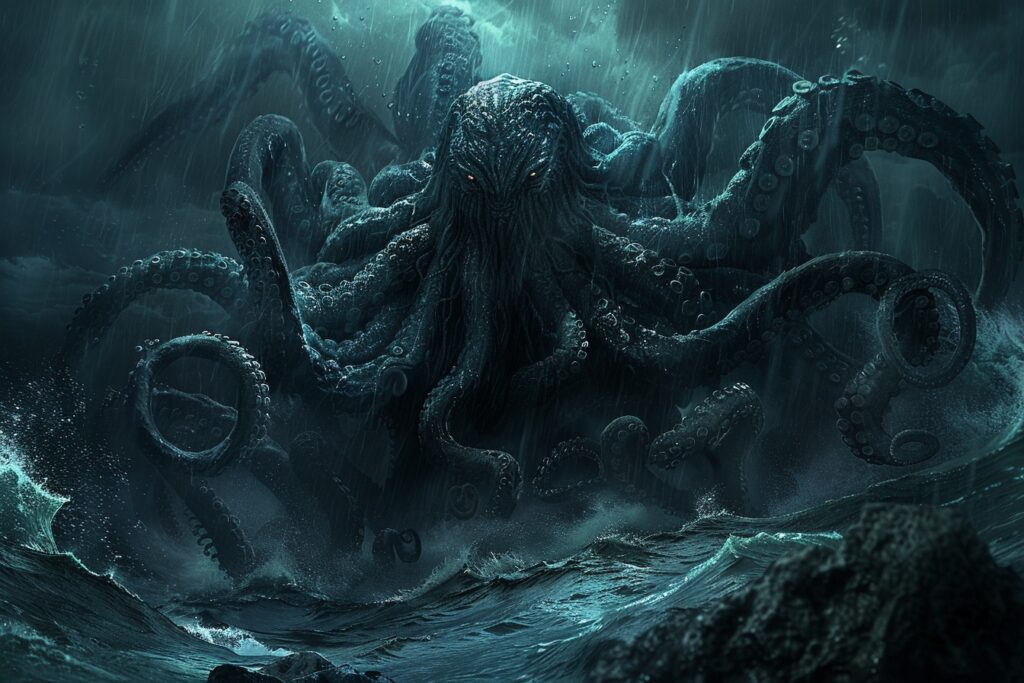
Next time you hear a sea monster story, ask yourself which text told it first and which specimen backs it up.
If there is no answer to the second question, you are reading a legend. That is already a lot.
FAQ
Is the kraken a real animal?
The kraken is a legendary creature, described by Erik Pontoppidan in 1752-1753. The giant squid Architeuthis dux, which very much exists, is its most serious candidate. The Smithsonian gives a record close to 13 meters, with no documented attack on a ship.
What is the longest bony fish in the world?
It is the giant oarfish, Regalecus glesne. The Australian Museum reports specimens reliably measured at 8 meters, and claimed lengths of up to 17 meters that have never been confirmed. It is often put forward as the origin of sea serpent legends.
Where are Charybdis and Scylla?
Ancient tradition places them in the Strait of Messina, between Sicily and Calabria. The strait’s currents and whirlpools are one possible explanation, nothing more.
Is the Loch Ness monster photo real?
No. The “surgeon’s photograph” published in 1934 showed a model mounted on a toy submarine. Christian Spurling’s confession was made public in 1994.
Sources
- How Big is the Giant Squid? (Smithsonian Ocean, Clyde Roper and the Ocean Portal team, 2025)
- What is the longest bony fish? (Australian Museum, Mark McGrouther, 2022)