
Traveling in Southeast Asia is to feel the power of a living heritage through the vibrant colors and fervor of Hindu festivals. In search of authentic spirituality and an ultimate experience where every detail matters, many seek to understand the unique place of the Sri Maha Mariamman temple in local life. Between fascinating architecture, ancient rites, and memorable encounters, these sanctuaries embody the strength of Tamil tradition and the communities’ ability to adapt without ever losing their soul. To grasp why these sacred places transform the perception of travel and offer a window into cultural diversity, one only needs to follow the thread of their stories, celebrations, and symbols, guided by the experience of those who have lived them from within.
What are the origins of the Sri Maha Mariamman temple in Bangkok and Kuala Lumpur?
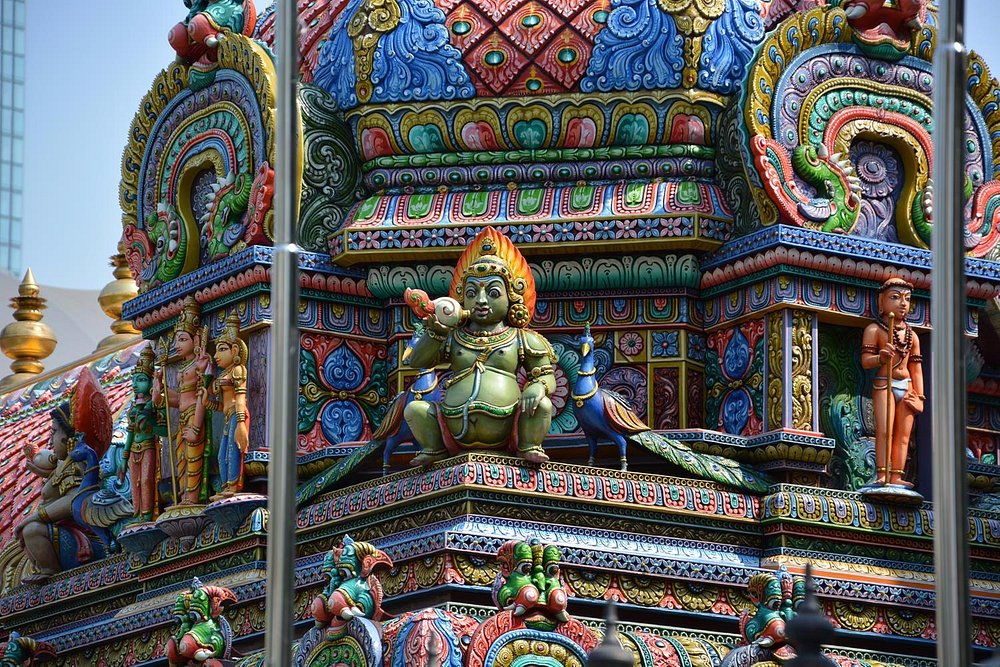
The Sri Maha Mariamman temple in Bangkok was founded by Vaithi Padayatchi, a member of the Tamil community from Tamil Nadu. This community emigrated to escape British colonial rule and settled in Bangkok’s Chinatown, where they built this place of worship in 1879. In Kuala Lumpur, the temple was erected in 1873 by Tamil immigrants seeking spiritual protection in their new country.
The two Sri Maha Mariamman temples testify to the strong Tamil presence in Southeast Asia. These sites have become landmarks for Tamils, embodying the spirituality and heritage of this community in Thailand and Malaysia. Each location has a history linked to Hindu tradition and a commitment to preserving ancestral rites.
Key historical elements
- Foundation in Bangkok in 1879 by Vaithi Padayatchi
- Construction in Kuala Lumpur in 1873 by Tamil immigrants
- Establishment in the Chinatown districts of each city
- Response to the spiritual needs of the Tamil community
How does the architecture of the Sri Maha Mariamman temple reflect Hindu culture?
The architecture of the two Sri Maha Mariamman temples is inspired by South Indian style with a monumental gopura six meters high in Bangkok and a five-story raja gopuram in Kuala Lumpur. These gateways are adorned with colorful sculptures representing deities from the Ramayana and other sacred Hindu texts.
The facades illustrate the complex decoration and symbolic richness of Hindu tradition. The main sanctuaries are dedicated to the goddess Mariamman, surrounded by secondary sanctuaries for Ganesh, Kartik, and other deities. The onion-shaped ceiling is a striking element of the interior architecture.
Remarkable architectural features
- Carved and colorful gopura with hundreds of deities
- Main sanctuary dedicated to Mariamman
- Onion-shaped ceiling
- Stone, gilded copper, and gold decorations
- Detailed sculpture inspired by the Ramayana
What are the major religious and cultural highlights of the Sri Maha Mariamman temple?
The temple hosts several major festivals each year, including Navratri in September or October, a celebration dedicated to the goddess Durga with processions, flower offerings, and rituals in the streets. In Kuala Lumpur, the Thaipusam festival attracts thousands of devotees for spectacular processions and colorful offerings.
Daily prayers punctuate the life of the temple, strengthening the sense of spirituality and heritage among participants. These key moments showcase Tamil tradition and promote the transmission of customs to new generations.
Main events at the temple
- Navratri with procession and offerings
- Thaipusam and its spectacular rituals
- Daily prayers
- Celebrations dedicated to the goddess Mariamman
Why is the Sri Maha Mariamman temple a symbol of heritage for the Tamil community?
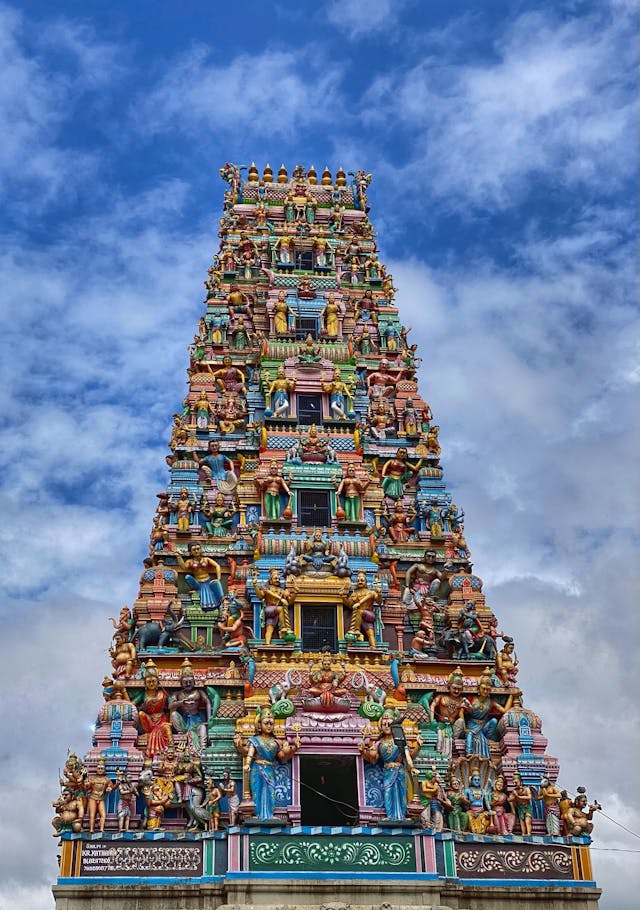
The temple acts as a community center and a place of protection for Tamils settled in Bangkok, Kuala Lumpur, or Penang. It embodies the spiritual heritage of the diaspora and brings the community together during major festivals and rituals.
This place of worship symbolizes the adaptability and strength of Tamil tradition in Southeast Asia. It represents a bridge between India and local societies, while promoting the transmission of Hindu values and spirituality.
How to organize a visit to the Sri Maha Mariamman temple and what to discover on site?
Visiting the Sri Maha Mariamman temple offers the opportunity to explore a living sanctuary, rich in decoration and sculpture. The community’s hospitality allows visitors to attend prayers or processions, especially during festivals.
In Georgetown on Penang Island, another Mariamman sanctuary testifies to the vitality of Tamil tradition in Malaysia. Visitors can admire the architecture and decoration while discovering the rites related to the goddess of protection.
Tips for discovering the temple
- Respect the worship rules during your visit
- Observe the daily prayers
- Discover the sculptures and colorful decoration
- Participate in festivals to experience Hindu tradition
- Explore the surroundings of the temple in the Chinatown districts
The chariot used during the Thaipusam festival in Kuala Lumpur is kept year-round within the temple grounds.
Quiz: Discover the Sri Maha Mariamman Temple
In what year was the Sri Maha Mariamman Temple founded in Bangkok?
Which architectural style mainly characterizes the Sri Maha Mariamman Temple?
Which festival celebrated at the temple attracts thousands of devotees with spectacular processions?
Which main deity is honored in the temple’s sanctuary?
The Sri Maha Mariamman Temple in Bangkok and Kuala Lumpur, a true reflection of Hindu tradition and cultural heritage in these Asian metropolises, attracts many visitors who, just like those wishing to discover other wonders of the world, can explore fascinating destinations through unique and authentic experiences.
How is the goddess Mariamman honored in the Sri Maha Mariamman temples?
The homage paid to the goddess Mariamman in each sanctuary is based on daily rituals and specific ceremonies. Devotees present offerings of flowers, fruits, and milk, symbolizing purity and fertility. Each prayer aims to seek protection and blessings for the community and visitors.
The procession of statues during festivals marks a highlight of Hindu tradition. The statues of the goddess are adorned with garlands and carried through the streets, accompanied by traditional songs and music. This public display strengthens the link between spirituality and local social life.
The worship ceremonies often include lighting oil lamps and distributing prasadam, blessed food, to all participants. These gestures reinforce the sense of belonging to a common heritage while promoting sharing and solidarity within the community.
The role of priests in maintaining the rituals
Priests play a central role in preserving the rites and tradition of the temple. They ensure the proper conduct of prayers and the correct execution of offerings according to sacred texts. Their presence guarantees the transmission of an authentic spiritual heritage.
The impact of festivals on local life
The festivals organized around the temple strongly influence the dynamics of the surrounding neighborhoods. The streets are decorated with colorful ornaments and the crowds attract many visitors, fostering cultural exchanges and the discovery of Hindu tradition by other communities. This effervescence contributes to the vitality of the sanctuary.
- Daily rituals dedicated to the goddess
- Public processions during festivals
- Distribution of prasadam to the community
- Decorating statues with garlands
- Intergenerational participation in ceremonies
Why does visiting the Sri Maha Mariamman temples help to better understand cultural diversity in Southeast Asia?
Discovering the Sri Maha Mariamman temples in Bangkok, Kuala Lumpur, or Penang offers an immersion into the richness of Hindu spirituality and the integration of the Tamil community into the local urban fabric. Observing the rites and festivals reveals the ability to adapt and preserve a living heritage.
FAQ for exploring the hidden richness of the Sri Maha Mariamman temples
What tips should be followed to photograph the Sri Maha Mariamman temples without disturbing the worshippers?
Before taking out your camera, always ask for permission from the staff or priests, especially during rituals. Prioritize discretion, avoid using flash, and respect the privacy of prayer moments. Prefer capturing exterior details and decorations when the interior spaces are occupied by ceremonies.
How to participate in a temple festival while integrating into the local community?
Wear respectful attire, follow the example of the worshippers for ritual gestures, and do not hesitate to interact with community members who will gladly guide you. Get involved in the proposed activities, such as preparing offerings or sharing prasadam, to experience an authentic and warm experience.
Related posts:
 Trip to Saint Martin immersion between paradisiacal beaches and unique Franco-Dutch culture
 Weather and temperatures in Tenerife in February between mild climate and ideal sunshine
 Safaga Egypt an authentic destination between the Red Sea natural beaches and historical heritage
 Roses Spain between beaches, coves, and exceptional heritage on the Mediterranean bay of the Costa Brava