In March 2017, an American tourist in his sixties died while snorkeling in the Silfra fissure, in Þingvellir National Park. It was the second death in two months. The park closed the site for a few days, then reopened it with stricter rules.
Our old page talked about the “Silfra lake,” with visibility of 100 meters and water between 1 and 3 °C. We have completely revised it based on the official park page. Silfra is a fissure, the water temperature is given between 2 and 4 °C, and the depth is capped.
Here is what you need to dive there, what happened in 2016 and 2017, and what you must check before booking (including what operator pages forget to mention).
Is Silfra a lake or a fissure?
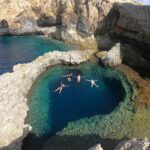
Silfra is a fissure. It opens in the rift zone of Þingvellir National Park, in southwest Iceland, and flows into Lake Þingvallavatn. Our old title mentioned the “Silfra lake,” a mistake repeated on many booking pages. We keep the article address to avoid breaking links, but the focus has changed.
Þingvellir Park has been a UNESCO World Heritage Site since 2004. You can see in the open air the fractures marking the separation between the North American and Eurasian plates, and Silfra is the most famous of these fractures among divers. The park presents it as one of the best diving sites in Iceland. It gives two reasons: the clarity of very cold mineral water and the scenery. A second fissure, Davíðsgjá, is located in the lake itself, and you have to swim for a while from the shore to reach it.
The photo of the two plates you could touch simultaneously with your fingertips appears on almost all booking pages.
However, the official park page says nothing about this. It rather emphasizes the maximum depth, the mandatory buddy system, and equipment suitable for very cold water. These are the rules that determine whether your dive can take place.
What are the official rules for diving at Silfra?
According to the diving page of Þingvellir National Park, consulted on October 3, 2026, you need an autonomous diver level equivalent to Open Water and a dry suit qualification. If you lack the qualification, the park accepts proof of 10 dry suit dives logged in the last two years.
The depth is capped at 18 meters.
Going deeper is forbidden. The park also requires diving or snorkeling with a buddy and prohibits entering the fissure alone. Caves and all enclosed environments above your head are excluded. Operators require a medical questionnaire, with a doctor’s approval if any answer demands it. Visitors who come on their own must declare, when booking their permit, that they are in good physical and mental health and ready for the site’s conditions.
This last point is surprising. The park page does mention a “permit” for diving or snorkeling to be booked, and it mentions divers coming without an operator. We found neither the price of this permit nor the list of authorized operators on the site. Impossible to decide here: ask your operator if the access fee is included in their price, and write to the park if you plan to dive without a guide.
What happened at Silfra in 2016 and 2017?
Silfra has experienced several fatal accidents. In January 2016, Iceland Monitor reported a serious accident involving a foreign diver, then his death two days later. In March 2017, an American tourist in his sixties died while snorkeling, the second death in two months. The park then closed the site for a few days.
In mid-March 2017, the fissure reopened with stricter rules.
According to Iceland Monitor, the park reduced the number of participants per guide, required prior experience with a dry suit, and requested a health check before each outing. One year later, in August 2018, the same media took stock. The 2017 death was the fifth at Silfra in seven years. Between 50,000 and 60,000 tourists came each year to dive or snorkel in the fissure. Since the new rules, the number of scuba divers had dropped by 60 to 70%.
But safety had improved. The media cited better controlled access to the fissure and the obligation to know how to swim.
These figures date from 2018. We have not found a more recent report published by the park, so we will not tell you that the site is “safe” or “dangerous” in absolute terms, and the clarity of the water says nothing about the cold or your condition on the day of the outing.
How to withstand water at 2-4 °C in a dry suit?
The park requires complete equipment suitable for water temperatures of 2 to 4 °C. For scuba diving, this means a drysuit and the corresponding qualification. Snorkelers can wear a thick, well-fitting wetsuit, according to the same official page.
The cold first affects the extremities.
Thus, the hands and feet often determine the actual duration of the outing. A drysuit keeps your body dry, but your hands remain exposed if you wear wet gloves. Ask the operator which gloves they provide, and read our guide on diving gloves and how to choose them well before you go. For the feet, it all depends on the drysuit model (integrated boots or dry socks), and our article on diving boots and their thermal protection details the criteria. Then there is buoyancy.
A drysuit changes your buoyancy, since the air inside the suit moves when you move. A narrow fissure, with a descending bottom and close walls, poorly tolerates an uncontrolled ascent or feet heading upwards. This explains the requirement of 10 dives.
If you plan to film, our selection of dive cameras helps you choose a housing. With thick gloves, small buttons quickly become a problem, and a camera occupying your hands deprives you of managing your inflator at the wrong moment. And if the cold northern waters tempt you elsewhere, our article on the orcas of Norway raises the same questions about cold and supervision.
ETIAS, hyperbaric chamber: what to check before going to Iceland?
Iceland is part of the Schengen area. If you have the nationality of a European Union country, ETIAS does not concern you. For travelers from other visa-exempt countries, the European Commission had not set a launch date on its page updated on October 6, 2025, and promised to announce it several months in advance.
So check this date on the official European Union website before your departure.
On the rescue side, the hyperbaric medicine and diving service at Landspítali hospital, in Fossvogur (Reykjavik), indicates a 24-hour on-call chamber and possible consultation with a diving doctor at any time. In an emergency, the number is 112. The service also displays +354 543 1000 to contact the team directly in case of a diving accident. However, the page says nothing about the transfer time from Þingvellir. Ask at the briefing.
The final choice comes down to a budget line. With a drysuit qualification or ten recent drysuit dives in your logbook, you meet the park’s condition for the scuba outing. Without them, you will need either drysuit training before the trip or to settle for snorkeling in a thick wetsuit, an option that our article on good reasons to start snorkeling helps to weigh. Training costs time and money even before leaving. Snorkeling costs the scuba dive.
Would you book it like this?
FAQ
Can you dive at Silfra without a drysuit qualification?
The Þingvellir park accepts instead proof of 10 drysuit dives recorded in the last two years. Without either, scuba diving is not possible. Snorkeling in a thick, well-fitting wetsuit remains authorized by the park.
What is the water temperature at Silfra?
The Þingvellir National Park indicates water temperatures of 2 to 4 °C. It requires complete equipment adapted to cold water, for both diving and snorkeling.
How deep can you dive at Silfra?
The maximum allowed depth is 18 meters. Caves and enclosed environments are prohibited, and it is forbidden to enter the fissure alone.
Do you need an ETIAS to go to Iceland?
European Union citizens are not concerned. For other visa-exempt travelers, the European Commission had not yet set a launch date on its page updated on October 6, 2025. Check the official date before your departure.
Where is the nearest hyperbaric chamber to Silfra?
The chamber is at Landspítali Hospital, Fossvogur site, in Reykjavik, with 24-hour coverage according to the hospital. In an emergency, call 112.
Sources
- Diving (Þingvellir National Park, accessed October 3, 2026)
- Fewer tourists visit Silfra, but safety has increased (Iceland Monitor, mbl.is, 2018)
{“@context”:”https://schema.org”,”@type”:”FAQPage”,”mainEntity”:[{“@type”:”Question”,”name”:”Peut-on plonger à Silfra sans qualification combinaison étanche ?”,”acceptedAnswer”:{“@type”:”Answer”,”text”:”Le parc de Þingvellir accepte à la place la preuve de 10 plongées en étanche enregistrées au cours des deux dernières années. Sans l’une ou l’autre, la plongée bouteille n’est pas possible. Le snorkeling en combinaison humide épaisse et bien ajustée reste autorisé par le parc.”}},{“@type”:”Question”,”name”:”Quelle est la température de l’eau à Silfra ?”,”acceptedAnswer”:{“@type”:”Answer”,”text”:”Le parc national de Þingvellir indique une eau de 2 à 4 °C. Il impose un équipement complet adapté à l’eau froide, pour la plongée comme pour le snorkeling.”}},{“@type”:”Question”,”name”:”Jusqu’à quelle profondeur peut-on plonger à Silfra ?”,”acceptedAnswer”:{“@type”:”Answer”,”text”:”La profondeur maximale autorisée est de 18 mètres. Les grottes et les milieux fermés sont interdits, et il est interdit d’entrer seul dans la faille.”}},{“@type”:”Question”,”name”:”Faut-il un ETIAS pour aller en Islande ?”,”acceptedAnswer”:{“@type”:”Answer”,”text”:”Les citoyens de l’Union européenne ne sont pas concernés. Pour les autres voyageurs exemptés de visa, la Commission européenne n’avait pas encore fixé de date de lancement sur sa page mise à jour le 6 octobre 2025. Vérifie la date officielle avant ton départ.”}},{“@type”:”Question”,”name”:”Où se trouve le caisson hyperbare le plus proche de Silfra ?”,”acceptedAnswer”:{“@type”:”Answer”,”text”:”Le caisson est à l’hôpital Landspítali, site de Fossvogur, à Reykjavik, avec une garde 24 heures sur 24 selon l’hôpital. En urgence, appelle le 112.”}}]}