Experiencing a translucent sea, feeling the Mediterranean breeze, and contemplating preserved seabeds fascinates all those who dream of authentic adventure. Between historic wrecks and mysterious caves, Greece reveals unsuspected treasures, where each dive transforms the perception of travel. The challenge is to choose the best sites, prepare your equipment, and respect the fragile biodiversity to fully enjoy rare sensations. This story shares practical advice, detailed comparisons, and feedback to guide every enthusiast towards an unforgettable experience in the Aegean Sea.
What are the major advantages of diving in Greece for seabed enthusiasts?

Diving in Greece attracts many enthusiasts every year thanks to the transparency and clarity of the Aegean Sea. The seabeds offer varied landscapes, combining coral reefs, historic wrecks, and spectacular underwater caves. Visibility conditions regularly exceed twenty meters, facilitating the observation of local biodiversity.
Comparison of the main diving sites in Greece
| Site | Type of diving | Maximum depth (m) | Main advantages |
|---|---|---|---|
| Santorini (Caldera) | Volcanic | 40 | Fumaroles, gas bubbles, unique landscapes |
| Alónnisos | Marine park | 30 | Monk seal observation, protected marine fauna |
| Mykonos (Anna II) | Wrecks | 20 | Sunken cargo ship, schools of fish |
| Rhodes (Kalithea) | Wall, caves | 35 | Red gorgonians, marine caves |
| Naxos (Artificial reef) | Reef | 25 | Created in 2006, seahorses, octopuses |
| Kos (Saint-Georges) | Wrecks | 18 | Warship, underwater history |
Scuba diving in Greece benefits from an ideal season from May to November, during which the water temperature ranges between seventeen and twenty-two degrees Celsius. This temperature range ensures optimal comfort to discover the local marine fauna without heavy equipment. Certified diving schools support both beginners and experienced divers.
Greek diving sites offer a complete experience, ranging from marine parks to ancient wrecks, while allowing exploration of unique biodiversity. The variety of sites satisfies all profiles, from the curious to the expert. The easy access to these spots, especially on the islands, encourages spontaneous discovery and the organization of tailor-made stays.
The greatest advantages of diving in Greece
- Exceptional visibility: Up to 30 meters at some sites
- Remarkable biodiversity: Observation of rays, dolphins, turtles, seahorses
- Diversity of sites: Marine parks, wrecks, caves, artificial reefs
- Favorable climate: Long season, temperate water
- Accessibility: Numerous certified schools and centers
What types of diving sites does the Aegean Sea offer to novice and experienced travelers?
The Aegean Sea is full of diving sites suitable for all levels. Beginners enjoy shallow sandy bottoms, while experienced divers explore spectacular wrecks or mysterious caves. Marine natural parks, such as the one in Alónnisos, guarantee a safe immersion in a protected environment.
The wrecks of old ships, like the Anna II in Mykonos or the Saint George in Kos, offer fascinating dives between history and nature. The underwater caves of Rhodes reveal rocky landscapes, refuges for abundant marine fauna. The underwater volcanoes of Santorini attract geology enthusiasts with their fumaroles and gas bubbles.
The Greek seabeds also stand out for submerged archaeological sites, such as the underwater museum of Alónnisos, where statues and ancient remains coexist with colorful fish. These places offer an immersive experience where diving becomes a journey through time.
Examples of iconic sites to explore
- Santorini: volcanic diving and gas bubbles
- Alónnisos: protected marine park and monk seals
- Mykonos: wreck of the cargo ship Anna II
- Rhodes: caves and colorful gorgonians
- Naxos: artificial reef rich in seahorses
- Kos: submerged archaeological site
How do biodiversity and marine life enrich the diving experience in Greece?
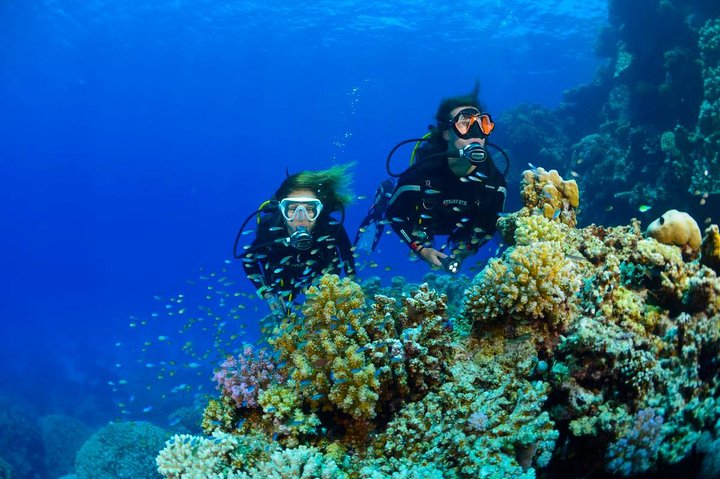
Marine biodiversity in Greece transforms every diving session into a living exploration. The waters of the Aegean Sea are home to a varied marine fauna, including manta rays, dolphins, turtles, wrasses, groupers, barracudas, and moray eels. Coral reefs and rocky areas serve as refuges for a multitude of rare species.
Marine parks, such as the one in Alónnisos, protect endangered species and promote the reproduction of multicolored fish. Caves and wrecks become habitats for octopuses, seahorses, and cuttlefish, making each exploration unique. The diversity of sites guarantees unexpected encounters with every dive.
Ecology-minded divers appreciate the growing trend toward sustainable diving. Local initiatives ensure the preservation of ecosystems and raise awareness about marine wildlife protection. Responsible observation helps maintain the richness of these exceptional seabeds.
What are the alternatives to diving in Greece and what criteria should be considered to choose the right destination?
Diving in Greece competes with other Mediterranean destinations like Croatia, Sardinia, or Sicily. Each region offers its own seabeds, diving sites, and particularities, but Greece stands out for the abundance of its submerged archaeological sites and the diversity of its ecosystems.
To choose the best destination, certain criteria should be evaluated: diversity of wrecks, accessibility of caves and reefs, quality of biodiversity, professional supervision, and ease of access to sites. The availability of certified schools and commitment to environmental preservation also play a decisive role.
Greece offers a balance between nature, history, and adventure, with iconic spots spread across the Cyclades, the Dodecanese, and the Sporades. The richness of marine wildlife and the diversity of sites guarantee renewed experiences on every trip.
Essential criteria for selecting a diving destination
- Diversity of sites: Reefs, wrecks, caves, marine parks
- Observed biodiversity: Presence of rare or protected species
- Supervision and safety: Certified centers, experienced guides
- Accessibility: Proximity to spots, facilitated logistics
- Environmental commitment: Protected areas, sustainable diving
During an exploration in Santorini, divers observed gas bubbles rising from the bottom of the caldera, indicating the ongoing underwater volcanic activity in this region.
Quiz: Explore Diving in Greece
What is the main advantage of diving in the Aegean Sea in terms of visibility?
Which Greek site is famous for its volcanic formations and gas bubbles?
Which marine species is often observed in the Alonissos marine park?
What equipment is recommended for safety during a first dive?
Which Greek site is known for its ancient shipwrecks?
Rhodes (Kalithea)
What equipment and precautions should be prioritized for a first dive in Greece?
Choosing the right equipment ensures a pleasant and safe diving experience. Local centers offer recent and suitable gear for scuba diving in the Aegean Sea. For a first immersion, a 5 mm wetsuit is generally sufficient thanks to the mild water temperature. Wearing a dive computer is advised to monitor depth and immersion time, especially on dive sites featuring caves or wrecks.
Respecting safety instructions remains essential. Local instructors emphasize the importance of buoyancy control to preserve the seabed and avoid any contact with fragile biodiversity. Accompaniment by a certified guide ensures a gradual discovery of the marine fauna’s particularities and underwater landscapes. Taking the time for prior training allows you to fully enjoy diving in Greece without apprehension.
Comparison of Essential Equipment for Diving in Greece
| Equipment | Main Use | Usage Advice |
|---|---|---|
| 5 mm wetsuit | Thermal protection | Ideal from May to November |
| Wide vision mask | Observation of fauna | Enhances exceptional visibility |
| Dive computer | Time and depth management | Essential on wrecks and caves |
| Buoyancy compensator | Buoyancy control | Preserves the seabed |
| Waterproof flashlight | Cave exploration | Improves safety |
| Certified guide | Supervision | Recommended for beginners |
Prior Training for a First Immersion
Taking training at an accredited school allows you to acquire the basics of diving. Instructors teach essential skills to move calmly in the seabeds of the Aegean Sea. This preparation facilitates the integration of safety rules and the learning of specific equipment.
Supervision by Local Professionals
Diving centers in Greece offer personalized support. Guides share their knowledge about biodiversity and the particularities of diving sites. Their expertise allows optimizing each outing by adapting routes according to level and expectations.
Safety Management at Diving Sites
Safety instructions are strictly enforced at every diving site. Pre-dive briefings include emergency procedures and best practices to preserve marine fauna. Divers thus benefit from a supervised and reassuring environment.
The Influence of Weather Conditions
The Aegean Sea presents stable conditions during the diving season. Checking the weather before each outing is advised to enjoy optimal visibility and avoid unexpected currents. Guides adapt schedules and sites according to forecasts.
- Choose a certified school
- Try the equipment before the outing
- Respect safety briefings
- Prefer supervised outings
- Observe fauna without contact
Why Does Greece Establish Itself as an Unmissable Destination for Diving in the Mediterranean?
Diving in Greece attracts with the diversity of its seabeds and the accessibility of its diving sites. Travelers enjoy a unique experience combining history, nature, and adventure. Ancient wrecks, mysterious caves, and the richness of marine biodiversity make each immersion a privileged moment. The varied offer of certified centers and the quality of infrastructures strengthen the destination’s appeal for all levels.
FAQ on Diving in Greece: Practical Tips and Unique Experiences
Can you dive all year round in Greece or are there periods to favor?
The diving season mainly extends from May to November, a period during which the water temperature remains pleasant and visibility is at its best. Off-season, some sites remain accessible but the coolness of the water and the reduced activity of specialized centers limit possibilities. Planning your outings during the high season guarantees optimal conditions to fully enjoy the Greek underwater landscapes.
What memorable souvenirs or encounters can one hope for during a dive in the Aegean Sea?
Throughout the dives, travelers often encounter emblematic creatures such as loggerhead turtles or seahorses hidden in the seagrass beds. Sharing a moment in front of a school of barracudas or observing a monk seal in its natural environment remains a rare experience. Each site holds a surprise, whether it is a wreck full of history or a color spectacle offered by gorgonians and corals.
How to limit the environmental impact of your practice during a diving trip in Greece?
Adopting a responsible approach involves respecting local guidelines, observing wildlife without contact, and choosing centers committed to marine preservation. Favoring the use of eco-friendly equipment and avoiding any collection or damage to the seabed helps preserve this exceptional heritage for future generations.
If you wish to broaden your underwater horizons beyond the Aegean Sea, also discover the best snorkeling destinations in the world to compare the richness of aquatic ecosystems across the globe.