First dreams of adventure, fascination with the marine world, and the desire to share unique moments with family: many parents wish to offer their child a unique and memorable experience in the water. Faced with the temptation to see their child evolve safely beneath the surface, the question of the ideal age and suitable conditions naturally arises. Between playful initiation, supervised progression, and respect for physiological limits, there is a clear path to ensure calm and appropriate learning for each young diver. This journey, rich in encounters and learning, will be detailed step by step to allow each family to make an informed choice and offer their child a safe and enriching aquatic adventure.
At what age can a child start diving initiation?
Diving attracts many children curious about the marine world. Initiation to diving begins with familiarization with the aquatic environment from a very young age. Pool activities promote confidence and water safety. The first structured courses are accessible from six years old, notably with the PADI Discover Mermaid and Basic Mermaid programs, which open the way to exploring water in a playful and progressive manner.
The youngest can thus learn to swim, feel comfortable underwater, and develop their buoyancy. This essential step prepares them for scuba diving training accessible from eight years old. Specialized clubs offer a suitable environment, with attentive supervision and equipment designed for the little ones.
Comparison of main diving programs for children
| Program | Minimum Age | Environment | Maximum Depth |
|---|---|---|---|
| PADI Discover Mermaid | 6 years | Pool | Surface |
| PADI Basic Mermaid | 6 years | Pool | Surface |
| PADI Bubblemaker | 8 years | Pool / Shallow sea | 2 meters |
| PADI Seal Team | 8 years | Pool | 2 meters |
| PADI Junior Open Water Diver | 10 years | Sea / Pool | 12 meters |
| PADI Junior Advanced Open Water Diver | 12 years | Sea / Pool | 21 meters |
| PADI Junior Rescue Diver | 12 years | Sea / Pool | 21 meters |
| Open Water Diver (adult) | 15 years | Sea / Pool | 18 meters |
What techniques and skills are taught during a diving training for children?
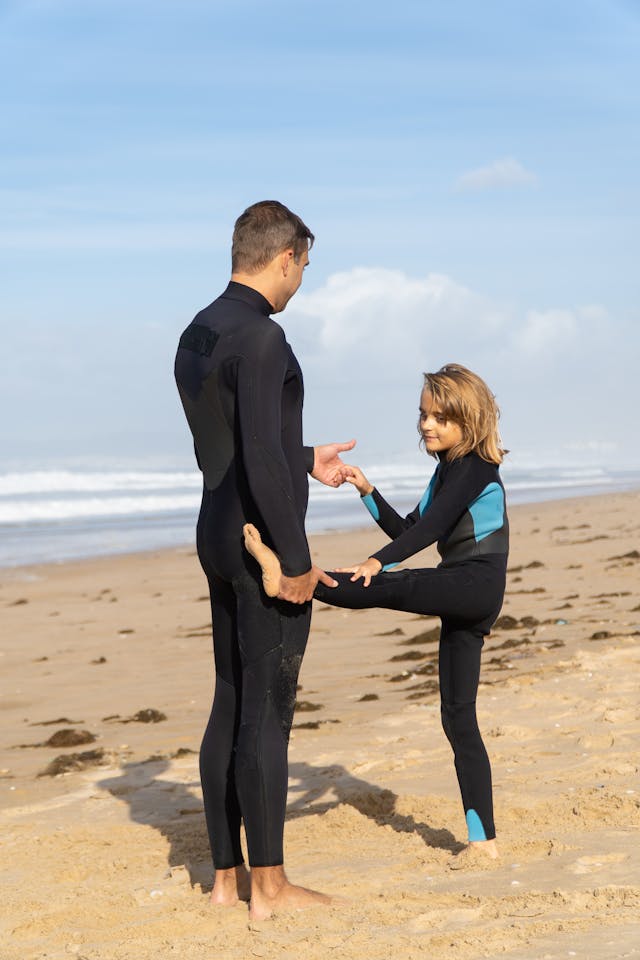
The techniques covered during the training include underwater breathing, the use of appropriate equipment, and buoyancy control. Children learn to put on and take off their equipment, manage their immersion smoothly, and adopt a calm and regular breathing technique, essential to remain relaxed underwater.
Safety is paramount at every stage. Instructors emphasize emergency situation management, constant supervision, and aquatic safety rules. Each program offers progression adapted to the age and level of each child, ensuring a positive and enriching experience.
Key skills acquired by child divers
- Familiarization with diving equipment
- Breathing technique and air management underwater
- Buoyancy and balance while diving
- Supervision and adherence to safety instructions
- Management of simple emergency situations
- Development of confidence and enjoyment in the aquatic environment
How does a pool or sea dive for children take place?
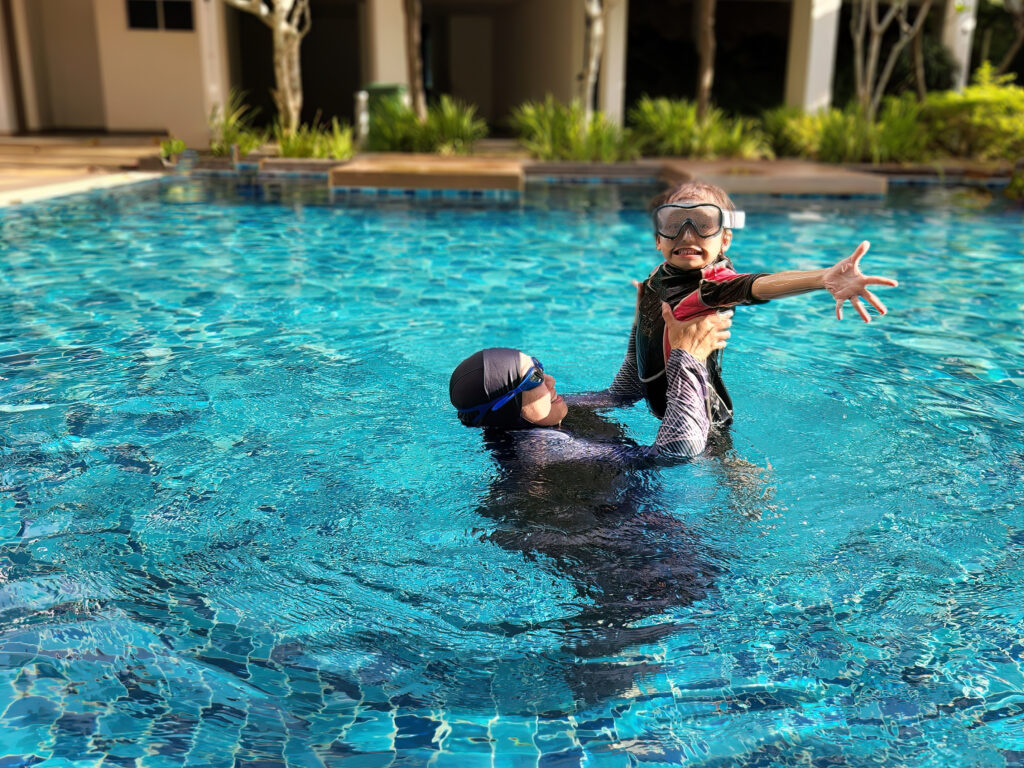
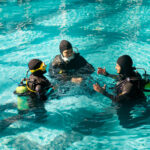
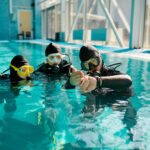
Pool diving offers a controlled environment, ideal for initiation. Children progress safely, under the supervision of qualified instructors, and discover the joy of immersion. Sessions are short, fun, and focused on progression at each child’s own pace.
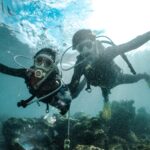
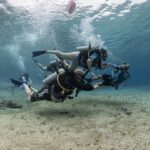
Sea diving becomes possible from the first Junior certification, starting at 10 years old. Exploration of the marine world is then done in small groups, with strict safety rules. Children discover the fauna, flora, and live an unforgettable experience.
What are the main programs and certifications dedicated to children in diving?
The PADI Bubblemaker and Seal Team programs are designed for children from eight years old. They allow discovering diving with real equipment, in a fun and supervised environment. These activities promote familiarization with equipment and safety.
From 10 years old, the PADI Junior Open Water Diver offers an internationally recognized certification. This program teaches the basics of scuba diving, depth management, and appropriate supervision. Young divers can then access advanced certifications from 12 years old.
Summary of progression steps in diving for children
- Initiation with water games from a very young age
- PADI Mermaid program from 6 years old
- Bubblemaker and Seal Team diving from 8 years old
- Junior Open Water Diver certification from 10 years old
- Advanced Junior program from 12 years old
- Adult certification from 15 years old
What are the recommendations to ensure the safety and development of the child diver?
Safety relies on constant supervision, respect for age and depth limits, as well as the child’s genuine motivation. It is advised to choose appropriate training and professional supervision.
Progression should be gentle, respecting each child’s pace. The choice of program depends on maturity, confidence level, and interest in exploring the marine world. A good experience promotes autonomy and fulfillment in diving.
In 2019, a Mediterranean diving club welcomed a ten-year-old child who obtained their first Junior Open Water Diver certification and observed an octopus during their very first sea dive.
If you want to deepen your knowledge about the different types of training available after an initial introduction, discover how experienced divers progress through Trimix diving and continue their learning safely.
To learn more about the ideal age and conditions to start scuba diving safely, find all the information on children’s diving training and the steps to follow for a successful initiation.
What specific equipment is necessary for diving with children?
The choice of equipment plays a fundamental role in ensuring comfort and safety during children’s initiation. Manufacturers offer wetsuits adapted to the morphology of the youngest, providing optimal thermal protection. Wearing low-volume masks promotes quick familiarization and clear vision underwater, essential to fully enjoy the exploration.
Children’s regulators have ergonomic mouthpieces that facilitate breathing and limit mouth fatigue. Smaller-sized buoyancy compensators improve buoyancy and autonomy while remaining easy to use. This specific equipment allows for safe and age-appropriate progression.
Short and flexible fins encourage efficient swimming without excessive effort, helping to build confidence during the first immersions. All these elements are checked before each session, ensuring a calm and enjoyable experience for the child.
Examples of equipment adapted for child divers
| Equipment | Main feature | Use |
|---|---|---|
| Junior wetsuit | Enhanced thermal protection | Maintains body temperature |
| Low-volume mask | Adapted to the child’s face | Clear vision and comfort |
| Children’s regulator | Ergonomic mouthpiece | Facilitates breathing |
| Junior buoyancy compensator | Reduced and adjustable size | Optimizes buoyancy |
| Short fins | Flexibility and efficiency | Facilitates swimming |
The role of specialized instructors
Instructors specialized in children’s diving provide continuous supervision and tailor each program to the maturity of each participant. Their experience promotes harmonious progression while teaching the basics of safety and emergency management in a reassuring environment.
The importance of mental and physical preparation
Mental and physical preparation precedes each training. Familiarization sessions with water, breathing exercises, and equipment discovery help build confidence and create a favorable atmosphere for exploring the marine world.
- Equipment trial in the pool
- Controlled breathing exercises
- Learning underwater communication
- Stress management in aquatic environments
- Work on balance and buoyancy
How to choose the best diving club for a child?
Choosing a specialized club is based on the quality of supervision, the presence of certified instructors for initiating the youngest, and the availability of suitable equipment. A recognized structure offers progressive programs adapted to each age and guarantees compliance with international safety standards.
The club environment must allow for safe progression, whether in pool diving or sea diving. Personalized support fosters confidence, discovery of the marine world, and the pleasure of learning in a group. A good club emphasizes emergency situation management and the continuous training of its instructors.
Feedback from other families, the quality of the facilities, and the variety of programs offered are reliable indicators for choosing the most suitable establishment. An experienced club supports each child in their development and progression towards autonomy underwater.
Diving clubs specialized for children in France
| Club Name | City | Type of Program |
|---|---|---|
| Les Dauphins Bleus | Marseille | Bubblemaker, Seal Team |
| Plongée Jeunesse | Nice | Junior Open Water |
| Océan Enfants | La Rochelle | Initiation, Mermaid |
| Atlantis Junior | Montpellier | Pool Diving |
| Subaqua Kids | Toulon | Advanced Certifications |
Criteria for recognizing good supervision
Quality supervision is distinguished by pedagogy, patience, and the ability to establish a climate of safety. Experienced instructors adapt their methods, offer individualized progression, and monitor each stage of the initiation.
The impact of the environment on learning
A preserved natural setting or a modern pool promotes familiarization and confidence. A serene environment, free from distractions, optimizes concentration and allows for a better diving experience for children.
- Verification of instructors’ qualifications
- Observation of the facilities
- Preliminary interview with the managers
- Analysis of feedback
- Evaluation of program diversity
- Trial of a discovery session
What experience does diving offer children and their development?
Diving offers a unique experience that stimulates curiosity and the spirit of adventure. Exploring the marine world develops confidence, stress management, and autonomy from a very young age. This educational leisure activity promotes learning about safety and respect for the aquatic environment.
Diving is opening your eyes to a new universe where each child becomes an explorer of their own limits.
FAQ – Answers to frequently asked questions about children’s diving training
Does my child need to be able to swim perfectly before starting scuba diving?
Comfort in an aquatic environment is desired, but perfect mastery of swimming is not mandatory to begin introductory diving programs. The first experiences take place in a pool, in a secure setting, where instructors assess each child’s comfort level and adapt exercises to gradually strengthen their confidence and aquatic abilities.
Can scuba diving be practiced as a family with young children?
Many clubs offer activities designed for families, allowing parents and children to share the discovery of the underwater world together. There are specific sessions where everyone progresses according to their level, under the supervision of instructors trained in family support. This approach fosters moments of bonding while ensuring safety and respecting age and experience limits.