The FFESSM level 1 technical training manual, in its December 2025 version, lists ten conventional signs that every diver must know how to identify and perform. The slate does not appear there.
This detail puts the accessory in its place. A slate is used to write what the hands cannot say. It does not replace any safety gesture.
Here we sort out what the slate really brings, the signs to know before taking it along, and the criteria that matter when buying one. No home testing bench was conducted and no price is copied from a product sheet.
What is a diving slate used for if the signs already exist?
Hand signs manage the conduct of the dive and emergencies: okay, ascend, reserve, out of air. The slate takes over for everything a gesture poorly expresses, like a precise number, the name of a species, a question about the route, or an exercise instruction during training.
It complements the gestures and never replaces them.
Take a hypothetical case. Your buddy shows you something at the bottom and you don’t understand. With hands, you can mime for a long time, consume air, and lose sight of the rest of the group while the guide continues on. With a slate, he writes “nudibranch on the left” and you move on. But the advantage stops there. No one should write “out of air” on a slate.
This message is conveyed by an immediate gesture, which the federal training classifies among the conventional signs to be performed accurately and promptly. The slate therefore remains the tool for long and non-urgent messages. It also has a less visible use in training, where an instructor can note an instruction or correction without waiting for the surface.
Which diving signs should you know before pulling out the slate?
The FFESSM level 1 manual cites ten conventional signs: OK, ascend, descend, not okay, half pressure, reserve, out of air, breathlessness, cold, and end of dive or exercise. This foundation comes before any slate, because a gesture is done in one second, even in murky water.
However, these signs are not perfectly universal. The Divers Alert Network told this in an Alert Diver article published in 2011, written by Eric Douglas. The author explains that he almost failed an instructor evaluation because the examiner used a closed fist as the OK sign. He expected the circle formed by the thumb and index finger. The comparison he makes with languages holds well.
Signs have their dialects.
The same article describes several ways to indicate remaining air, with fingers representing hundreds of psi for some and a different logic for others. Its recommendation is simple: before descending, talk with your buddy to verify that you understand the same signs. This is where a slate proves its usefulness, since you can write on it at the surface the agreed convention for pressure or turn-back.
What criteria should you look at when choosing a diving slate?
The right model depends on what you will write and where you carry it. For a few words in recreational diving, a small wrist slate is enough. For diagrams, records, or training, a larger surface or a notebook with waterproof pages becomes more practical, at the cost of a bulkier object.
| Format | Typical Use | Point to Check |
|---|---|---|
| Wrist slate | Short messages between buddies | Attachment that does not slip on the suit |
| Forearm or rigid slate | Dive plan, diagrams, training instructions | Storage without hindering the buoyancy vest |
| Notebook with waterproof pages | Records, observations, notes to keep | Binding and number of pages |
First look at the pencil. If it is not attached by a cord or elastic, it will end up on the bottom sooner or later, and the slate will be useless for the rest of the dive. Then check that you can grab it and write with the diving gloves you actually wear. Also test the attachment. A slate hanging from a carabiner can catch on the reef. Thus, the best location remains the one you can reach without looking, even with thick gloves and an inflated vest.
The rest is judged by readability.
A clear surface and a well-dark pencil line are easier to read when the light dims. However, the size of the writing matters as much as the size of the slate, and a small surface filled with tight letters becomes unreadable for a buddy located one meter away from you. Write large, in capital letters, with few words.
What to note on your slate before entering the water?
The slate is mainly used on the surface, during preparation. You can record what the briefing has set: planned maximum depth, duration, turn and return pressure, agreed signs for pressure and route. These figures come from the guide and the dive plan, never from a downloaded model.
And a prepared slate saves you from calculating underwater.
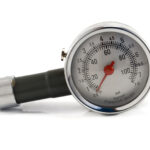
For example, you can note the pressure at which you must signal half-pressure, then reserve, in agreement with the dive group. To read these values without hesitation, review how your dive pressure gauge works and what it really displays. The planned duration is tracked with your dive watch or computer. Add two or three ready-made messages if you often dive with the same buddy. This shortens the writing.
For observation diving, a column for species seen helps to remember what you encountered, provided you keep your distance from the wildlife and do not touch anything to write, a reflex detailed in why you should never touch marine life.
On a more technical outing, like a wreck dive at Lavandou, a written plan can help the dive group find the planned route. It does not replace the guide or the briefing.
Is the slate still useful when visibility decreases?
Less than one might think. A slate is read at short distance, with light, and requires two divers to stop side by side. In murky water or at night, simple signs and contact between buddies remain faster than writing. Good visibility does not make a dive safer either.
However, the slate keeps a place in these conditions, on one condition only: consult it before you need it. At night, illuminate the surface with your torch without dazzling your buddy. Keep the message to two or three words. The time spent writing or deciphering is time when you are not monitoring your depth or your air. We therefore prefer a short message poorly handwritten to a complete sentence. In short, writing slows down.
For maintenance, rinse the slate and pencil with fresh water after the dive and let dry, like the rest of your equipment.
Erase pencil marks according to the method indicated by the manufacturer, with an eraser or a soft pad, to avoid scratching the surface. Check the cord and attachment before each outing. A scratched slate or a blunt pencil can be replaced at little cost, whereas an illegible message costs you time and air when you need it.
FAQ
Does a dive slate replace hand signals?
No. Conventional signals, like reserve or air failure, are done in one second and remain priority. The slate is for long and non-urgent messages.
Are dive signals the same everywhere?
The basis is similar from one course to another, but variations exist, especially to indicate remaining air. DAN advises discussing this with your buddy before descending.
What size slate should a beginner choose?
A wrist slate is sufficient for short messages in recreational diving. A larger surface or a waterproof notebook is justified for training, diagrams, or recordings.
How to erase a dive slate?
Follow the manufacturer’s method, usually an eraser or a soft pad. Then rinse the slate and pencil with fresh water and let dry.
Sources
- Technical Diver Level 1 Training Manual (PE20) (FFESSM, 2025)
- What’s That You Say? (Divers Alert Network, Alert Diver, 2011)
Photo: Massimo Ponti, Wikimedia Commons, CC BY-SA 4.0
{“@context”:”https://schema.org”,”@type”:”FAQPage”,”mainEntity”:[{“@type”:”Question”,”name”:”Une ardoise de plongée remplace-t-elle les signes de la main ?”,”acceptedAnswer”:{“@type”:”Answer”,”text”:”Non. Les signes conventionnels, comme réserve ou panne d’air, se font en une seconde et restent prioritaires. L’ardoise sert aux messages longs et non urgents.”}},{“@type”:”Question”,”name”:”Les signes de plongée sont-ils les mêmes partout ?”,”acceptedAnswer”:{“@type”:”Answer”,”text”:”Le socle est proche d’un cursus à l’autre, mais des variantes existent, surtout pour indiquer l’air restant. Le DAN conseille d’en parler avec ton binôme avant de descendre.”}},{“@type”:”Question”,”name”:”Quelle taille d’ardoise choisir pour débuter ?”,”acceptedAnswer”:{“@type”:”Answer”,”text”:”Une ardoise de poignet suffit pour des messages courts en plongée loisir. Une surface plus grande ou un carnet immergeable se justifie pour la formation, les schémas ou les relevés.”}},{“@type”:”Question”,”name”:”Comment effacer une ardoise de plongée ?”,”acceptedAnswer”:{“@type”:”Answer”,”text”:”Suis la méthode du fabricant, en général une gomme ou un tampon doux. Rince ensuite l’ardoise et le crayon à l’eau douce et laisse sécher.”}}]}