In September 2013, a pink and sagging fish, with a soft nose and drooping mouth, was elected the ugliest animal in the world. It was called Mr Blobby. It had been dead for ten years and was soaking in alcohol, at the bottom of the Australian Museum’s collections in Sydney.
This fish is the blobfish, or blob fish. Its soft dough-like face has gone viral on the web, from memes to plush toys, becoming a symbol of animal ugliness. Yet, this face does not exist in its natural environment.
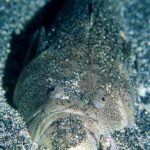
Here, we focus solely on it, with what museums and researchers really say. For the full ranking, we have listed elsewhere the ten ugliest fish in the world, and the uranoscope, another candidate for the ugliest fish title, has its own portrait.
Why was the blobfish elected the ugliest animal in the world?
The blobfish won in 2013 an online vote organized by the Ugly Animal Preservation Society, an association that humorously defends species considered unphotogenic. The photo submitted for the vote showed a specimen brought up from beyond 1,000 meters and deformed by the ascent. The title thus rewards a photo taken outside its environment.
The association starts from a simple observation. The panda attracts attention, donations, and campaigns, while less cute animals disappear without anyone caring. They chose to give them a mascot. The blobfish won the vote. The scientific press of the time, including Science News on September 26, 2013, quickly reminded that the image was misleading about the animal.
In short, the jury voted for a decompressed corpse.
But the photo already had a history. The specimen was captured in June 2003 during the NORFANZ scientific expedition, on the Norfolk Ridge northwest of New Zealand, between 1,013 and 1,340 meters deep, according to the Australian Museum. The crew nicknamed it Mr Blobby.
Why does the blobfish look so flabby once brought up?
Because its body is built for deep-sea pressure. Its bones are soft and barely ossified, its skin is thin and loose, and its musculature remains reduced. At depth, the water pressure maintains this body shape, but as soon as a net brings it to the surface, it loses this external support and collapses on itself like soft dough.
Pressure increases by about one atmosphere every ten meters. At 1,000 meters, the fish withstands about a hundred times surface pressure. A heavy skeleton and thick muscles would cost it energy in an environment where food is scarce. Its gelatinous flesh suffices. According to the organizer of the New Zealand vote mentioned below, this jelly-like density allows it to float just above the bottom without swimming.
Thus, the ascent precisely destroys what gave the fish its shape.
Mr Blobby’s face, with that hanging nose and pout, is the result of this collapse, explained Science News in 2013. Then the alcohol did the rest. According to the Australian Museum, fixation in formalin then in 70% ethanol tightened its skin. Its famous nose shrank. Its body relies on energy economy, a much more discreet strategy than those in our selection of extraordinary defense mechanisms in marine animals.
What does a living blobfish look like, between 600 and 1,200 meters?
Alive, in its environment, the blobfish looks like a stocky fish, with a large head, broad pectoral fins, and smooth skin. The pressure keeps its contours sharp. Images taken at depth show an animal resting or floating near the bottom, far from the pink puddle of the photos.
The range of 600 to 1,200 meters comes from the Mountains to Sea Conservation Trust press release. Read it as an order of magnitude. The family Psychrolutidae, to which it belongs, occupies depths from 100 to 2,800 meters in the Atlantic, Indian, and Pacific Oceans, according to the Australian Museum. Its biology remains poorly known. Examined stomachs contained gastropods, suggesting a diet of small invertebrates picked up near the bottom.
So we know very little about its feeding habits, and almost nothing solid about its growth, reproduction, or lifespan, which some articles claim without source.
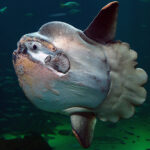
However, one misconception persists. People sometimes imagine encountering it during a deep dive, around a wall, like stumbling upon a moray eel or a scorpionfish. No chance. At those depths, no recreational diver will see it, and the photos circulating come from trawls, robots, or museums. It shares these deep waters with other strange fish, like the abyssal anglerfish and its extraordinary couple life. For a surprising silhouette within finning reach, the sunfish remains more accessible to divers and snorkelers, although no encounter is ever guaranteed.
Where does the blobfish live and what threatens it?
The blobfish Psychrolutes marcidus lives off the coast of mainland Australia, Tasmania, and New Zealand, on deep seabeds. Its main known threat is bottom trawling. It often ends up in nets intended for the orange roughy, a commercially fished deep-sea fish. Its conservation status remains unknown.
A small clarification about the name. The word blobfish actually refers to several species of the genus Psychrolutes. The Australian Museum identifies Mr Blobby as a Psychrolutes microporos, a close cousin of P. marcidus, which most popular articles confuse with it without noting. The two look very similar. This does not change the decompression story.
And ocean warming could complicate matters.
Psychrolutidae are cold-water fish, living either at high latitudes or in depth, and the specialist interviewed by the Australian Museum expects that rising marine temperatures will harm them. This is an expert prediction. No published measurement on the species confirms this yet, so it is impossible to decide for now.
How did the blobfish become fish of the year in New Zealand?
In March 2025, the blobfish won the Fish of the Year contest organized by the Mountains to Sea Conservation Trust, with 1,286 votes, ahead of the orange roughy, second with 1,009 votes. In total, 5,583 New Zealanders voted, compared to 1,021 the previous year, a participation more than five times higher. Twelve years after 2013, the fish changes status.
But the victory owes much to a radio campaign. The More FM hosts supported the fish on air, repeating that it had been bullied all its life and finally deserved its moment of glory. The trust saw this as an opportunity to talk about the deep sea. Kim Jones, for the trust, summarized the final duel as between “forgotten deep-sea creatures.” The final duel actually opposed two species linked by the same bottom trawl, the one targeting the orange roughy.
A wrong date sometimes circulates: this vote dates from 2025.
For a fish that almost no one will see alive, the vote had a concrete effect. Bottom trawling appeared in the newspapers for a few days, through a mascot that everyone already recognized. In our opinion, this is the best possible revenge on the 2013 photo.
FAQ
What is the ugliest fish in the world?
The blobfish was elected the ugliest animal in the world in 2013 by the Ugly Animal Preservation Society. This title is based on the photo of a specimen brought up from the deep and deformed by decompression. Other candidates exist, such as the telescope fish.
Is the blobfish as ugly alive?
No. In its environment, between about 600 and 1,200 meters, the pressure maintains the shape of its body and it looks like a stocky fish with a big head. It is the ascent that makes it collapse.
Is the blobfish threatened?
Its conservation status is unknown. It is often caught accidentally during bottom trawling targeting the orange roughy, off New Zealand and Australia.
Can you see a blobfish while diving?
No. It lives well beyond recreational diving depths. The images we have come from trawls, robots, or museum collections.
Sources
- Blobfish (aka Mr Blobby) (Australian Museum, 2025)
- Fish of the Year 2025: Kiwis answer the call to support their squishy, fishy friend (Mountains to Sea Conservation Trust, 2025)
{“@context”:”https://schema.org”,”@type”:”FAQPage”,”mainEntity”:[{“@type”:”Question”,”name”:”Quel est le poisson le plus moche du monde ?”,”acceptedAnswer”:{“@type”:”Answer”,”text”:”Le blobfish a été élu animal le plus laid du monde en 2013 par la Ugly Animal Preservation Society. Ce titre repose sur la photo d’un spécimen remonté des grands fonds et déformé par la décompression. D’autres candidats existent, comme l’uranoscope.”}},{“@type”:”Question”,”name”:”Le blobfish est-il aussi moche vivant ?”,”acceptedAnswer”:{“@type”:”Answer”,”text”:”Non. Dans son milieu, entre 600 et 1 200 mètres environ, la pression maintient la forme de son corps et il ressemble à un poisson trapu à grosse tête. C’est la remontée qui le fait s’affaisser.”}},{“@type”:”Question”,”name”:”Le blobfish est-il menacé ?”,”acceptedAnswer”:{“@type”:”Answer”,”text”:”Son statut de conservation est inconnu. Il est souvent capturé par accident lors du chalutage de fond visant l’hoplostète orange, au large de la Nouvelle-Zélande et de l’Australie.”}},{“@type”:”Question”,”name”:”Peut-on voir un blobfish en plongée ?”,”acceptedAnswer”:{“@type”:”Answer”,”text”:”Non. Il vit bien au-delà des profondeurs de la plongée loisir. Les images qu’on en a viennent de chaluts, de robots ou de collections de musée.”}}]}