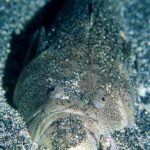
Between 2015 and 2024, poison control centers in mainland France recorded 1,311 cases of envenomation by marine animals, according to a report published by Anses in July 2026. Jellyfish accounted for 19%. The weever fish, a small fish that buries itself in the sand, is far ahead with 53%.
In short, jellyfish make more noise than damage on our beaches.
Yet it remains the most misunderstood marine animal by vacationers, and by quite a few divers as well. This guide lays the foundations (anatomy, life cycle, species along our coasts) and directs you to our detailed articles on each topic.
How does a jellyfish live without a brain or heart?
A jellyfish has neither brain nor heart. Its body consists of two thin layers of cells separated by a transparent jelly, the mesoglea, and oxygen passes directly through these tissues without going through a specialized organ. A diffuse network of neurons, without a command center, coordinates the contractions of the bell that propel it forward in jerks.
Water makes up more than 95% of its mass, a commonly cited order of magnitude that varies depending on the species.
Jellyfish belong to the cnidarians, like corals and sea anemones. Their signature lies in the cnidocyte. Each cell of this type contains a capsule, the nematocyst, with a coiled filament that shoots out upon contact with prey or skin and injects venom. The firing is automatic. And it does not depend on any decision by the animal, since the trigger is mechanical and chemical, cell by cell, which explains why a torn tentacle fragment can still sting.
In terms of senses, large jellyfish and box jellyfish have rhopalia on the edge of the bell. These small organs detect light and body position. Box jellyfish even house small eyes with a lens capable of spotting obstacles.
From polyp to jellyfish, how does the life cycle work?
In most large jellyfish, life alternates between two forms. Adults release their gametes, fertilization produces a ciliated larva, the planula, which attaches to a hard surface and becomes a polyp a few millimeters in size. This polyp then segments into stacked discs that detach one by one to become young jellyfish, the ephyrae.
The polyp also multiplies by budding, without a partner. That’s why a population sometimes seems to appear out of nowhere, although it has been building for months on a hull, a buoy, or a pontoon from a few discreet polyps. However, not all species follow this pattern. Pelagia noctiluca, the purple jellyfish very common in the Mediterranean, skips the polyp stage and goes directly from larva to jellyfish in open water. This point changes everything. It needs neither breakwater nor rock to sustain itself, which helps it form large swarms far from the coasts.
A single polyp can produce several jellyfish in the same season.
Turritopsis, the so-called immortal jellyfish
Turritopsis dohrnii measures a few millimeters and lives in the Mediterranean, among other seas. Stressed or damaged, it can revert to a polyp, which will in turn produce new jellyfish. Italian and Swiss researchers described this reversal in the 1990s, under the name transdifferentiation. Immortal, then? Not in the usual sense of the word, as it gets eaten, falls ill, and dies like any small plankton animal. To compare it with other records, take a look at our ranking of marine animals that live the longest.
Which jellyfish to encounter in the Mediterranean and Atlantic?
In the Mediterranean, you will mostly see the purple jellyfish, the rhizostome, the “fried egg” jellyfish, and the moon jellyfish. In the Atlantic and the English Channel, the lion’s mane jellyfish and the large rhizostome dominate summer sightings. The Portuguese man o’ war arrives via the Atlantic, and it is not a jellyfish in the strict sense.
| Species | Common name | Where to see it | Identification (indicative) |
|---|---|---|---|
| Pelagia noctiluca | Purple jellyfish | Mediterranean, Atlantic | Small, violet-pink, very stinging, luminous at night |
| Rhizostoma pulmo | Rhizostome, barrel jellyfish | Mediterranean | Large white bell bordered with violet, generally mild sting |
| Cotylorhiza tuberculata | “Fried egg” jellyfish | Mediterranean, late summer | Harbors symbiotic algae, mild sting |
| Aurelia sp. | Moon jellyfish | Mediterranean, Atlantic, English Channel | Four rings visible through transparency, mild sting |
| Chrysaora hysoscella | Compass jellyfish | Atlantic, English Channel | Brown V-shaped stripes on the bell, painful sting |
| Rhizostoma octopus | Atlantic rhizostome | Atlantic, English Channel | Large size, generally mild sting |
| Physalia physalis | Portuguese man o’ war | Atlantic | Colony with a bluish float, very stinging |
This table provides general trends. The reaction to a sting varies depending on the person, the area affected, and the amount of tentacles in contact, so a species considered “mild” can still leave a lasting mark on sensitive skin.
This article is informative and does not replace the advice of a qualified diving medicine doctor.
The Portuguese man o’ war, a colony posing as a jellyfish
The NOAA classifies it among the siphonophores. It is a colony of specialized and genetically identical individuals, the zooids, gathered under a blue, violet, or pink float. Its tentacles average 10 meters and can reach 30 meters according to the same source. The name matters little to your skin. Its nematocysts sting strongly, and the NOAA specifies that while the sting rarely kills, it remains painful and leaves marks on exposed skin. On the beach, leave a stranded Portuguese man o’ war where it is.
But if you get stung, Anses recommends rinsing abundantly with seawater, never with fresh water, and our guide what to do after a jellyfish sting details the next steps.
Why are some summers invaded by jellyfish?
Jellyfish blooms result from cumulative factors. Warmer water accelerates growth, winds and currents push swarms toward the coast, plankton is abundant. Researchers also mention overfishing of predators and competitors, or the increase of hard surfaces where polyps attach.
The wind weighs heavily for swimmers. A swarm of purple jellyfish can stay offshore for several days then reach the beach overnight after a simple shift of the wind toward land. However, jellyfish maps published by some apps are not always dated or sourced. Check the time of the report. A morning observation does not say much about the afternoon.
The causes, effects on fishing, and scientific debate are covered in our dossier on jellyfish invasions and their consequences on biodiversity.
Here we stick to a simple idea: a beach without jellyfish at 9 a.m. guarantees nothing for swimming at 4 p.m., and a flag or a sign from the lifeguard station is better than a screenshot from the day before.
What to remember about the records attributed to jellyfish?
Some records hold up. The green fluorescent protein, isolated from the jellyfish Aequorea victoria, earned the 2008 Nobel Prize in Chemistry for Osamu Shimomura, Martin Chalfie, and Roger Tsien. It has since been used as a luminous marker in a very large number of biology laboratories.
Other claims circulate without proof. The previous version of this page announced painkillers derived from jellyfish venoms “without side effects.” No such validated medication has been found, so the sentence has been removed. The same goes for the recommendation to eat jellyfish attributed to the UN, whereas studies published by the FAO only mentioned this possibility for certain species already consumed in Asia. The rest often belongs to legend.
However, regarding behavior, a Caltech team showed in 2017 that Cassiopea undergoes a sleep-like state each night, with fewer pulses, slower reactions, and a need to recover after a restless night. We summarize the study in do jellyfish sleep?
The animal itself, lying upside down on the seabed with its algae, has its own fact sheet on the Cassiopea jellyfish.
For other verified anecdotes, our selection of ten things to know about jellyfish takes over. A good starting point.
FAQ
Is the jellyfish a fish?
No. The jellyfish is a cnidarian, a cousin of corals and sea anemones. It has neither brain nor heart, and its body is composed mostly of water.
Is Turritopsis dohrnii really immortal?
It can revert to the polyp stage and start a new cycle, which earns it this nickname. But it remains mortal in the usual sense. It gets eaten or dies of disease like any plankton animal.
Is the Portuguese man o’ war a jellyfish?
No. According to NOAA, the Portuguese man o’ war is a siphonophore, a colony of specialized individuals gathered under a float. Its tentacles average 10 meters long and sting strongly, although the sting rarely kills.
Should a jellyfish sting be rinsed with fresh water?
No. Anses advises rinsing abundantly with seawater, and never with fresh water. In case of discomfort, respiratory difficulty, or intense pain, call emergency services or a poison control center.
Why do we see more jellyfish in summer?
Warm water accelerates their growth and the plankton they feed on is abundant. Winds and currents then drive the swarms towards the beaches. The extent varies greatly from year to year.
Sources
- Portuguese man o’ wars, jellyfish, weever fish: recognizing them to better avoid stings (Anses, 2026)
- What is a Portuguese Man o’ War? (NOAA National Ocean Service, 2026)
Photo: DipartimentoBiologiaUniPi, Wikimedia Commons, CC BY 4.0