Marine legends, mythical heritage and the power of the elements intertwine in the story of Poseidon, the god whose strength shapes storms and calms the waves. When you have lived by the rhythm of the coasts and shared the life of fishermen, it becomes clear that every wave tells an ancient tale. Fascination with marine creatures, respect for ancient rites, and a quest for meaning still drive those who seek to understand the deep relationship between man and the sea. Through founding myths, symbolic powers, and maritime rituals, this journey into Poseidon’s heritage reveals how the figure of the god continues to inspire adventure and diving enthusiasts, while inviting reflection on the fragility and grandeur of our bonds with the oceans.
How did Poseidon become a major figure in Greek mythology?
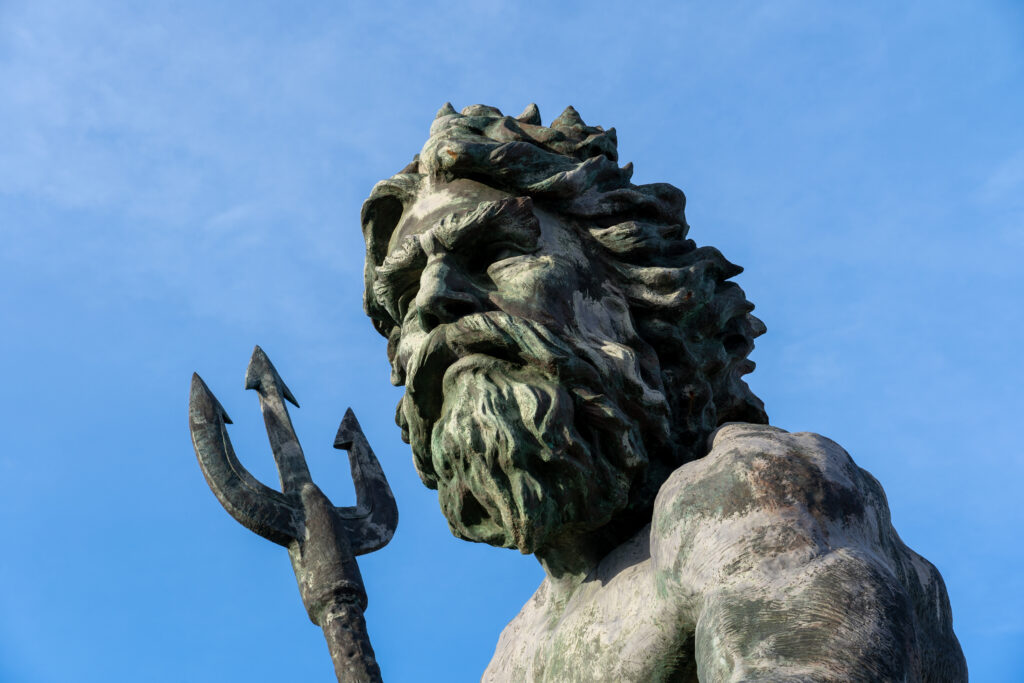
The origin of Poseidon dates back to the end of the Bronze Age, a period when the Mycenaean civilization already worshipped him at sites like Pylos and Knossos. Linear B tablets reveal the importance of this deity in religious practices, attesting to an ancient cult that even predates the great epic narratives.
Historical landmarks of Poseidon’s importance
| Period | Major event | Place of worship | Role in mythology |
|---|---|---|---|
| Bronze Age | Mycenaean cult | Pylos, Knossos | Main deity |
| Archaic period | Appearance in oral tales | Mainland Greece | Myth protagonist |
| Classical period | Institutionalization of the cult | Athens, Corinth | Master of the sea and waters |
| Hellenistic period | Assimilation to Neptune | Roman Empire | Fusion of Greco-Roman beliefs |
| Modern era | Cultural references | Museums, literature | Emblematic figure of the myth |
The birth of Poseidon is set within the divine family of Cronus and Rhea. His journey, marked by the prophecy that foretold his father’s downfall, makes him a central figure in Greek mythology. Alongside Zeus and Hades, he forms the triad that rules the sea, the sky, and the underworld, demonstrating divine kinship and unmatched power.
What are the origins and family of Poseidon according to ancient beliefs?
Poseidon belongs to a complex mythological family, son of Cronus, the master of time, and Rhea, the Titaness of motherhood. He shares his childhood with Hera, Demeter, Hestia, Hades, and Zeus, all descended from divine ancestors whose rivalries shaped the founding myths of ancient Greece.
The story of this family is enriched by tales where ancient beliefs explain the succession of gods and the transmission of powers. Poseidon’s mythical ancestors, such as the Titans and Cyclopes, contributed to forging his attributes and superhuman strength, notably during the war against the Titans.
Main members of Poseidon’s family
- Cronus: Father, symbol of time
- Rhea: Mother, Titaness of fertility
- Zeus: Brother, king of the gods
- Hades: Brother, lord of the underworld
- Hera: Sister, goddess of marriage
- Demeter: Sister, goddess of the harvest
What are the powers and symbols that make Poseidon a superhuman force?
Poseidon rules over the ocean and the sea thanks to his trident, a symbol of his power and control over the waters. This mythical symbol, forged by the Cyclopes, embodies the god’s ability to trigger earthquakes and any natural disaster related to the liquid element.
His power also extends to the creation of mythical creatures such as Pegasus or Triton, and to inspiring heroes in many legends. Poseidon’s attributes recall the duality of his role, capable of bringing fertility and destruction through his brute strength.
How do ancient myths and beliefs illustrate the complexity of Poseidon?
The myths surrounding Poseidon reflect the richness of Greek beliefs. His rivalry with Athena for the city of Athens, his tumultuous loves with nymphs and nereids, and his revenge against Ulysses illustrate a complex and unpredictable personality.
Through these legends, the Greeks explained natural disasters and the variations of the sea. The marine creatures engendered by Poseidon, from the Minotaur to Charybdis, testify to the fascination with the unknown and the diversity of symbols attached to this deity.
Why does Poseidon remain an essential figure in culture and the collective imagination?
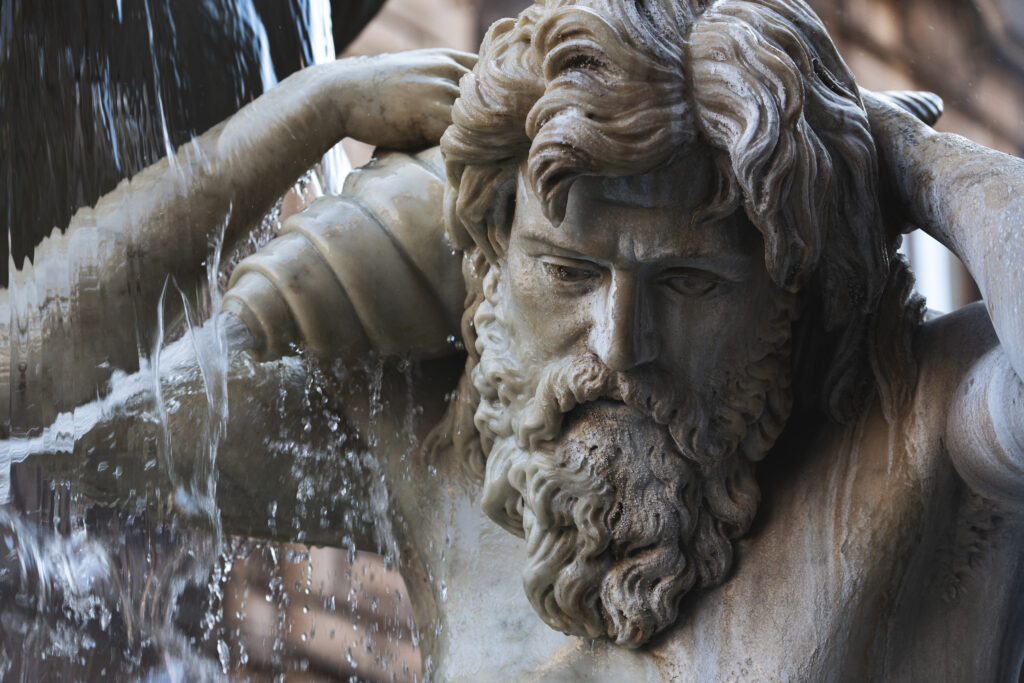
Poseidon continues to inspire modern civilization, present in art, literature, and cultural representations. His image as sovereign of the ocean and waters embodies the power of nature, the creative and destructive force, and the fascination with marine creatures and legendary heroes.
The transmission of Poseidon’s myths through the centuries shows how much this deity remains a universal reference for understanding the relationship between man and the elements. His influence goes beyond Greek mythology, crossing beliefs and cultures up to today.
Notable aspects of Poseidon’s influence
- Founding myth: Stories at the origin of understanding natural disasters
- Symbolic attributes: Trident, horses, marine creatures
- Heroes and legends: Role in the Odyssey, the founding of cities
- Cultural transmission: Presence in art, temples, modern works
In Delphi, a dolphin was honored by a constellation for having helped Poseidon win the heart of Amphitrite.
To better understand Poseidon’s role in Greek mythology, also discover our selection of the most fascinating Greek sea deities that populate ancient tales.
Poseidon diving into the myth of the god of oceans and earthquakes allows an in-depth exploration of the most impressive mythological creatures that populate marine and terrestrial legends.
How does Poseidon influence navigation and maritime life in Antiquity?
Ancient Greek sailors attributed their safety at sea to the protection of Poseidon. Before each voyage, offerings were placed in coastal temples to solicit the goodwill of this deity. Fishermen and merchants saw in every storm or calm the direct manifestation of the god’s power, reinforcing maritime beliefs and the necessity of precise rituals.
The rites dedicated to Poseidon marked the calendar of coastal communities. Festivals like the Poséidonia, organized in major ports, brought together sailors and townspeople around sacrifices and horse races, animals sacred to the god. These traditions, rooted in Greek civilization, testified to a close relationship between the sea and human activities, where every expedition depended on the favor of this superhuman force.
Ancient tales also mention appearances of extraordinary marine creatures, perceived as signs of warning or favor. Whales, dolphins, and sea monsters were associated with Poseidon’s will, their presence reinforcing the sacred dimension of the myth and the fascination with the deep waters. This vision shaped generations of sailors, keen to respect the symbols and taboos related to the sea.
Main maritime rituals related to Poseidon
| Ritual | Objective | Time of year | Location |
|---|---|---|---|
| Offerings before departure | Ensure protection at sea | Spring, autumn | Coastal temples |
| Poséidonia | Celebrate the god’s power | Summer | Major ports |
| Horse sacrifices | Appease divine anger | After a storm | Beaches, sanctuaries |
| Maritime processions | Honor marine creatures | Religious festivals | Shores and quays |
The symbolism of the trident in ancient navigation
The trident, a major attribute of Poseidon, represented mastery over the waters and the ability to open or close maritime routes. Captains sometimes wore trident-shaped amulets, convinced that this symbol could ward off natural disasters and attract prosperity to their crew.
The impact of mythical creatures on sailors’ beliefs
Stories of mythical creatures like Scylla or the Kraken influenced ancient cartography and the routes chosen by sailors. These legends served to explain the unknown dangers of the oceans and to strengthen crew cohesion, united by fear and respect for the myth.
- Offer a sacrifice before each crossing
- Respect the taboos related to the sea
- Participate in maritime religious festivals
- Wear protective talismans
- Listen to the elders to avoid dangerous areas
Why does the figure of Poseidon still fascinate diving and adventure enthusiasts?
The presence of Poseidon in the modern imagination stimulates the curiosity of diving and underwater exploration enthusiasts. His association with the mysteries of the oceans and marine creatures inspires the search for exceptional sites, where each dive becomes a quest for myth and legend.
He who masters the sea holds the key to hidden worlds.
FAQ on Poseidon’s legacy and his place in contemporary imagination
Why do we find references to Poseidon in current popular culture?
Film, novel, and video game creators regularly draw from Greek mythology to bring powerful and mysterious characters to life. The figure of Poseidon, master of the seas and depths, embodies a primal force that fascinates as much for its destructive power as for its protective role, which explains its presence in many modern works.
How do underwater explorers draw inspiration from the legend of Poseidon?
Many divers and adventure enthusiasts see in Poseidon a symbol of exploration and respect for the oceans. Some diving sites bear names inspired by the Greek god, and tales of his mythical creatures fuel the imagination during expeditions in caves, shipwrecks, or reefs still unexplored.
Are there still rituals or celebrations today in honor of Poseidon?
In certain coastal regions of the Mediterranean, traditional festivals still evoke the memory of Poseidon through maritime processions, boat blessings, or cultural performances. These events recall the sacred dimension of the sea and the perpetuation of a heritage rooted in the relationship between man and the elements.