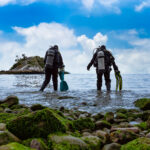
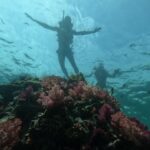
On September 24, 1944, planes from the American Third Fleet attacked Japanese ships sheltered in Coron Bay, north of Palawan. Their hulls are still there.
Our old page promoted Palawan with tiger sharks, a dugong “observed in 2018,” and waters always crystal clear. None of these elements were sourced. So we rewrote the article using our usual framework: level, current, season, supervision, and fallback plan.
Coron, El Nido, and Tubbataha are not prepared for in the same way. The table in the first part compares them.
What level is required to dive in Palawan?
It all depends on the area. The coastal reefs of El Nido welcome beginners under supervision on their sheltered sites, while the deep wrecks of Coron require at least Advanced level according to Divernet, plus wreck training to enter the hulls. Tubbataha is only dived on cruises, far from any quick rescue.
| Area | Access | Indicative Level | Current | Indicative Season | Fallback Plan |
|---|---|---|---|---|---|
| El Nido, Bacuit Bay | Day boat from El Nido | Beginner supervised to confirmed, depending on the site | Variable according to tide, to be asked at briefing | Monsoon to watch, impossible to decide from here | Sheltered bay sites if the sea picks up |
| Coron, 1944 wrecks | Day boat from Coron | Advanced minimum, wreck training to enter (Divernet, 2016) | Strong tidal currents in the passes (Divernet, 2016) | To be checked with the center | Shallower wrecks or no diving day |
| Tubbataha, park in the middle of the Sulu Sea | 10 to 12-hour cruise from Puerto Princesa (Tubbataha Management Office) | Experienced autonomous divers, criteria set by each boat | Offshore, to be specified at briefing | Short window around March to June (Ramsar, 2012) | None on site: postponement or cancellation by the operator |
This table remains indicative.
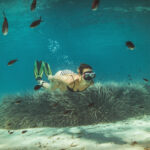
The levels given come from public sources, and no single regulation sets them for the entire province. Yet each center sets its own requirements. Ask them in writing for the minimum level, the number of dives required since your last certification, and the maximum depth planned for each site. If the center offers you a refresher dive before the deep wrecks, take it (we would without hesitation). The lagoon photo says nothing about the current.
For what level? That is the first question to ask, even before the price.
What can be seen on the Japanese wrecks of Coron?
Japanese ships sunk during the American raid on September 24, 1944. Divernet (December 2016) mentions the Okikawa Maru, an oil tanker resting upright around 26 meters, the Akitsushima, a seaplane tender, around 36 meters, and the Irako, a refrigerated ship, around 43 meters. These depths remain indicative.
The attack came from Admiral Halsey’s Third Fleet. Divernet counts 96 Hellcat fighters and 24 Helldiver dive bombers launched against the bay and the neighboring island of Busuanga. The Teru Kaze Maru, a small anti-submarine chaser, is dived between 3 and 22 meters. It is the only wreck on this list accessible to a supervised beginner.
But a deep wreck is not just a number. At 36 or 43 meters, you exceed the limits of many entry-level certifications, and your no-decompression time melts very quickly. Divernet adds that the passes between the islands experience strong currents during tidal exchanges. Average visibility there is around 6 to 9 meters, and sometimes exceeds 30 meters before dropping to a few meters on other days, according to the same article. Clear water never makes penetration safer.
Entering a hull remains another dive, which requires wreck training and a guide who knows the interior.
In a hold, a well-adjusted weight prevents you from stirring up silt. If you ascend in open water in the middle of the bay, a decompression buoy helps the boat locate you. Ask for the plan of each wreck at the briefing.
Are El Nido and Bacuit Bay suitable for beginners?
Partly. Day trips in the Bacuit Bay include sheltered and shallow sites, suitable for a supervised first step. Other sites, more exposed, dive with currents. No one can say from here which ones will be open on the day of your trip, as the wind and tide decide every morning.
Our previous version promised turtles, rays, and even dugongs. We have removed these promises.
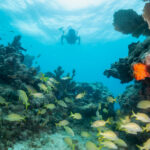
Thus, the wildlife of a coastal reef changes from one outing to another, and no consulted source guarantees a specific encounter in the bay. The dugong “observed in 2018” could not be cross-checked, so it disappears from the article. Also keep your distance from what you encounter, and reread why you should never touch marine life, even coral that seems dead or already damaged. A beginner mainly benefits from asking how many divers share the guide. The number matters more than the name of the site.
If part of the group does not dive, the bay is also suitable for snorkeling, like many of the best snorkeling destinations we have compared.
Puerto Princesa and its Honda Bay also offer quieter outings. They remain a fallback option if the sea builds up to the north, to be confirmed with a local center before booking. If small fauna attracts you, also check Anilao and its macro diving, south of Manila.
How does a cruise to Tubbataha work and how much does entry cost?
Only by cruise, as the park has no land facilities. Boats depart from Puerto Princesa and take 10 to 12 hours to reach the reefs, according to the Tubbataha Management Office. The 2026 park permit form shows a fee of 5,000 pesos per visitor, an amount to verify at the time of booking.
The site has been listed as a UNESCO World Heritage Site since 1993.
Its perimeter was extended in 2009 and covers 96,828 hectares in the middle of the Sulu Sea, according to the UNESCO sheet. It includes two atolls, North and South, and the Jessie Beazley reef. Yet this status says nothing about the day’s weather. A 2012 Ramsar case study placed the diving season from March to June, and many operators announce their departures from mid-March to mid-June. Always cross-check this schedule with that of accredited boats for the year of your trip.
The fee has changed. The same Ramsar study mentioned 3,000 pesos per visitor in 2012, and the 2026 park form indicates 5,000 pesos, with an exemption for those under 12 years old. These amounts are added to the price of the cruise. The park’s website places this price between 1,000 and more than 4,000 dollars, depending on the operator and duration.
The real issue remains isolation, about ten hours by sea from the nearest port, with no fallback possible if a diver is injured or if the weather turns during the cruise.
So ask the operator about the evacuation plan. If you hesitate between two isolated parks, compare with Sipadan and its permit quota, or reread our dedicated page on the Tubbataha reefs.
Typhoons, eTravel, and hyperbaric chamber: what to check before booking?
Check three things before paying. The typhoon and monsoon season for your dates, your eTravel declaration, free and mandatory on arrival and departure, then real access to a hyperbaric chamber from the chosen area. The last point remains the hardest to confirm from here.
Start with the weather. Our previous page placed the rainy season from July to October, a plausible range but without a dated source. The Philippines receive typhoons every year, and Palawan is not protected from them. Check the bulletins from the national weather agency, PAGASA, in the days before your departure, as a cruise or outing postponement is often decided the day before.
And the administrative side does not forgive.
Since April 15, 2023, every passenger arriving in or departing from the Philippines must fill out eTravel, according to a notice from the Philippine Ministry of Foreign Affairs. The declaration must be made within 72 hours before the flight, and no later than three hours before. It is free on the official site etravel.gov.ph. Beware of paid sites that imitate it.
There remains the hyperbaric chamber. We could not confirm the address of a hyperbaric chamber in service in Palawan, nor its access time from Coron or El Nido. Ask the center, in writing, where the nearest chamber is located, how long an evacuation takes, and whether it carries oxygen on board. Also check that your insurance covers repatriation from a cruise in open sea. Keep these answers with your ticket.
A day of margin between your last dive and your flight, a written response about the chamber, and a Tubbataha cruise booked with a backup date will cost you time and a bit of money. Would you book it this way?
FAQ
Can you dive in Palawan all year round?
Coastal trips from El Nido and Coron operate for much of the year, depending on the day’s weather. Tubbataha only opens a short window, around March to June according to a 2012 Ramsar study. Check the PAGASA bulletins before each departure.
Is Advanced level required to dive on the Coron wrecks?
Divernet (2016) recommends at least Advanced level for deep wrecks, and wreck training to enter the hulls. The Teru Kaze Maru, between 3 and 22 meters, is an exception. The center sets the rule at the briefing.
How much does entry to Tubbataha park cost?
The 2026 park permit form indicates 5,000 pesos per visitor, with an exemption for those under 12 years old. This fee is in addition to the price of the cruise. Double-check the amount on the official park website before paying.
Can children dive in Palawan?
Minimum ages depend on the training agency and the center. For a child, a snorkeling trip on a sheltered site in El Nido remains the simplest option, with supervision to be verified. The exemption from the Tubbataha fee says nothing about a child’s suitability for an offshore cruise.
Sources
- Attack on Coron Bay (Divernet, diving magazine, December 16, 2016)
- Permits and Fees (Tubbataha Reefs Natural Park, Tubbataha Management Office, 2026 form, accessed October 3, 2026)
{“@context”:”https://schema.org”,”@type”:”FAQPage”,”mainEntity”:[{“@type”:”Question”,”name”:”Peut-on plonger à Palawan toute l’année ?”,”acceptedAnswer”:{“@type”:”Answer”,”text”:”Les sorties côtières d’El Nido et de Coron fonctionnent sur une grande partie de l’année, selon la météo du jour. Tubbataha n’ouvre qu’une fenêtre courte, autour de mars à juin d’après une étude Ramsar de 2012. Vérifie les bulletins PAGASA avant chaque départ.”}},{“@type”:”Question”,”name”:”Faut-il le niveau Advanced pour plonger sur les épaves de Coron ?”,”acceptedAnswer”:{“@type”:”Answer”,”text”:”Divernet (2016) recommande au minimum le niveau Advanced pour les épaves profondes, et une formation épave pour entrer dans les coques. Le Teru Kaze Maru, entre 3 et 22 mètres, fait exception. Le centre fixe la règle au briefing.”}},{“@type”:”Question”,”name”:”Combien coûte l’entrée au parc de Tubbataha ?”,”acceptedAnswer”:{“@type”:”Answer”,”text”:”Le formulaire de permis 2026 du parc indique 5 000 pesos par visiteur, avec une exonération pour les moins de 12 ans. Cette redevance s’ajoute au prix de la croisière. Revérifie le montant sur le site officiel du parc avant de payer.”}},{“@type”:”Question”,”name”:”Les enfants peuvent-ils plonger à Palawan ?”,”acceptedAnswer”:{“@type”:”Answer”,”text”:”Les âges minimaux dépendent de l’organisme de formation et du centre. Pour un enfant, une sortie snorkeling sur un site abrité d’El Nido reste l’option la plus simple, avec un encadrement à vérifier. L’exonération de redevance à Tubbataha ne dit rien de l’aptitude d’un enfant à une croisière au large.”}}]}