Do you feel that thrill at the thought of experiencing a nocturnal underwater adventure, where every beam of light reveals unsuspected creatures and fascinating landscapes? Darkness transforms every moment into a unique sensory experience, where safety and mastery of techniques become your best ally. Knowing how to choose the right equipment, anticipating every detail, and understanding the subtleties of underwater communication means accessing an unsuspected dimension of travel. Prepare to take a significant step forward with a training course that reveals the hidden beauty of the depths, while providing you with concrete tools to turn your next night dive into an unforgettable memory.
Why take specialized training for night and low visibility diving?
Diving in darkness requires a different adaptation than classic dives. The specific techniques covered during the training allow you to operate in an environment where safety relies on mastering orientation and navigation. Reduced visibility transforms the experience and emphasizes the need for clear communication between dive buddies.
The SSI Night and Limited Visibility Diving course is designed for any certified Open Water Diver or equivalent. It offers an immersive approach focused on equipment management and emergency situations, enhancing safety during night dives. This mastery is essential to fully enjoy night diving without stress.
Thanks to a flexible teaching method, the SSI training prioritizes practice in real conditions. Participants develop skills adapted to diving in darkness, low visibility, and twilight diving. The experience gained paves the way for confident scuba diving.
Key points covered during the training
- Night diving and light management
- Navigation techniques in low visibility
- Specialized equipment and its use
- Mastery of safety gestures
- Adapted underwater communication
- Management of specific emergencies
What essential equipment is needed for night diving and how to choose it well?
Equipment plays a fundamental role during a night dive or nocturnal diving. A powerful flashlight, a comfortable mask, and safety accessories ensure comfort and control underwater. The training includes learning how to use each piece of equipment to guarantee an optimal experience.
French Touch Diving offers high-end equipment, including lamps, innovative devices like the Doppler O’Dive, and iBubble video recording systems. These specialized tools promote safe diving in darkness, even under extreme conditions such as deep water or dark water diving.
The training emphasizes the importance of appropriate selection according to the environment: cold water diving, warm water diving, murky water diving, or crystal-clear water diving. This preparation allows for approaching diving in low-light waters with confidence.
Recommended Equipment for Night Diving
- Main and backup flashlights
- Wide field of vision mask
- Light or strobe signals
- Dive computer with night function
- Sound location devices
How Does SSI Training Stand Out from Other Night Diving Programs?
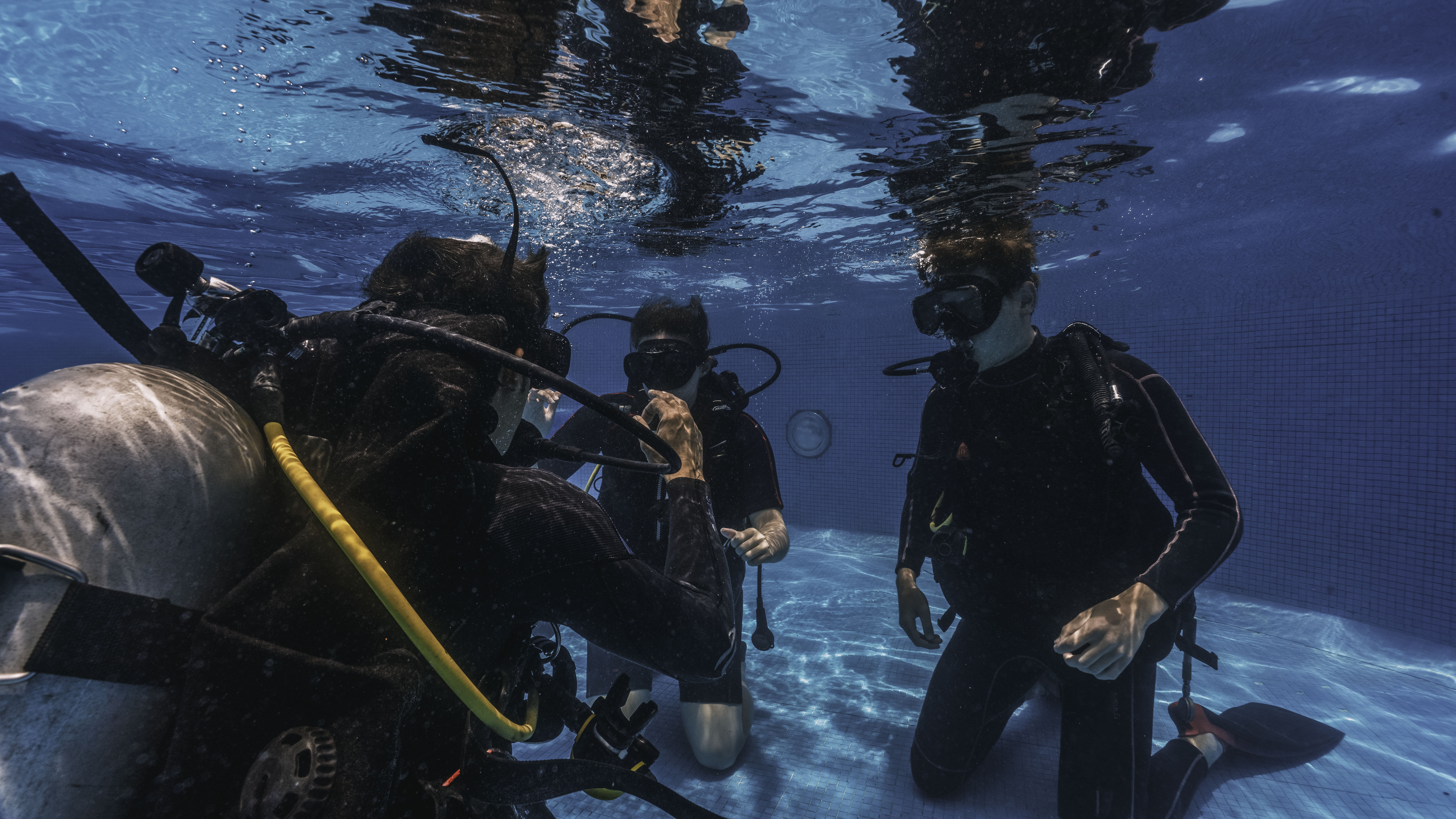
SSI’s pedagogy stands out for its flexibility and immersive approach. Each student benefits from personalized support, promoting rapid progress towards mastering night diving techniques. This method differs from other organizations like PADI or FFESSM, which are more structured or academic.
Practical sessions revolve around two supervised dives, allowing experimentation with navigation and communication in reduced visibility. SSI instructors emphasize safety management and autonomy in diving under special conditions.
The training generally takes place over one day with alternating theory and practice. This organization optimizes skill acquisition, making night sport diving accessible to all levels of recreational and technical diving.
Which Sites to Favor for a First Night Diving Experience and Which Species to Observe?
Prestigious sites like the wrecks of the Grec and the Donator or the Gabinière drop-off in Port-Cros National Park offer ideal conditions for a first night dive. The environment is rich in fascinating underwater diving, with exceptional biodiversity.
In Panglao, Philippines, night dives reveal unique fauna: lionfish, octopuses, phosphorescent rays, crustaceans, and bioluminescent corals. These sites are recommended for experiencing an unforgettable and safe dive in darkness.
The training allows exploration of the many facets of low visibility diving, from twilight dives to deep water or low-light water dives. Each site offers experiences adapted to different levels and expectations.
Species and Landscapes to Discover During a Night Dive
- Lionfish and phosphorescent rays
- Octopuses and rare crustaceans
- Bioluminescent corals
- Barracudas and groupers
- Turtles and sunfish
- Red gorgonians and nocturnal fauna
During a night dive in Panglao, a guide observed a mimic octopus changing color under the lamp light, a phenomenon rarely seen during the day.
The SSI Night and Limited Visibility Diving training enables mastering specific techniques and equipment to explore the seabed safely.
How to optimize your preparation before a first night dive?
Preparation directly influences the success of a night dive. Analyzing weather conditions, choosing the site, and checking the equipment are essential. Taking the time to plan your route improves navigation and reduces risks related to reduced visibility. A precise briefing on communication techniques and the distribution of roles within the buddy pair strengthens the group’s safety.
Training recommends performing a complete equipment check before each dive. Testing lamps, checking battery status, and preparing backup light signals ensure optimal control during diving in darkness. Anticipating the specific needs of diving in low-light waters limits unforeseen events and promotes an immersive experience.
Choosing the right buddy for a night dive
The selection of the buddy determines the success of the night dive. Favoring a partner with similar experience strengthens communication and the management of unusual situations. Perfect synchronization on light signals and movements optimizes safety throughout the dive.
Adjusting buoyancy in low visibility conditions
Buoyancy plays a central role in diving in low visibility. Adjusting your weighting and controlling your movements limits turbulence and preserves visibility around you. Good buoyancy management allows you to remain stable, avoid contact with the bottom, and observe wildlife without disturbing the environment.
Managing stress and adrenaline underwater
Diving in darkness sometimes triggers an adrenaline rush. Learning to recognize signs of stress, controlling your breathing, and adopting a calm attitude promote self-control. Training offers relaxation exercises and refocusing techniques to fully enjoy the experience.
Using technology to improve night navigation
Using a dive computer with a night function, electronic compasses, or light beacons facilitates orientation. These technological tools allow following a precise trajectory and easily finding the exit point, even during dives in murky or deep waters.
- Thorough equipment check before each dive
- Development of a clear and detailed dive plan
- In-depth briefing on light signals and communication
- Stress level control and relaxation techniques
- Use of technological tools for navigation
How does night diving training transform the underwater experience?
Learning specific techniques for night diving opens new perspectives. Divers discover unprecedented animal behaviors and access unknown landscapes thanks to increased mastery of navigation and safety. This training develops the confidence needed to operate in varied environments, from cold water diving to warm water diving.
“At night, the sea reveals its secrets to those who know how to listen.”
Frequently asked questions about night diving and SSI training
What memorable experiences can one have during a first night dive?
Experiencing a first night dive often means encountering unique moments: observing wildlife usually hidden during the day, feeling a deep connection with your dive buddy, and sensing the magic of underwater silence. Some memories remain etched, like encountering a ray in the midst of hunting or admiring the light displays created by bioluminescent plankton.
How to overcome apprehension related to diving in total darkness?
Apprehension gradually disappears thanks to methodical preparation, reliable equipment, and the support of a caring instructor. Starting out in a group reassures, as does practicing relaxation exercises before immersion. Very quickly, confidence sets in and gives way to fascination for this mysterious and calming world.
The SSI Night and Limited Visibility Diving course allows you to gain better mastery of specific techniques and equipment to operate safely in darkness, and to enrich your underwater skills, also discover Trimix diving which opens the door to new sensations at depth.