Ancient fascination, visceral fear, and marine mystery intertwine whenever Jörmungandr is mentioned, this colossal serpent that haunts Nordic tales. Faced with the power of the sea and the violence of storms, many feel the anxiety of the unknown and human fragility. Living to the rhythm of the waves, confronting the elements, or seeking meaning in ancestral symbols means confronting the raw force of nature and its secrets. The story of the world-serpent reveals how the Viking peoples transformed their fears into legends, giving rise to rituals, protective objects, and stories passed down from generation to generation. To understand the significance of Jörmungandr, it is necessary to analyze its place in mythology, its influence on maritime culture, and then how it continues to shape the collective imagination and perception of the ocean today.
Who really is Jörmungandr in Norse mythology?
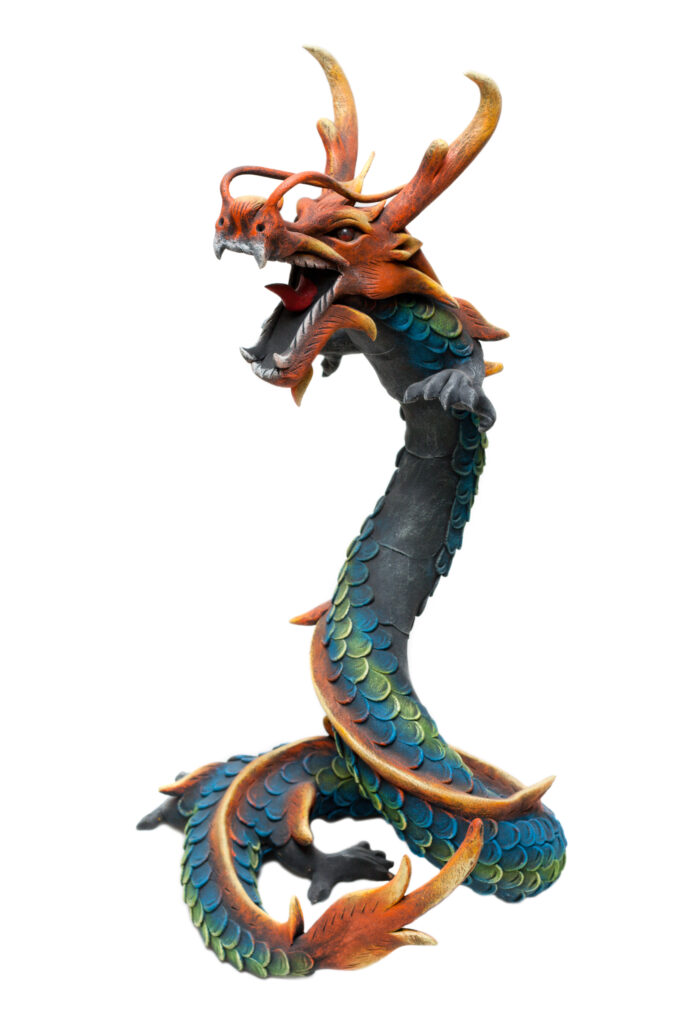
The figure of Jörmungandr stands out in Norse mythology as an extraordinary creature, born from the union of Loki and Angrboda. From birth, this serpent draws the gods’ attention due to its nature as a mythological animal and its kinship with the goddess Hel and the wolf Fenrir.
Odin, aware of the prophecy foretelling its destructive power, throws this monster into the sea surrounding Midgard. The sea serpent then becomes a legendary creature whose rapid growth leads it to encircle the world, biting its own tail, embodying the world-serpent and the sea’s totem animal.
Main members of Jörmungandr’s family
- Loki: Father, god of chaos and change
- Angrboda: Mother, giantess of Jötunheim
- Fenrir: Brother, gigantic wolf
- Hel: Sister, goddess of the dead
How did Jörmungandr become the world-serpent surrounding Midgard?

After his banishment by Odin, Jörmungandr dives into the ocean and undergoes a spectacular expansion, becoming an aquatic creature of colossal size. Its circular form around Midgard symbolizes the infinite sea and the waves that protect the world of men.
The world-serpent bites its own tail, creating a perfect circle, representing the perpetual movement of the sea and the symbolic animal in Norse thought. This image marks the boundary between the known and the unknown, between safety and danger.
Symbols associated with Jörmungandr in Viking culture
- Circle: Eternal cycle of life and death
- Wave: Natural power and unpredictability
- Serpent: Wisdom, renewal, threat
- Ocean: Mystery, boundary of the known world
What are the main encounters between Jörmungandr and Thor?
Among the major stories, the fishing episode remains emblematic: Thor tries to catch the serpent using bait, illustrating the rivalry between mythical animal and thunder god. This scene appears on runestones, attesting to the importance of this battle in the Viking imagination.
At Ragnarök, the final fight pits Thor against Jörmungandr in a titanic battle. The serpent spits venom, causes storms and tidal waves, embodying the brute force of the fantastic animal against the hero.
How is Jörmungandr represented in art and ancient texts?
Four major runestones, such as the one at Altuna in Sweden, depict the creature and its clashes with Thor. The skaldic poems and the Eddas evoke the power of this giant and its central role in Norse mythology.
The kennings and Germanic tales present Jörmungandr as the symbol of the raging ocean, storms, and threatening waves. It inspires respect and fascination, representing the symbolic sea animal with many facets.
Examples of media mentioning Jörmungandr
- Skaldic poems (Ragnarsdrápa, Húsdrápa)
- Altuna stone (Sweden)
- Gosforth stone (England)
- Snorri’s Edda
What impact does Jörmungandr have in modern popular culture?
Today, Jörmungandr inspires music, comics, video games, and tourist attractions, symbolizing the power of the mythical animal and the strength of the sea. Its image as a legendary creature continues to captivate and fuel the collective imagination.
The naming of an asteroid after Jörmungandr illustrates the persistence of this serpent in collective memory, linking Norse mythology to contemporary science. Each representation recalls the central role of the world-serpent in the perception of the ocean as a space of danger and movement.
On the Ardre VIII stone, Thor is depicted confronting a gigantic serpent, a detail that allowed the scene to be identified as one of the oldest traces of the Jörmungandr myth in Scandinavia.
At the heart of Norse mythology, Jörmungandr embodies the mysterious power of the ocean and, to better understand the links between marine figures of different cultures, discover the main Greek sea deities who also share fascinating attributes.
Jörmungandr the sea serpent in Norse mythology, between Viking myth and ocean symbolism, is part of the most impressive mythological creatures evoked by ancient Scandinavian legends.
What role does Jörmungandr play in Viking maritime beliefs?
The presence of Jörmungandr in Scandinavian sea tales influences the perception of waves and storms among Viking sailors. Considered a marine animal of immeasurable strength, it personifies the fear and admiration felt towards the ocean. Expeditions into the unknown were often accompanied by rituals to appease this mythological animal and ensure the ship’s protection.
Sailors see in the unpredictable movements of the sea the manifestation of the presence of the sea serpent. Oral tradition reports that every storm or enormous wave would be the work of its undulations, closely linking the myth to the daily reality of Nordic peoples. This belief reinforces respect for the symbolic animal and caution during crossings.
The figure of the world-serpent becomes a totem animal for many Viking clans. Wearing a symbol of Jörmungandr or invoking its name during marine ceremonies expresses the wish for a safe crossing and a safe return. This ritual dimension fits into the continuity of shamanic practices and the sacred relationship with the sea.
Evolution of the perception of the world-serpent among sailors
Over the centuries, the image of Jörmungandr evolves, shifting from a feared creature to a fantastic animal celebrated for its power. The legends passed down from generation to generation make the serpent an invisible companion of sailors, whose anger or benevolence determines the fate of expeditions. This evolution marks the integration of the myth into Nordic maritime culture.
Objects and talismans inspired by Jörmungandr
Artifacts found in Viking graves, such as amulets shaped like the world-serpent, testify to the attachment to this protective monster. These objects, worn during sea voyages, symbolize the search for balance between man and the forces of nature. They embody the desire to channel the power of the mythical animal to overcome trials.
- Serpent-shaped amulets found in Viking burial sites
- Protection rituals before maritime expeditions
- Legends passed down by Nordic storytellers
- Symbols engraved on the prows of longships
- Invocation of the world-serpent during storms
Why does Jörmungandr fascinate mythology enthusiasts so much?
The figure of Jörmungandr captivates by its ability to embody both danger and protection, destruction and renewal. This giant serpent, which connects lands and oceans, offers a powerful metaphor for the fragile balance between man and nature. Delving into this myth is to explore the richness of Norse mythology and the diversity of creatures that inhabit it.
He who faces the world-serpent no longer fears the storms of life.
Frequently asked questions about Jörmungandr and Norse mythology
What is the connection between Jörmungandr and sea monster stories around the world?
Many cultures share the idea of a giant serpent or sea monster, like Jörmungandr in the North. This myth echoes in Mediterranean, Asian, and Polynesian legends, reflecting the universal fascination with the unknown depths and the collective fear of the dangers of the sea.
Can traces of the Jörmungandr cult still be found in contemporary Scandinavian societies?
Although the direct cult disappeared with Christianization, symbols of the world-serpent survive in folk art, goldsmithing, and certain sea-related rituals. Viking festivals revived today sometimes highlight this figure, showing a heritage still very much alive in Nordic culture.
How does modern diving allow one to feel the symbolism of Jörmungandr?
Exploring the Nordic seabed provides a direct experience of the vastness and mystery that Jörmungandr symbolized for the ancient Vikings. The silence, darkness, and constant movement of the water offer a striking parallel with mythological stories, inviting each diver to appreciate the ambivalence of the sea, between fascination and respect.