Guaranteed chills when the dark silhouette of the umibōzu emerges in the tales of Japanese fishermen, symbolizing an ancient fear that still haunts the coasts of Japan. Faced with the unpredictable power of the sea, many feel this mix of fascination and unease, confronted with the unknown lurking beneath the surface. The legend of the umibōzu, an enigmatic and feared creature, is rooted in maritime traditions and still shapes practices and beliefs today. Why does this figure continue to leave a mark on minds and influence fishermen’s behavior? By tracing its origins, detailing its terrifying appearances, and analyzing its impact on maritime culture, it becomes possible to grasp the depth of this myth and its role in transmitting values related to the sea.
What is the origin of the umibōzu in Japanese folklore and how has it evolved?
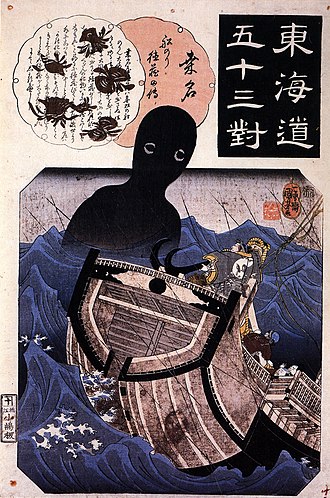
Japanese folklore is full of fascinating stories about the marine yōkai called umibōzu. This legendary phenomenon is rooted in the oral tradition and maritime mythology of Japan, where it embodies the fear of the unknown at sea. The evolution of its image has been built from testimonies of fishermen and sailors confronted with extreme situations.
The appearance of the umibōzu in ancient tales varies by region, which explains the diversity of its representations. This monster is sometimes described as a vengeful spirit, sometimes as an angry deity, reflecting the complexity of local beliefs and the influence of maritime phenomena on Japanese culture.
Over the centuries, the umibōzu has established itself as one of the major mythical phenomena of Japanese culture, inspiring artists, writers, and filmmakers, while retaining its role as a messenger of the dangers of the ocean and guardian of the mystery of the depths.
The roots and evolutions of the umibōzu
- Popular tales passed down by fishermen
- Influence of Buddhist and Shinto mythology
- Adaptations in traditional and contemporary Japanese art
- Transformation of the creature according to coastal regions
What does the umibōzu look like and how does it manifest on the Japanese sea?
The umibōzu creature impresses with its size, often described as exceeding several tens of meters, appearing during calm nights when the sea seems peaceful. Its appearance, made of translucent black skin and a face resembling a Buddhist monk, accentuates its mysterious phenomenon aspect.
Only the head or upper body is visible, leaving doubt about its true form. According to tales, it can also transform into a beautiful young woman or take the appearance of a giant catfish, reinforcing the aura of supernatural phenomenon surrounding the creature.
Its appearance is often accompanied by sudden storms and gigantic waves, creating a feeling of surprise and terror among sailors, who see in it the symbol of the uncontrollable power of the ocean.

The Different Forms and Manifestations of the Umibōzu
- Black head emerging from the waves
- Transformation into mist or dark cloud
- Human or giant catfish appearance
- Female apparition to lure ships
- Presence in rivers and inland lakes
What Powers and Behaviors Are Attributed to the Umibōzu According to Japanese Tradition?
The umibōzu rules over the sea as a destructive spirit, capable of triggering a storm and devastating waves in an instant. It is often associated with shipwrecks or the disappearance of vessels, making it a feared oceanic phenomenon among fishermen and sailors.
To appease its anger, tradition advises offering a ladle or a barrel, which the umibōzu fills with water to sink the boat. Some clever sailors use a perforated ladle to avoid drowning, thus playing on cunning against the mythical phenomenon.
The umibōzu is also perceived as a supernatural phenomenon linked to wealth, with some abandoning their cargo to save their lives, which fuels the belief in a monster that steals or craves marine treasures.
How Is the Legend of the Umibōzu Explained Through History and Science?
The legend of the umibōzu draws its origins from the ancient fear of natural phenomena and the dangers of the ocean. Many researchers suggest that rogue waves could be behind some accounts, reinforcing the idea of an unpredictable meteorological and oceanic phenomenon.
The confusion with funayūrei, ghosts of drowned sailors, shows the closeness between various maritime beliefs, all centered on the fear of the unknown and the power of the sea. Offerings to the sea spirit testify to respect for natural forces and the desire to gain their goodwill.
The artistic representation of the umibōzu in prints, mangas, and modern films perpetuates the fascination with this legendary phenomenon, a symbol of the wild and unpredictable nature of insular Japan.
Historical and Scientific Explanations Surrounding the Umibōzu
- Observation of giant waves in calm seas
- Role of religious and animist beliefs
- Influence of shipwreck survivors’ testimonies
- Artistic interpretation in popular culture
During the Obon festival in Japan, some fishermen still place a perforated ladle on their boat to protect themselves from the umibōzu during their sea outings.
Umibōzu, the most enigmatic and terrifying sea spirit of Japanese folklore through the centuries, is among the most impressive mythological creatures in history.
How Does the Umibōzu Influence Maritime Culture and the Practices of Japanese Fishermen?
The presence of the umibōzu in maritime tradition shapes the behaviors of fishermen and sailors, who adapt their rituals to protect themselves against this supernatural phenomenon. Specific gestures, such as offering a pierced ladle, are still practiced during certain sea outings to ward off bad luck and soothe this spirit known for its unpredictability. These customs testify to the strength of local beliefs in the face of the unknown elements of nature and the power of the ocean.
The umibōzu also holds a central place in stories passed down from generation to generation, reinforcing cohesion within fishing communities. Discussions about its appearances and powers feed the collective imagination, while reminding of the need to respect the sea and remain vigilant against potential dangers. This oral transmission helps preserve a unique cultural heritage, where Japanese folklore blends with everyday realities.
Symbolism of fear and respect for the sea
The umibōzu embodies the ancient fear of the unknown and the recognition of the sea’s power. Fishermen see in this legendary phenomenon a constant reminder of the need to show humility in the face of natural forces, reinforcing respect for traditions and protective rituals.
Transmission of stories in coastal villages
Stories of the umibōzu are told during vigils or after fishing trips, allowing the younger generation to learn about the dangers of the ocean and to internalize values of caution. This oral transmission contributes to the preservation of Japanese folklore and the rooting of beliefs in daily life.
Impact on maritime arts and literature
The umibōzu inspires numerous works, from traditional prints to contemporary novels. The representation of this monster in art reflects the fascination with the mysterious phenomenon and the diversity of interpretations according to the eras and regions of Japan.
Adaptation of navigation techniques
Some fishermen adjust their routes or avoid going out to sea during conditions deemed favorable to the appearance of the umibōzu. These practical adaptations testify to the integration of the mythical phenomenon in risk management related to maritime life.
- Ritual offerings to appease the spirit
- Stories passed down during vigils
- Influence on navigation choices
- Presence in art and literature
- Respect for natural phenomena
Does the umibōzu symbolize a boundary between reality and imagination in Japanese culture?
The umibōzu occupies a unique place between the tangible and the fantastic, illustrating how Japanese folklore shapes the perception of the sea and its mysteries. This creature reminds us that the boundary between natural and supernatural phenomena remains porous in the collective imagination, where nature is endowed with invisible and unpredictable forces. The umibōzu invites reflection on how ancestral beliefs continue to influence contemporary practices and stories.
The sea reveals its secrets only to those who know how to listen to its legends.
FAQ: Dive into the mysteries of the umibōzu and Japanese maritime tradition
Can we still encounter testimonies of umibōzu nowadays among Japanese fishermen?
Contemporary accounts still circulate in certain coastal communities, where fishermen claim to have experienced strange events at sea, often during sudden storms or unusual weather phenomena. These stories, passed down during vigils, serve to reinforce a spirit of caution and to perpetuate attachment to protective customs.
How does the umibōzu inspire travelers and artists passionate about Japan?
The umibōzu fascinates with its ambiguity and symbolic strength, inspiring both explorers seeking adventure and creators in search of powerful stories. Its presence in literature, prints, cinema, or manga offers an original gateway to better understand the unique relationship that the Japanese have with the sea and their legends.
Through the frightening tales dedicated to the Umibōzu, many Japanese sea legends highlight the mysterious figure of this spirit, which shares several characteristics with other maritime deities, as you can discover by consulting this article dedicated to sea gods and their influence on Japanese beliefs.