Guaranteed chills facing the tentacular silhouette of the kraken, this legendary monster that haunts maritime tales and evokes an ancient fear in all those who dream of adventure on the ocean. Stories of colossal creatures emerging from the depths awaken in everyone the memory of a time when the sea was synonymous with mystery and unpredictable danger. Behind the fascination with this symbol lies a question: how far does the boundary between myth and reality shape our relationship with the unknown? By tracing its origins, scientific influences, and its echo in culture, this narrative aims to shed light on the kraken phenomenon and reveal its impact on beliefs and the perception of the ocean.
What are the origins of the kraken in legend and Norse mythology?
The legend of the kraken takes root in medieval Scandinavian folklore, where it is described as a gigantic creature lurking in the heart of the sea. Ancient tales speak of a monster with tentacles capable of seizing and sinking ships, creating an atmosphere of danger in the waters between Norway and Iceland. Norse mythology and ancient myths speak of colossal animals, such as the Hafgufa and the Lyngbakr, whose descriptions blend with those of the kraken.
Medieval accounts mention that the monster could be mistaken for a floating island on the surface of the deep sea. This confusion appears on old maritime maps, where some mysterious islands might actually be representations of the monster legend. Testimonies from sailors, fascinated and sometimes frightened by these mythical creatures, helped anchor the maritime legend in Nordic popular culture.
The marine legend of the kraken has enriched itself over the centuries through new observations and oral transmission. Descriptions vary but always evoke a legendary animal with a formidable appearance. This myth, passed down from generation to generation, has shaped the collective imagination and fueled the fear of sea monsters.
Key points about the origins of the kraken
- Legend: Giant creature from Scandinavian folklore
- Norse mythology: Appearance in sagas and medieval tales
- Observation: Sailor testimonies and confusion with islands
How have science and observations influenced the legend of the kraken?
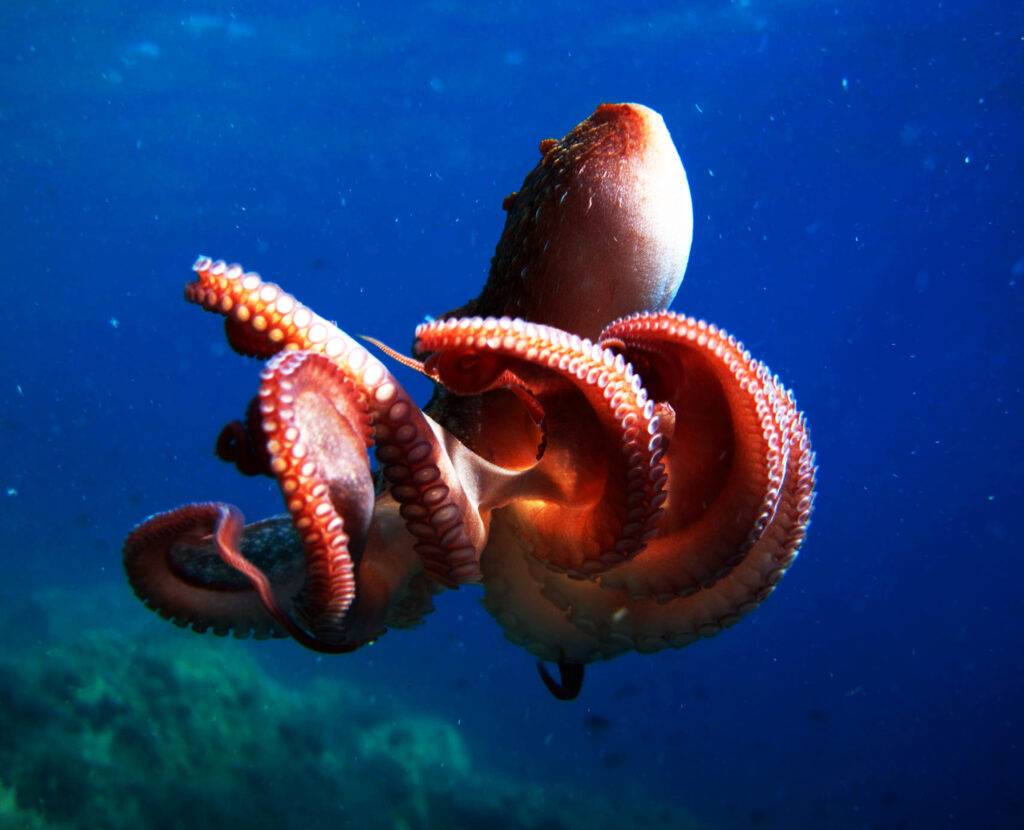
Observations of giant squid and octopus at sea have fueled the kraken legend by giving it a real basis. Descriptions of large aquatic creatures, seen at the surface or during attacks on ships, have reinforced the aura of danger. The discovery of the giant squid Architeuthis in 1857 confirmed the existence of fantastic animals living in the depths of the ocean.
Scientists, such as Carl von Linné, attempted to classify the kraken in 18th-century naturalist works. This desire to link myth to scientific reality allowed myths and legends to blend with proven facts, such as the existence of giant cephalopods. Documented encounters, such as that of the French ship Alecton in 1861, helped legitimize the maritime legend.
Modern science has continued the study of these creatures by analyzing captured specimens and observing their behavior in the deep seas. The gigantism of squids and their impressive tentacles continue to fuel fascination with sea monsters and the legend of the kraken.
Key facts about scientific influence
- Observation: Discoveries of giant squids up to 15 meters
- Attack: Accounts of ships confronted by giant cephalopods
- Maritime legend: Partial confirmation by science
Why does the kraken fascinate literature and popular culture?
The kraken has inspired literature since the 19th century, where it appears in major works such as Jules Verne’s Twenty Thousand Leagues Under the Sea or Victor Hugo’s Toilers of the Sea. Its presence symbolizes the fear of the unknown and the power of sea myths. Writers use the figure of the monster to explore the limits of human imagination and the confrontation with the inexplicable.
In popular culture, the kraken holds a prominent place in cinema, television, comics, and video games. It is often depicted as a fantastic creature emerging from the depths to sow chaos. This creature has become a symbol of adventure, danger, and mystery, captivating enthusiasts of sea legends and mythical creatures.
The fascination endures thanks to the kraken’s ability to embody the power of the deep seas and represent the unknown. This monster is also an emblem in fictional universes, such as in Game of Thrones, where it becomes the symbol of a powerful house, or in games where it challenges heroes during epic battles.
Examples of the kraken’s presence in culture
- Stories: Works by Jules Verne, Victor Hugo, Alfred Tennyson
- Monster: Films like Pirates of the Caribbean, Clash of the Titans
- Mythical creatures: Video games, series, comics
What are the links between the kraken legend and the reality of the marine abyss?
The legend of the kraken finds an echo in the reality of the marine depths, where legendary animals such as giant squids live. Aquatic creatures discovered thousands of meters below the surface possess characteristics that recall the descriptions made in Nordic myths and legends. Their size, strength, and mysterious appearance reinforce the link between maritime legend and scientific reality.
The sea monsters observed by ancient sailors have often been identified as giant squids or impressively sized octopuses. These creatures have powerful tentacles and enormous eyes, capable of surviving in the extreme conditions of the deep seas. Their rarity at the surface has helped maintain the mystery surrounding the monster legend.
The persistence of the kraken in contemporary culture is explained by the regular discovery of new species and by the fact that the ocean remains one of the least explored environments on the planet. Sea myths continue to fuel imagination and inspire explorers, divers, and legend enthusiasts.
Real characteristics of the abyss and associated creatures
- Giant squid: Up to 15 meters long, eye 30 cm in diameter
- Octopus: Giant species inhabiting the Pacific and Atlantic oceans
- Aquatic creatures: Adaptation to life in the depths, mysterious appearance
In 2006, a Japanese team filmed a giant squid living at 900 meters deep for the first time, confirming that the legend of the kraken originated from the reality of abyssal wildlife.
The kraken, legendary giant monster of the deep seas, and its influence on mythology continue to fascinate enthusiasts, just like the most impressive mythological creatures that have fueled the collective imagination for centuries.
How does the kraken influence marine beliefs and rites?
Legends related to the kraken have shaped practices and beliefs among Scandinavian and European sailors. The fear of encountering this creature in the depths motivated the adoption of protective rituals before each crossing. Some crews threw offerings into the sea to appease sea monsters and ensure a safe journey.
Marine legend tales also inspired specific superstitions. The sudden appearance of foam or whirlpools on the water was interpreted as a sign of the kraken’s presence. This perception contributed to the transmission of myths and legends within maritime communities, reinforcing the importance of caution at sea.
Symbolism of the kraken in maritime societies
The kraken symbolizes the power and unpredictability of the deep sea. In many ports, representations of mythical creatures adorn boats and homes to remind of the respect owed to the ocean. This symbolism nurtures a feeling of fascination and humility in the face of nature.
Oral transmission and family traditions
Legendary monster stories are passed down from generation to generation. Sailors’ families share these stories during gatherings, perpetuating the collective memory around sea monsters. This oral tradition helps preserve maritime folklore.
Impact on cartography and navigation
The fear of the kraken influenced the depiction of deep seas on old maps. Unexplored areas were often decorated with drawings of aquatic creatures, signaling potentially hostile territories to navigators. This iconography has left a lasting mark on the imagination of maritime exploration.
Evolution of beliefs with scientific discoveries
The appearance of the giant squid in scientific records changed the perception of the kraken. Sailors gradually accepted the idea that some observed creatures were real animals, while maintaining rituals inspired by the kraken legend. This evolution illustrates the adaptation of beliefs in the face of advances in knowledge.
- Adoption of protective rituals before each departure
- Oral transmission of sea monster stories
- Influence on the decoration of ships and ports
- Evolution of superstitions with scientific progress
Why does the kraken remain a powerful symbol in the collective imagination?
The kraken remains a central figure in the imagination thanks to the strength of its legends and the fascination with unexplored depths. The persistence of its stories reflects the attraction to mythical creatures and the ancestral fear of the unknown. Mythology and adventure enthusiasts find in the kraken an inexhaustible source of inspiration and questioning about the mysteries of the sea.
“Legends are born where man does not yet understand nature.”
FAQ: Mysteries and Realities Around the Kraken
Could the kraken exist in another form in today’s oceans?
Recent discoveries of new cephalopod species in the abyss suggest that the diversity of marine creatures is far from fully known. The characteristics attributed to the kraken – gigantism, strength, and enigmatic behavior – are sometimes found in certain giant squids or octopuses, reinforcing the idea that reality can sometimes surpass myth.
Why does the kraken fascinate divers and modern explorers so much?
The feeling of entering an unknown world, inhabited by rare creatures, evokes the thrill of the first sailors’ tales. For a diver used to exploring isolated sites, the idea of encountering one of these giants, or simply observing their traces, fuels an imagination where adventure and respect for nature combine daily.
How to recognize the influence of the kraken during a trip to Nordic countries?
In Scandinavian ports, you can admire statues, engravings, or motifs representing the monster of the depths on boats or in local museums. The legends are also told during evening gatherings or integrated into tourist routes, offering a unique and authentic cultural immersion in the Nordic maritime world.
For centuries, the kraken has fascinated with its terrifying tales and its ability to fuel the collective imagination, just like other impressive mythological creatures that populate marine legends and still influence popular culture today.