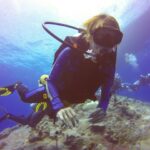
On October 1, 1995, the Maldives classified Fish Head, locally known as Mushimasmingili Thila, among their first protected diving sites. On June 5, 2009, a reef band in the southern part of Ari Atoll became the South Ari Marine Protected Area, the whale shark reserve.
These two dates come from the list of protected areas published in 2019 by the Maldives Environmental Protection Agency (EPA). They carry more weight for your trip than the promises of our old page.
We have completely revised it. The visibilities of 40 or 50 meters, the water temperature, and fixed-time encounters have disappeared due to lack of dated sources. What remains is a simple grid: level, current, season, supervision, and fallback plan.
Where are Fish Head and the protected thilas of Ari Atoll located?
Fish Head is located in the northern part of Ari Atoll. It is a thila, a reef pinnacle that rises from the bottom without breaking the surface. The EPA list classifies it as a protected area since October 1, 1995, along with Maaya Thila, also in the north, and Kudarah Thila, in the south of the atoll, all registered on the same day.
The official Fish Head sheet mentions grey reef sharks, Napoleon wrasse, and schools of fusiliers. It says nothing about depth, current, or required skill level. Our old page presented the site as a setting of tropical fish and colorful corals, a pleasant description to read but which did not help you prepare your dive. On a thila, the current can change during the dive. And it is the current that sets the difficulty of the day, much more than the postcard image from the catalog.
The current decides more than the photo.
The old version also listed Madivaru Corner and Hammerhead Point among Ari sites without specifying their location. These names refer to Rasdhoo, a small neighboring atoll located northeast of Ari. The EPA classified the Rasdhoo Madivaru area on October 7, 2018, and describes it as one of the few sites where hammerhead sharks can be seen year-round. Year-round does not mean at every dive. As for “Bodu Thila,” this name refers to several pinnacles in the country, so we removed it. For other atolls, our guide to diving sites in the Maldives covers them all.
How to approach a whale shark in the South Ari MPA?
At three meters from its body and four meters from its tail, at minimum. This is the national rule adopted by the Maldives in 2024. It also prohibits touching the animal, holding onto it, and feeding it, and restricts flashes, selfie sticks, and bright lights.
This text bears the number 2024/R-96 and modifies the regulations on protected species. The Maldives tourism office presented it on October 13, 2024. Around each whale shark, it defines a zone of 250 meters where no more than three boats can be present simultaneously, with a speed limit of five knots, then two knots within the last 50 meters. Drones must fly at least 30 meters above the sea. These figures date from 2024, so check with your operator if they have changed since the text was published.
Why so many rules about boats? Part of the answer comes from the Maldives Whale Shark Research Programme. In a study published in 2021 in Scientific Reports, its researchers and their colleagues identified 265 different whale sharks in southern Ari between 2006 and 2019. More than 95% were males, juveniles about 5 meters on average. Of the 100 individuals tracked from 2014 to 2019, 61 bore at least one major injury, mostly attributed to propellers. The authors also noted that the guidelines, then voluntary, were often violated.
The same study describes southern Ari as one of the few places in the world where individuals stay year-round.
But a year-round presence does not guarantee any encounter on the day of your dive.
Our sheet on whale sharks details the species’ biology. And what we explain about why you should never touch marine life applies here to the letter.
Which season to choose in Ari according to the monsoons?
The Maldives live according to two monsoons. For Baa Atoll, further north, the UNESCO sheet places the rainy season from May to November and the dry season from January to March. We found no official calendar specific to Ari, so take these months as an indicative reference.
Our old page placed the ideal period from December to May, with water temperatures from 26 to 30 °C and 50 meters of visibility. None of these figures were dated or sourced. We are removing them. It also mentioned manta rays from November to April at Madivaru, without further reference. For mantas around Ari, the best season remains impossible to determine from here, so ask your center on which sites they saw them last season, and on what dates.
However, clear water says nothing about the current, and visibility does not measure your safety.
The monsoon mainly changes the state of the sea surface. A windier period can bring swell, less comfortable crossings, and canceled outings, which weighs heavily on a one-week stay where every diving day counts. For whale sharks, the 2021 study speaks of year-round presence. Our article on the Baa Atoll and Hanifaru Bay applies the same framework to manta rays.
What level is required to dive in the Ari Atoll?
No official text sets a level per site in Ari. It is the dive center that decides, based on the planned depth, the current of the day, and what they see of your ease. Your PADI, SSI, or CMAS certification indicates the training you have followed. Your ease in a pinnacle current is judged by the guide on site, the same day.
| Criterion | Fish Head, Maaya and Kudarah Thila (scuba) | South Ari MPA (whale sharks) | Rasdhoo Madivaru (scuba) |
|---|---|---|---|
| Level | Set by the center according to depth and current | Snorkeling or scuba depending on the operator, surface ease required | Set by the center, site open to the open sea |
| Current | No dated public data | No dated public data | No dated public data |
| Season | Indicative marker: rains from May to November (UNESCO, Baa fact sheet) | Year-round presence described by the 2021 study, no guarantee | Hammerhead sharks visible year-round according to EPA, no guarantee |
| Supervision | Center guide, group size to be confirmed | 3 m from the body, 4 m from the tail, 3 boats in the 250 m zone (2024 rule) | Center guide, to be confirmed |
| Fallback plan | A more sheltered reef in the lagoon | Another day of outing | A less exposed inner site |
The “current” line is empty for a simple reason. We found no dated public measurement for these sites, and we prefer to tell you rather than copy a “moderate current” seen on a booking site. Operator pages readily talk about spectacle and rarely about the tide time. Yet it is the tide that conditions the entry onto a thila. Ask the question the day before.
Thus, three answers are enough to decide: the planned depth, the direction of the current, and the entry time.
If you mainly come to swim on the surface, our selection of the 12 best snorkeling destinations compares other options. Keep the same framework.
Hotel, local island or cruise: which supervision to choose in Ari?
Choose the operator who answers in writing four questions: who supervises and at what cost, how they manage the current, what rule they apply with whale sharks, and what they plan if the outing is canceled. A vague answer leaves you to bear the risk alone.
A cruise chains several sites per day and can change zones if the sea rises on one side of the atoll. It also follows a program set in advance. A hotel or inhabited island gives you more flexibility, with fewer sites within boat range. Both formulas can work. It all depends on the fallback plan provided, and how the operator presents it before you pay, not once on site.
However, a fallback plan always has a price.
On the photo side, the 2024 rule restricts flash and bright lights near whale sharks, so set your housing before entering the water. On a thila, also keep your fins away from the reef (one fin kick is enough to break what you came to photograph). Our ten things to know about corals explain why.
The cost of this caution is concrete: one or two days of margin in the stay, and sometimes a more expensive offer that includes a real Plan B. Would you book it that way?
FAQ
Is Fish Head a protected area?
Yes. Fish Head, or Mushimasmingili Thila, has been listed as a protected area by the Maldives EPA since October 1, 1995. Maaya Thila and Kudarah Thila were designated on the same day.
What distance should be kept from a whale shark in the Maldives?
At least three meters from its body and four meters from its tail, according to the national regulation 2024/R-96 introduced in October 2024. Touching, holding onto, and feeding it are prohibited. Check with your operator if these rules have changed.
Can whale sharks be seen year-round in South Ari?
A study published in 2021 in Scientific Reports describes a year-round presence of certain individuals in the South Ari MPA. This does not guarantee any encounter on a given outing.
What is the best season for diving in Ari?
No official calendar specific to Ari has been found. For Baa Atoll, UNESCO places the rainy season from May to November and the dry season from January to March. Use these months as an indicative reference and ask your center about recent conditions.
Sources
- The impact of injury on apparent survival of whale sharks (Rhincodon typus) in South Ari Atoll Marine Protected Area, Maldives (Harvey-Carroll et al., Scientific Reports, 2021)
- The Maldives Takes Significant New Step to Enhance Conservation of Whale Sharks With National Regulation (Visit Maldives, Maldives Tourism Office, 2024)
{“@context”:”https://schema.org”,”@type”:”FAQPage”,”mainEntity”:[{“@type”:”Question”,”name”:”Fish Head est-il une aire protégée ?”,”acceptedAnswer”:{“@type”:”Answer”,”text”:”Oui. Fish Head, ou Mushimasmingili Thila, figure sur la liste des aires protégées de l’EPA des Maldives depuis le 1er octobre 1995. Maaya Thila et Kudarah Thila ont été classés le même jour.”}},{“@type”:”Question”,”name”:”Quelle distance garder avec un requin-baleine aux Maldives ?”,”acceptedAnswer”:{“@type”:”Answer”,”text”:”Au moins trois mètres de son corps et quatre mètres de sa queue, selon le règlement national 2024/R-96 présenté en octobre 2024. Le toucher, s’y accrocher et le nourrir sont interdits. Vérifie auprès de ton opérateur si ces règles ont évolué.”}},{“@type”:”Question”,”name”:”Peut-on voir des requins-baleines toute l’année dans le sud d’Ari ?”,”acceptedAnswer”:{“@type”:”Answer”,”text”:”Une étude publiée en 2021 dans Scientific Reports décrit une présence à l’année de certains individus dans la South Ari MPA. Cela ne garantit aucune rencontre lors d’une sortie donnée.”}},{“@type”:”Question”,”name”:”Quelle est la meilleure saison pour plonger à Ari ?”,”acceptedAnswer”:{“@type”:”Answer”,”text”:”Aucun calendrier officiel propre à Ari n’a été trouvé. Pour l’atoll Baa, l’UNESCO situe la saison des pluies de mai à novembre et la saison sèche de janvier à mars. Prends ces mois comme un repère indicatif et demande les conditions récentes à ton centre.”}}]}