Shivers on the shores of Loch Ness, the myth of Nessie continues to fuel fascination and curiosity among those seeking to unravel the mystery of this elusive creature. Faced with uncertainty, the line between collective dream and scientific reality blurs, stoking the desire to understand what truly lies beneath the dark surface of the Scottish lake. The legacy of troubling testimonies, the strength of local folklore, and recent technological advances plunge everyone into a quest where mystery and hope intertwine. Between memories of expeditions, remarkable encounters, and reflections on tourism, it is about grasping how a simple legend shapes a country’s identity and transforms the vision of those who venture there. The following narrative aims to analyze the origin of the legend, key events, scientific leads, and cultural impact, allowing everyone to form their own conviction about Nessie.
How did the legend of the Loch Ness monster emerge in Scottish history?

The legend of Loch Ness draws from an ancient tale dating back to the 6th century. The account of Saint Columba in 565, mentioning a giant creature attacking a swimmer in the River Ness, lays the foundation for a mythological legend that spans centuries. This episode, passed down through generations, is part of a folkloric and ancestral legend that shapes local identity and the Scottish collective imagination.
Over time, the mythical legend has been enriched by testimonies and observations from residents and travelers. The accounts from the 20th century, notably those from 1933, amplify the reach of this popular legend and help establish it as a leading traditional legend in Scottish folklore. Each new story strengthens the belief in the existence of a mysterious monster inhabiting the lake.
Historical landmarks on the Nessie myth
- 565: First account by Saint Columba of a creature in the River Ness
- 1933: Multiplication of testimonies and first major public sightings
- 1934: Publication of the famous “surgeon’s” photograph
- 2018: DNA analyses revealing the presence of marine animals such as the giant eel
What are the testimonies and observations that have marked the legend of Nessie?
Testimonies play a major role in the Loch Ness legend. The couple who reported a strange animal on the lake’s surface in 1933 drew the attention of the press and the public. George Spicer, in the same year, described a creature resembling a reptile or dinosaur, crossing the road in front of his car.
The publication of the 1934 photo, although later revealed as a hoax, reinforced the popular legend and attracted many curious people and researchers. These observations feed the mystery and the collective belief in an elusive creature hidden in the murky waters of the lake.
Most notable observations over time
- Couple of residents in 1933 describing a rolling animal on the surface
- George Spicer in 1933 mentioning a reptile-like creature
- Photo of the “surgeon” from 1934, long considered authentic
- Multiple testimonies from residents and tourists up to the present day
What are the main scientific hypotheses about the nature of Nessie?
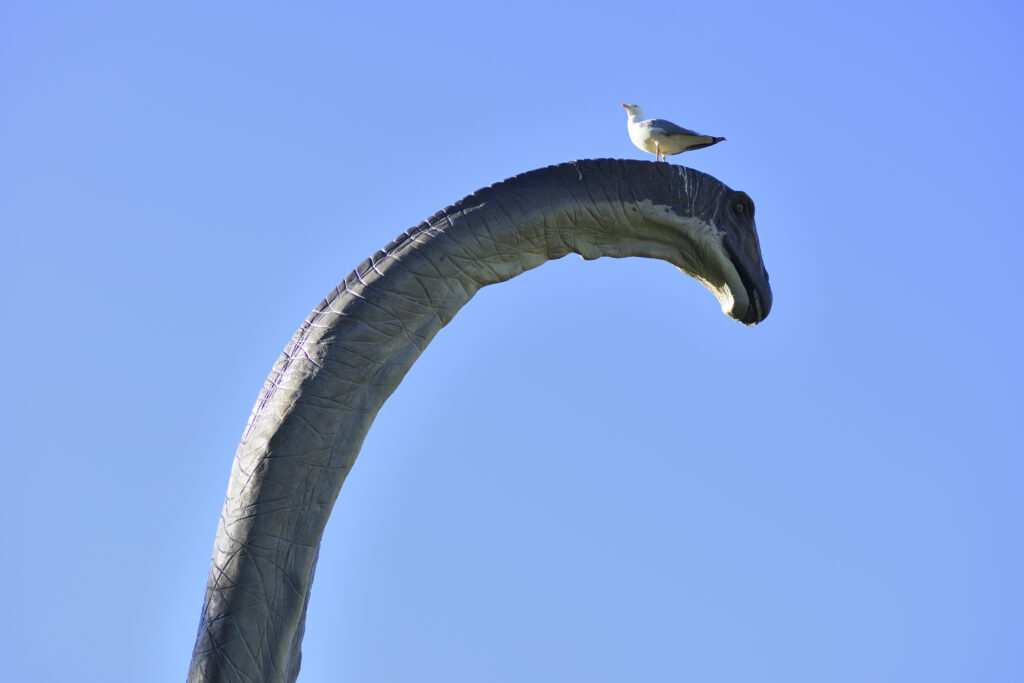
The plesiosaur hypothesis, a prehistoric marine reptile, has long captivated enthusiasts of mysterious phenomena. Some 20th-century naturalists support the idea that the Loch Ness monster could be a marine animal from the Mesozoic era, adapted to the freshwater of the Scottish lake.
Modern research relies on DNA analyses, including one conducted in 2018 that revealed a strong presence of giant eel DNA. This hypothesis suggests that Nessie could be an unknown creature or a large animal, fueling the mystery while ruling out the possibility of a surviving dinosaur or plesiosaur.
Why is Loch Ness a place conducive to legends and folklore?
Loch Ness, 36 kilometers long and 240 meters deep, has dark waters rich in peat, providing an ideal environment to nurture the legend. The geographical features of the site, combined with the changing weather of the Highlands, reinforce the perception of a persistent mystery.
The importance of folklore and folk legend in Scottish culture helps maintain belief in Nessie. Traditional stories, passed down from generation to generation, make Loch Ness a prime location for exploration by the curious and enthusiasts of unexplained phenomena.
Factors favoring the Loch Ness myth
- Deep and vast lake: Ideal environment to hide a creature
- Murky waters: Difficulty in clearly observing what is there
- Rich oral tradition: Transmission of legends and folklore
How does the legend of Nessie influence culture and tourism in Scotland?
The legend of Nessie holds a central place in Scottish history and identity. Each year, it attracts thousands of visitors who come to observe the lake and try to unravel the mystery of this elusive creature. Local businesses, museums, and lake tours benefit from the popularity of this well-known legend.
The Nessie phenomenon also inspires many artists, researchers, and exploration enthusiasts. The quest for the Loch Ness monster continues to fuel films, books, and documentaries, strengthening the collective belief in the existence of an extraordinary animal.
In 1972, an expedition led by the Boston Academy of Applied Sciences filmed a moving mass beneath the surface of the loch, reigniting the passion of researchers and tourists worldwide.
For centuries, the question of whether the Loch Ness monster really exists has fascinated the curious and mystery lovers, just like the most impressive mythological creatures that fuel our collective imagination.
What modern technologies and methods are used to explore Loch Ness?
Scientific advances have intensified the exploration of Loch Ness using sophisticated tools. Researchers deploy high-precision sonars to map the lakebed and detect any large creatures hidden in the deep waters. These devices deliver detailed images, revealing the complex topography of the site and fueling the mystery surrounding the presence of an unknown animal.
Expeditions also use underwater cameras capable of filming in low-light conditions. These tools allow observation of the local wildlife and identification of unusual phenomena. The collected images are used to analyze the behavior of species living in the lake and to verify the truthfulness of certain testimonies.
Genetic analyses represent a major breakthrough. By collecting water samples, scientists detect the DNA of every animal present in the lake. This method has allowed some hypotheses to be ruled out while opening the way to new leads regarding the nature of the monster.
The Contribution of International Expeditions
Teams from around the world enrich Nessie’s story. Their missions bring together specialists in underwater exploration, biologists, and engineers. These international collaborations strengthen the search for the creature and contribute to the phenomenon’s worldwide renown.
The Impact of New Discoveries on Local Folklore
Each scientific advance renews interest in the legend and nourishes Scottish folklore. The locals adapt their stories to the latest observations, maintaining a lively belief. Recent discoveries are integrated into popular legend and perpetuate the mystery of Loch Ness.
- Use of sonars to map the lakebed
- Deployment of underwater cameras to film wildlife
- DNA analyses to identify present species
- International collaboration during expeditions
- Adaptation of local folklore to new discoveries
Why Does the Fascination for Nessie Endure Across Generations?
The legend of the Loch Ness monster spans eras thanks to the power of collective belief and the allure of mystery. Oral transmission, the media, and new technologies sustain curiosity around this elusive creature. Each generation appropriates the folklore by bringing its own vision and hypotheses.
“Mystery is the source of all true discovery.” – Arthur Conan Doyle
FAQ: Diving into the Heart of the Loch Ness Mystery
What Advice Can Be Given to Travelers Wishing to Explore Loch Ness in Search of Nessie?
For an authentic experience, favor small group excursions, especially early in the morning or late in the day when mist envelops the lake. Bring binoculars and cameras, stay attentive to locals’ stories, and also explore local museums to enrich your understanding of the legend. Let yourself be carried away by the unique atmosphere of the place, conducive to imagination and unlikely encounters.
Is scuba diving in Loch Ness possible to observe wildlife or search for the monster?
Diving in Loch Ness is accessible to experienced divers, but it requires specific preparation due to low visibility, currents, and cold temperatures. The peat bottoms harbor a discreet but fascinating biodiversity. Even without encountering the famous creature, underwater exploration offers a unique perspective on the mystery and raw beauty of the loch.
How can visiting Loch Ness transform a traveler’s view of folklore and legends?
Discovering Loch Ness through contact with its inhabitants and their stories allows one to perceive folklore as a living vehicle of identity and cultural transmission. This journey often prompts reflection on the boundary between reality and imagination, inviting openness to the unknown and attentiveness to local beliefs. Immersion in this myth shapes a more nuanced and respectful perspective on the stories that weave the world.