At the heart of Qiandao Lake, a submerged city captivates with its mysterious beauty and relics frozen underwater for decades. Heritage and history enthusiasts face a puzzle: how could such a vast historical site survive intact, preserved by the depths and modern technology, while the rise of tourism often threatens the authenticity of such places? My field experience, between local encounters and underwater expeditions, allows me to provide you with a precise view of the conservation challenges, architectural treasures, and innovations that are transforming the way we approach this exceptional site.
How did the city of Shi Cheng end up submerged under a lake?
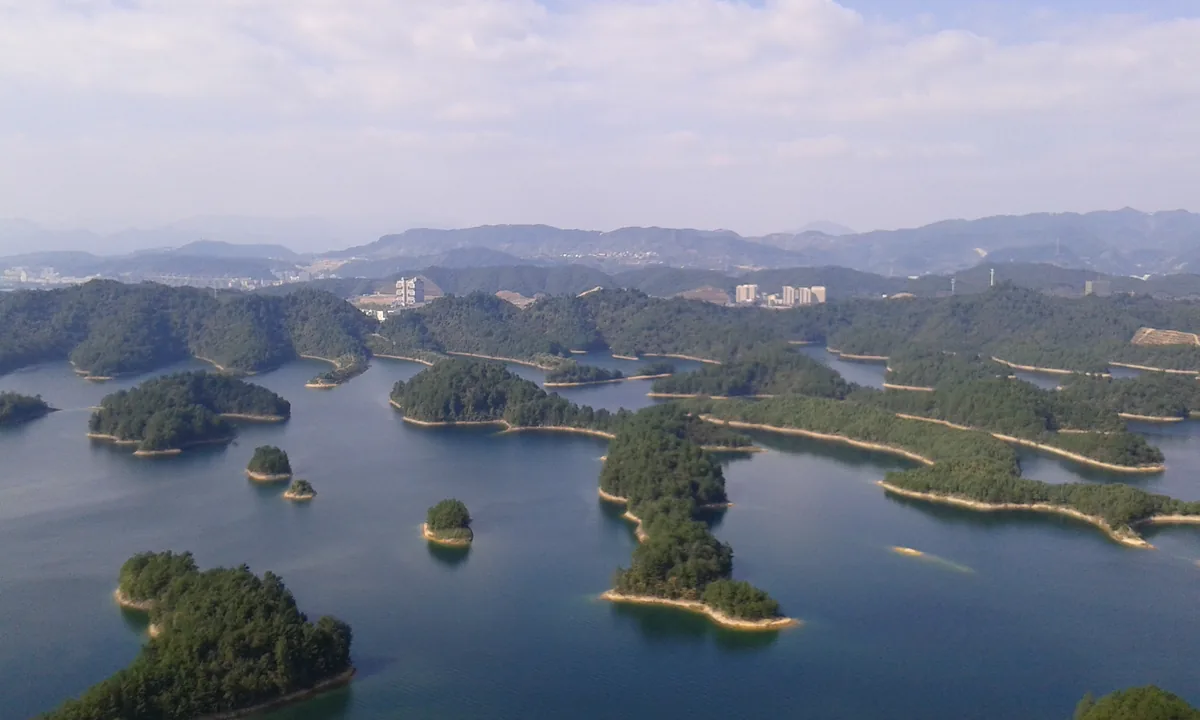
The submerged city of Shi Cheng now rests beneath the calm waters of Qiandao Lake. This unique site was flooded in 1959 during the construction of a hydroelectric dam on the Xin’an River, transforming the entire region and giving birth to a vast body of water with a thousand islands.
Before this submersion, the City of Lions was a major historical site, the seat of the Sui’an county, hosting a dynamic local life. Approximately 300,000 people were relocated during the rising waters, inadvertently preserving the ancient structures under 26 to 40 meters of depth.
Main events leading to the submersion
- Construction of the hydroelectric dam on the Xin’an River
- Creation of Qiandao Lake and flooding of the valley
- Relocation of 300,000 inhabitants
- Submersion of Shi Cheng’s ruins and paved roads
- Natural protection of the submerged archaeological site
What architectural and historical treasures lie beneath the waters of Qiandao?
The remains of Shi Cheng reveal an exceptional archaeological site, preserved thanks to the protection of the deep waters. There are temples, traditional houses, paved roads, and 265 stone arches dating from the 18th century, showcasing the architectural refinement of imperial China.
The structures of the City of Lions include five entrance gates, a rare feature, and walls dating from the 16th century. This submerged historical site offers a unique insight into ancient urban life, intact underwater for more than sixty years.
Remarkable elements to discover underwater
- Stone structures from the Ming and Qing dynasties
- Preserved temples and sanctuaries
- Paved roads and monumental arches
- 16th-century defensive walls
- Traditional dwellings
- Monumental entrances
Why does Shi Cheng attract so many divers and researchers from around the world?
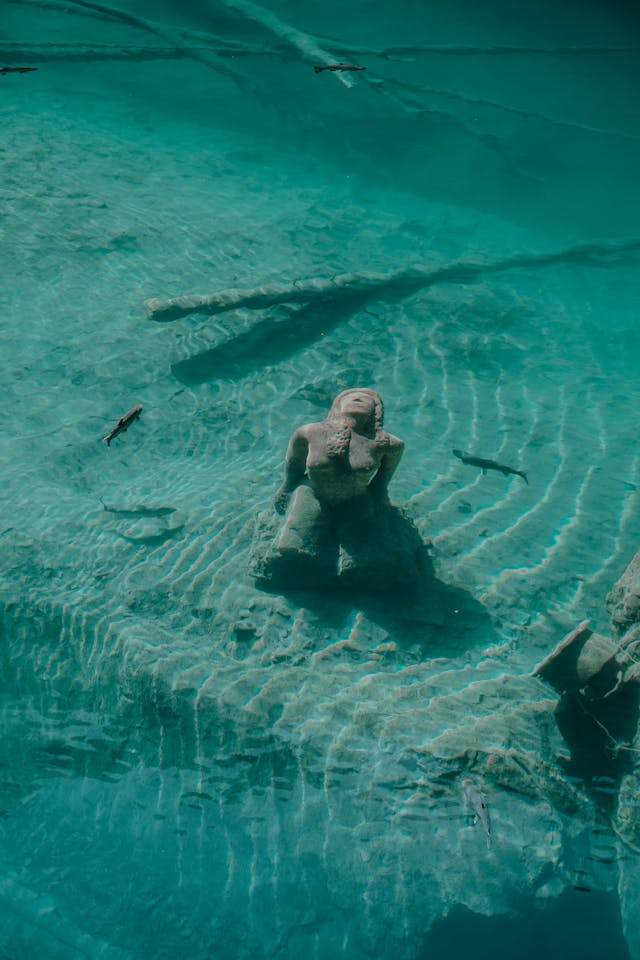
Diving at Shi Cheng offers a rare experience in an exceptional underwater site. Exploring this submerged archaeological site is reserved for experienced divers, especially in night diving and deep water diving, due to the depth and low visibility.
This discovery has revealed ancient remains of great scientific value. The images published in 2011 sparked international enthusiasm, making Shi Cheng a tourist site and a symbol of Chinese underwater heritage.
How is the preservation of the sunken city ensured today?
The conservation of the protected Shi Cheng site relies on complex scientific and technical operations. Being submerged under 20 to 40 meters of water protects the structures from natural aggressions, limiting erosion and damage over time.
Chinese authorities and specialized researchers continue the exploration and conservation of this exceptional site, with costly research projects and regular expeditions to document and preserve this historic submerged site.
What aspects make the City of Lions unique in the world heritage?
Shi Cheng stands out as a perfectly preserved submerged archaeological site, offering a journey through time via its intact remains. Its history, natural protection, and the richness of its structures make it an essential reference for enthusiasts of underwater exploration and archaeology.
The City of Lions embodies a rare heritage, at the crossroads of history, nature, and technology. Its discovery continues to inspire enthusiasts and researchers, confirming its status as an exceptional site in the world of underwater sites.
Divers have observed that part of Shi Cheng’s paved roads remains surprisingly passable underwater, as if frozen in time.
Shi Cheng, nicknamed the City of Lions, remains submerged under the waters of Qiandao Lake in China, and its mysterious history reminds us how ancient civilizations fuel the collective imagination, just like the most impressive mythological creatures that populate stories and legends worldwide.
Shi Cheng, the mysterious City of Lions submerged under Qiandao Lake in China, fascinates as much as the most impressive mythological creatures that populate ancient tales.
What technological innovations today enable the exploration of Shi Cheng?
Advances in submarines and robotics facilitate the exploration of the depths of the submerged archaeological site of Shi Cheng. Remotely operated vehicles equipped with high-definition cameras provide precise access to the remains and allow mapping of the structures without disturbing the environment. This technology helps preserve the integrity of the exceptional site while enabling detailed observation.
Technical diving, using specific gas mixtures, makes the sunken city accessible even at great depths. Professional divers use advanced equipment to ensure their safety and extend their immersion. These practices ensure a progressive and methodical discovery of the ancient remains.
Photogrammetric surveys produce detailed 3D models of the archaeological site. These digital images allow the study of the conservation of structures and the consideration of virtual restorations. The use of these innovative tools places Shi Cheng at the forefront of research on submerged historical sites.
Impact of Technology on Heritage Preservation
The integration of technology in the conservation of the protected site promotes the transmission of heritage to future generations. Data collected by underwater drones and robots guide preservation decisions and limit direct human interventions. This approach minimizes risks to fragile structures while enriching the knowledge of the historic site.
Challenges Encountered During Exploration Missions
Diving and mapping missions at Shi Cheng face deep and sometimes murky waters, complicating access to the remains. Low light and the need to avoid any deterioration impose strict protocols. Teams must constantly adapt their equipment and methods to ensure the integrity of the underwater site.
- Use of underwater robots for mapping
- Technical diving equipment for secure access
- Photogrammetric surveys for 3D modeling
- Continuous scientific monitoring for conservation
- International collaboration for heritage study
Why Does Shi Cheng Fascinate History and Adventure Enthusiasts So Much?
The Shi Cheng site, due to its unique character and preserved remains, attracts discovery and exploration enthusiasts from around the world. Limited access and the rarity of submerged archaeological sites of this scale enhance the fascination with the Lion City. Each dive offers the opportunity to observe heritage frozen for decades, gradually revealing its secrets to those who venture there.
“Beneath the tranquil waters of Qiandao Lake lies a story that time has not erased, but merely concealed.”
FAQ on the Sunken City of Shi Cheng: Diving, Heritage, and Discoveries
Can Shi Cheng be visited as an amateur diver or are specific skills required?
Access to Shi Cheng requires solid technical diving experience. The depth, reduced visibility, and water temperature demand an advanced level, or even a deep diving certification. Specialized clubs offer guided expeditions for experienced divers, ensuring safety while respecting the integrity of the archaeological site.
What are the biggest challenges in preserving the authenticity of the underwater Lion City?
The preservation of Shi Cheng relies on rigorous scientific methods. Humidity, pressure, and microorganisms threaten the ancient structures. Research teams continuously monitor the condition of the remains and adapt conservation techniques, while limiting human impact through technology and strict regulations on site access.
Photo: Nihaopaul, Wikimedia Commons, CC BY-SA 3.0