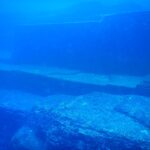
On June 7, 1692, an earthquake caused a large part of Port Royal to slide into Kingston Harbour, Jamaica. The Jamaica National Heritage Trust (JNHT), the public agency responsible for the island’s heritage, sums up the scene in one sentence: a large part of the city sank into the sea.
Three centuries later, these submerged ruins are listed as a UNESCO World Heritage Site, along with the part of the city that remained on land. And the question every diver asks quickly arises. Can you go see them with a tank on your back?
Short answer: no, not for recreational diving. We explain why, what archaeology has really found there, and where to look at submerged heritage without breaking the law.
Why did Port Royal attract privateers and merchants?
Port Royal guarded the entrance to Kingston Harbour, a deep and sheltered anchorage at the end of a sand spit. After the English took Jamaica in 1655, the city became in four decades a hub of regional and transatlantic trade, according to UNESCO.
The legend remembers the privateers. Henry Morgan outfitted his expeditions against Spanish possessions there before becoming lieutenant governor of the island, and the city earned a reputation as the most dissolute city in the Caribbean. Taverns, multi-story brick houses, and six forts protecting the harbor composed the setting. But the picturesque hides the rest. Trade also involved the trafficking of Africans enslaved. This is actually one of the two reasons cited by the World Heritage Committee in 2025 (criterion vi).
In short, the pirate den is a convenient label.
It has sold many postcards and excursions, to the point of erasing in copied guides the merchant, military, and slave-trading city described by archives and excavations. We keep both sides here. Otherwise, the story limps.
What happened on June 7, 1692?
On June 7, 1692, a violent earthquake struck Jamaica. According to UNESCO, it devastated Port Royal and swallowed a large part of the city in water and sand. The Institute of Nautical Archaeology estimates that about 2,000 inhabitants died instantly.
Others succumbed in the following days to their injuries or diseases. The ground of the city, built on sand at the end of the Palisadoes, did not hold. Entire streets slid into the harbor with their houses and contents, which explains the current state of preservation. Sediments covered the remains. Deprived of oxygen, organic objects, from wood to leather, survived more than three centuries.
However, several details repeated endlessly on the internet about that day deserve serious scrutiny.
Many articles claim a precise magnitude of 7.5 and describe a devastating tsunami. None of the official sources we consulted give this magnitude figure, and UNESCO speaks of a city buried by water and sand, without calling it a tidal wave. The same caution applies to the famous pocket watch stopped at 11:43: the anecdote appears everywhere, but we did not find it in the official pages consulted. Take it as a digging story.
Can you dive on the submerged city of Port Royal?
No, not for recreational diving. The submerged part is an archaeological reserve protected by Jamaican law, declared a protected national heritage site in 1999. A 2012 Associated Press dispatch already described it as closed to divers without a permit. Interventions are part of research authorized by the JNHT.
So beware of pages selling you a “dive on the pirate city.”
The legal framework is based on two laws. The 1985 law on the JNHT protects declared heritage, and the 1991 law on the Natural Resources Conservation Authority covers the protected area of the Palisadoes and Port Royal since 1998. Since August 9, 2011, Jamaica also applies the UNESCO Convention on the Protection of the Underwater Cultural Heritage. A snorkeling or diving excursion sold in the bay therefore gives you no access to the remains. If an operator claims otherwise, ask for the JNHT permit in writing.
But even with a permit, the water is not appealing. AP spoke in 2012 of remains covered with algae in murky water, and nothing indicates that conditions have changed since (impossible to decide from here, due to lack of published measurements). Visibility says nothing about safety. It mainly makes the site unreadable for a visitor.
What have archaeologists found in Kingston Harbour?
Underwater excavations began with the American Edwin Link in 1956, then Robert Marx worked on the site for the Jamaican government in the 1960s. The longest campaign, conducted by the Institute of Nautical Archaeology and Texas A&M University with the JNHT, spans from 1981 to 1991.
This campaign excavated five buildings. There are workshops, including a complex combining a pipe factory, tavern, and shoemaker, and residential houses. The INA notes an unusual amount of organic objects, preserved thanks to an oxygen-poor environment. This detail matters. On most terrestrial sites, wood, leather, or food remains disappear within a few decades.
Thus, Port Royal delivers a city frozen in its daily life.
One finds tin utensils, bottles, clay pipes, and dishes on the floors of the rooms where they fell, allowing the use of each space to be read. For an archaeologist, this context is worth more than the isolated object. This is also why looting, or even a simple souvenir picked up from the bottom by a visitor, destroys the information.
These campaigns took place under permits, with teams trained in excavation. Nothing like a club outing.
What does the UNESCO inscription of July 2025 change?
On July 12, 2025, during its 47th session, the World Heritage Committee inscribed “The archaeological ensemble of Port Royal in the 17th century.” The site covers 27 hectares, surrounded by a buffer zone of 292.27 hectares, and includes terrestrial and submerged remains under criteria iv and vi.
The inscription does not open the site to divers.
On the contrary, the Committee addressed eleven recommendations to Jamaica, including updating zoning, a disaster risk management plan, monitoring indicators, and finalizing interpretation and tourism management plans. Management remains shared between the JNHT and the national environmental agency (NEPA), based on a 2022-2027 plan. The decision specifically requests finalizing the tourism component. If a supervised underwater visit ever exists, it will necessarily go through this management plan and require authorization from Jamaican authorities. Until then, beware.
However, on land, Port Royal is visitable. The JNHT highlights Fort Charles, St Peter’s Church, and the Giddy House among the notable places of the historic Port Royal site. It does not replace the submerged ruins, but it is legal and understandable.
Where to see submerged heritage instead?
If you want to swim above ruins, choose a site where visits are provided for by law. In Italy, the Baia underwater park allows guided dives by authorized centers, over Roman villas at shallow depth. It is the most documented alternative we have studied.
We detailed the framework of Baia, Roman city frozen underwater, with zones where diving is limited. Freediving remains allowed elsewhere. To compare other drowned cities, our top 7 submerged cities specifies which are visitable and which remain excavation grounds reserved for archaeologists. Some, like Shi Cheng at the bottom of its Chinese lake, raise other access questions.
And if Jamaica attracts you, reef diving remains possible elsewhere on the island.
Our guide to diving in Jamaica lists the areas of Montego Bay, Negril, or Ocho Rios. Check with the center for level, current, and fallback plan. For Afro-Caribbean maritime memory, the figure of Yemaya, sea deity illuminates another facet of this history. The real cost of the choice is summed up in one line. A day at Port Royal is spent on land, and diving is reserved elsewhere on the island, with an extra trip in your schedule and a center to verify yourself.
FAQ
Can one dive freely on the ruins of Port Royal?
No. The submerged part is a protected archaeological reserve, closed to divers without a permit. Interventions fall under research authorized by the Jamaica National Heritage Trust.
When was Port Royal inscribed as a World Heritage site?
On July 12, 2025, during the 47th session of the World Heritage Committee. The site is called “The Archaeological Ensemble of Port Royal in the 17th Century” and covers both terrestrial and submerged remains.
How many people died during the 1692 earthquake?
The Institute of Nautical Archaeology estimates that about 2,000 inhabitants were killed instantly. Others died in the following days from their injuries or diseases.
What can be visited at Port Royal today?
The terrestrial part can be visited, featuring Fort Charles, St Peter’s Church, and the Giddy House highlighted by the JNHT. The submerged remains, however, remain inaccessible to the public.
Sources
- The Archaeological Ensemble of Port Royal in the 17th Century (UNESCO World Heritage Centre, 2025)
- Port Royal Harbor Excavation (Institute of Nautical Archaeology, 2020, updated in 2025)
{“@context”:”https://schema.org”,”@type”:”FAQPage”,”mainEntity”:[{“@type”:”Question”,”name”:”Peut-on plonger librement sur les ruines de Port Royal ?”,”acceptedAnswer”:{“@type”:”Answer”,”text”:”Non. La partie immergée est une réserve archéologique protégée, fermée aux plongeurs sans permis. Les interventions relèvent de la recherche autorisée par le Jamaica National Heritage Trust.”}},{“@type”:”Question”,”name”:”Quand Port Royal a-t-elle été inscrite au patrimoine mondial ?”,”acceptedAnswer”:{“@type”:”Answer”,”text”:”Le 12 juillet 2025, lors de la 47e session du Comité du patrimoine mondial. Le bien s’appelle « L’ensemble archéologique de Port Royal au XVIIe siècle » et couvre des vestiges terrestres et immergés.”}},{“@type”:”Question”,”name”:”Combien de personnes sont mortes lors du séisme de 1692 ?”,”acceptedAnswer”:{“@type”:”Answer”,”text”:”L’Institute of Nautical Archaeology estime qu’environ 2 000 habitants ont été tués sur le coup. D’autres sont morts dans les jours suivants, de leurs blessures ou de maladies.”}},{“@type”:”Question”,”name”:”Que peut-on visiter à Port Royal aujourd’hui ?”,”acceptedAnswer”:{“@type”:”Answer”,”text”:”La partie terrestre se visite, avec le Fort Charles, l’église St Peter et la Giddy House mis en avant par le JNHT. Les vestiges immergés, eux, restent hors d’accès pour le public.”}}]}